Category: growing
-

GoodCritters: Western Honey Bee
Bees are one of my favourite insects. They have co-evolved with flowering plants and their benefit to your garden can not be overstated. So you can definitely say that humans and bees have a strong relationship albeit pretty one sided.
The species of bee that we all recognise on sight is not native to Australia however and was introduced here in the 1820s. I still love them :).
Species: Apis mellifera
Identification:


Some amazing slow motion footage of bees leaving and returning to my friend Giuseppe’s Flow Hive in slow motion.
Benefits:
Bees:
- pollinate many of our flowering edibles
- make honey, beeswax etc
- are pleasant to watch and listen to
Encouragement:
Plant flowers near or between your edible crops to encourage bees into your garden. Avoid the use of pesticide sprays and systemic controls that are harmful to bees.If you have to spray, do so in the evening so no bees are present and use low toxic, fast breakdown products like pyrethrum liquid.
More Resources:
- BBC’s ‘The importance of bees’
- Native Australian species ‘Wikipedia‘
- See more GoodCritters here
Please consider subscribing to get a weekly email summary of our posts.
[mc4wp_form id=”15771″]
Written by
·
-

Komatsuna
This really easy to grow leafy green will add that bit of special to your salads and stir fries. Use it as a substitute for spinach or along side. It is also called Japanese mustard spinach and is heavily used in Japan and throughout Asia.
I grow grow both green and red varieties (plants are about 10cm tall) and pick the leaves when they are still young.
Taste/Aroma:
Whilst the leaves look and smell like spinach their stronger taste is more like Mizuna and leaf beets,
Plant:

Grow It Perth

Planting/Care:
Very easy to grow in rich friable soil. Occasionally use liquid fertiliser or pellets designed for use on vegetables. Nitrogen is useful when growing plants for their foliage.
You will get the normal suite of BadCritters such as caterpillars, weevils and the like. Visual inspection, keeping weeds down and eating the komatsuna leaves before they do is the key 🙂 .
Related Links:
- see more asian green posts here
- go to all meal ingredients
- go the Grow It Perth calendar
Written by
·
-

BadCritters: Common Garden Weevil
I actually think these little guys are cute but they still get an automatic squishing when I find them munching on my edible plants 🙂 .
They leave tell tale little holes in the leaves of your greens, fruit trees, strawberries, beans, peas and the like.
Their grubs live under ground munching on plant roots.
Species: Otiorhynchus sulcatus
Identification:
Damage:

Control:
I am lucky in that I have only experienced very light infestations. Prevention is best because removing whole plants is often the only solution to heavy infestations.
Here are some tips:
- Keep weeds down and hence reduce a food source for weevil larvae.
- Visual inspection of the top and bottom of leaves and removing adults helps break the cycle. I squish them and push them into the soil so their bodies are added to the soil mix or you could throw them to your chooks.
- I find that spraying pyrethum keeps the adults off the leaves.
More Resources:
- More on weevil damage
- See more BadCritters here
Please consider subscribing to get a weekly email summary of our posts.
[mc4wp_form id=”15771″]
Written by
·
-
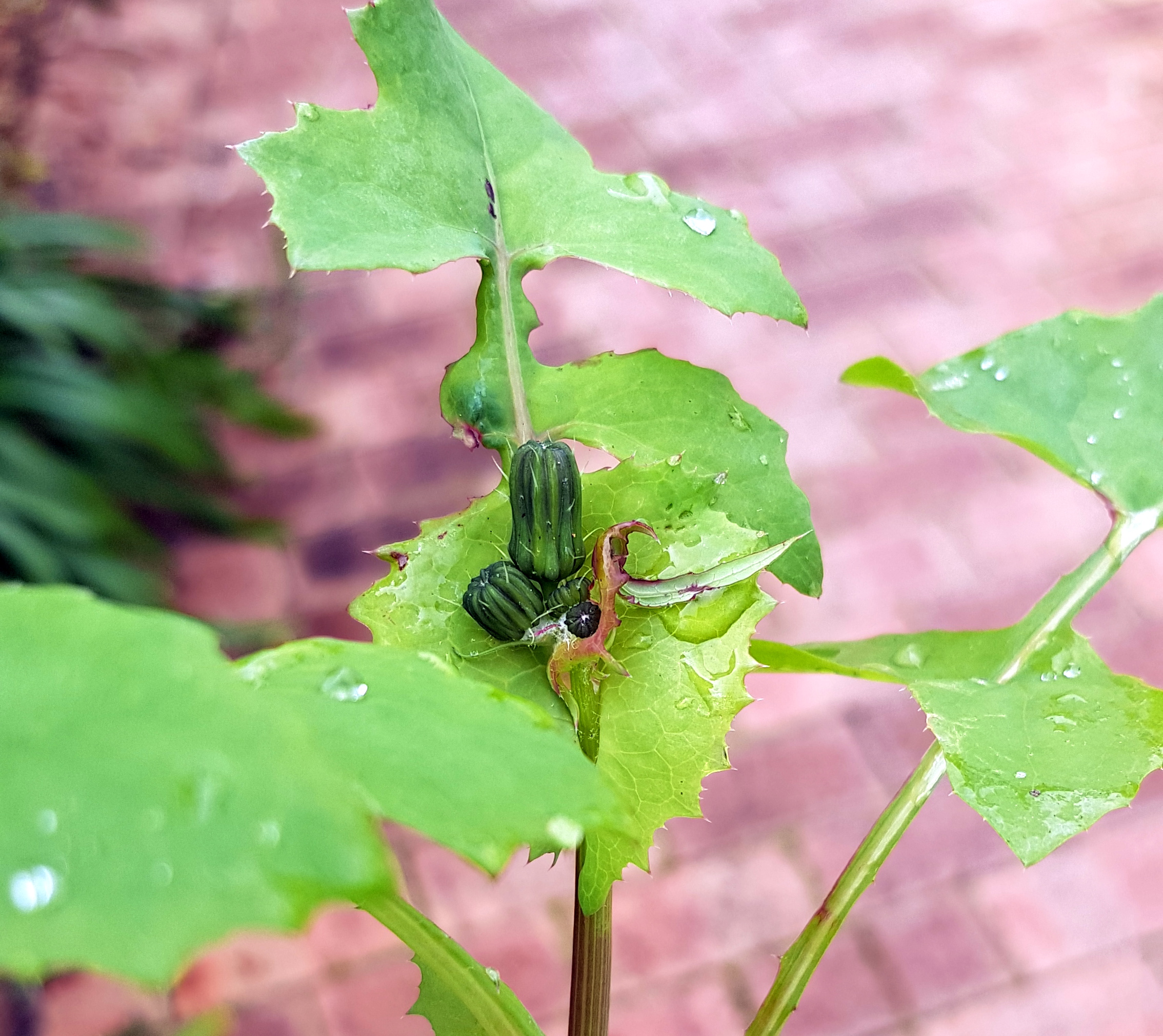
Can I Compost Weeds?
In my quest to keep up with my worm farms and compost bins I am always on the look out for new sources of vegetable matter.
There is lots of conflicting opinion on using weeds in your compost. The fear being that the compost will then spread weeds anywhere you use it.
I firmly believe you can use them in your worm farms and compost bins and here is how.
Choose your weeds carefully
I only use the leafy varieties and not those that spread via runners and create a ground cover. The latter I just pull and leave on top of the soil. They tend to mulch and stop other weeds growing if you do this enough. Really tough to pull weeds can always be killed using this method.
Don’t include any seeds
Pull seed pods off any weeds you are going to use or simply bypass them altogether.
The secret weapon step
If you are still worried you can make soup 🙂 . I have an old pot that I use for this purpose and it doubles as a collection bucket. I pop the weeds into it and then pour boiling water over them. Pop the pot somewhere safe from kids and the rain and allow to sit for a few days.
By then you will have a pile of sludge that can be poured into your compost bins and the like. The boiling water has rendered the weeds, any seeds or BadCritters you missed unlikely to cause you any trouble.


Enjoy,
PK
Written by
·
-

BadCritters: Small Pointed Snail
I don’t see many examples of this very shy BadCritter in my garden but I suspect there are lots of them hidden in the leaf litter. This one was munching on some radish leaves and his friends will like all of your leafy green edibles. Shame they are so cute but they are my radishes 🙂 .
Species: Cochlicella barbara
Identification:
Adults are only a few millimetres long.

Damage:
I think they are only a minor problem. I think they eat more detritus than greens.
Control:
Visual inspection of the top and bottom of leaves and removing them is generally sufficient. I squish them and push them into the soil so their shells are added to the soil mix.
More Resources:
- See more BadCritters here
Written by
·
-

BadCritters: Tiger Moth Caterpillar
The caterpillar of this BadCritter will munch your salad greens just as happily as your non-edibles. Their hairy bodies have given them the nickname ‘woolly bears’.
I picked the caterpillar below of my snow pea plants and after its photo shoot it got dispatched 🙂 .
Bit of a shame as they are amazing to watch and the moth is attractive too.
Species: Ardices glatignyi
Identification:


Damage:
The caterpillars are voracious munchers of many trees, shrubs and vegetables found in the home garden.
Control:
Visual inspection of the top and bottom of leaves and removing any caterpillars is generally sufficient. You can buy traps and insecticides but I have never needed to use them.
More Resources:
- Check out this great resource http://lepidoptera.butterflyhouse.com.au/arct/glatig.html
- See more BadCritters here
Youtube:
Written by
·
-

Snow Peas
Snow peas are one of my favourite edible plants to grow in my working garden. This annual flowering vine produces crisp edible pods and peas bursting with colour and flavour.
My boys love picking the pods with me when we pop out to get fresh ingredients for salads, stir fries and curries.

Taste/Aroma:
Raw pods and peas are crisp and very sweet. Cooking them makes the pods soft and the peas less sweet. The seeds remain plump though.
Very nice taste and texture regardless.
Flower:

Pods:


Plant:
Grow It Perth
Planting/Care:
Make a trellis out of 6 foot wooden stakes and twine. The plants will attach themselves to the twine using tendrils but I also wind in and out of the twine for more support. Top them once they are taller than the trellis to encourage horizontal growth and strength.
Here is an example trellis Ben and his family made in 2016:
Fertilise with high nitrogen liquid fertiliser at first and then low nitrogen, high potassium fertlisers to support the pea pods’ development.
Snow peas are very sensitive to average temperature and some years are less suitable to their success than others. They also have a delicate stem at their base and a small root structure. Be sure to thin seedlings so they don’t compete for the same nutrients and choose a spot that gets lots of winter sun.
Dry the seeds of healthy, heavy producing plants for the next planting.
When the plants are spent, turn the roots back into the soil to take advantage of this legume’s ability to fix nitrogen. Plant nitrogen loving edibles in the location next growing cycle followed by plants that don’t need nitrogen.
Related Links:
- see more snow pea posts here
- go to all meal ingredients
- go the Grow It Perth calendar
Written by
·
-
Grow It
What to grow in Perth?
Trying to work out what, when and where to plant in your working garden? Me too 🙂
With it’s Mediterranean climate we have to be ready for tricky growing conditions in Perth, so I present what I am doing throughout the year. I hope it guides and inspires others as I learn on the job.
I would love to hear from you, the Perth edible gardening community, so we can have the best possible resource to share. While you are it, check out the tons of posts written about cooking ingredients (see Ingredients List ).
Thanks in advance 🙂
The table below gives a quick overview but if you click on a:
- month’s link you will get details on planting, harvesting and everything in between.
- plant’s link you will get details on looks, tastes, uses and growing tips (some from my personal experience but lots from contributors like you too).
Grow It Perth
Green squares = you can harvest crops and plant seedlings
Blue squares = no harvesting but you can plant seedlings, sets etc
Orange squares = harvesting only this month
Black squares = no planting and no harvests
White squares = I don’t know and need your helpM A M J J A S O N D J F alfalfa sprt. aloe vera bean broad chili jalapeno coriander komatsuna leaf beets lemongrass mizuna mung sprt. radish snow peas spinach Written by
·
Radishes: Grow And Eat
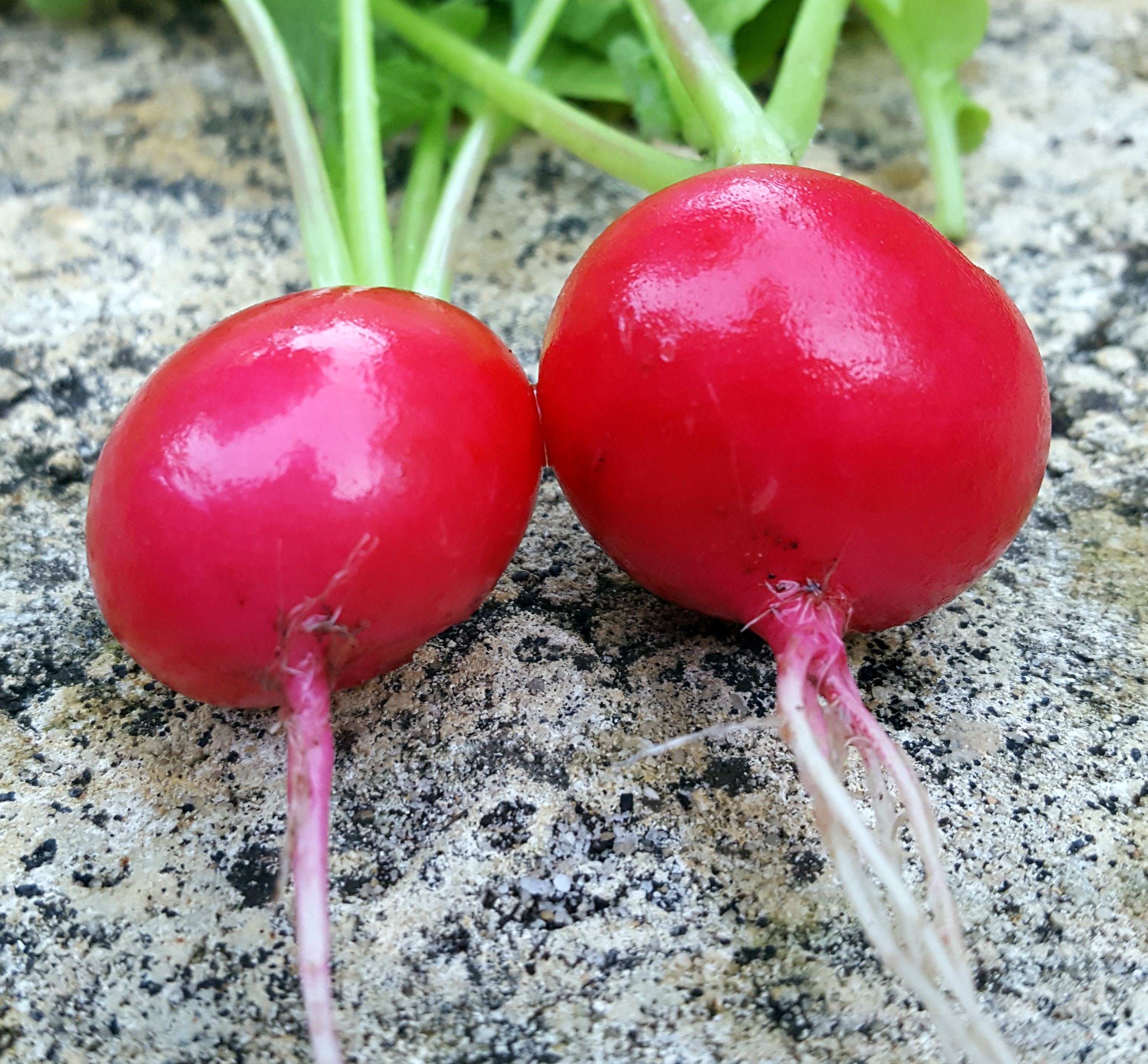
Many varieties of this crisp and crunchy edible root can be grown all year round in Perth, Western Australia. They are very easy to grow and my children love watching their rapid growth and asking where Peter Rabbit is :).
You can have fresh radishes all year round by simply planting a new batch every 2 – 3 weeks.
Taste/Aroma:
Most people are familiar with the sharp bite it brings to salads and sandwiches. They even go well in soup. Although some varieties are milder than others it is a love or hate thing I am afraid :).
Did you also know:
- that you can also eat the leaves and sprouts?
- they go great in stir fries (for example radish carrot and edamame stir fry)?
- you can pickle them (I have some daikon growing and will give this a try soon)?
Watermelon


Cherry Belle


Daikon


French Breakfast

Growing Months:
- All months
Planting/Care:
Simply sow directly where they will be growing (choose a spot in full sun if you can) every 2 – 3 weeks. The soil should loose, full of composted organic matter and be well draining.
Don’t over do it on the nitrogen front when fertilising or the plants will put too much effort into growing leaves.
Sometimes the seedlings work themselves up and out of the soil, holding on by just a few roots. Gently pull them out and transplant them a bit deeper.
Enjoy,
PK
YOU MIGHT ALSO LIKE
RADISH RECIPES
THE FULL GICICI INGREDIENTS LIST
GICICI’S WHAT TO GROW IN PERTH GUIDE
Please consider subscribing to a weekly email summary of our posts or check us out on Facebook @growitcatchitcookit.
[mc4wp_form id=”15771″]
Written by
·
Radishes
Many varieties of this crisp and crunchy edible root can be grown all year round in Perth, Western Australia. They are very easy to grow and my children love watching their rapid growth and asking where Peter Rabbit is :).
You can have fresh radishes all year round by simply planting a new batch every 2 – 3 weeks.
Taste/Aroma:
Most people are familiar with the sharp bite it brings to salads and sandwiches. They even go well in soup. Although some varieties are milder than others it is a love or hate thing I am afraid :).
Did you also know:
- that you can also eat the leaves and sprouts?
- they go great in stirfrys (for example radish carrot and edamame stir fry)?
- you can pickle them (I have some daikon growing and will give this a try soon)?
Cherry Belle


Daikon


French Breakfast

Growing Months:
- All months
Planting/Care:
Simply sow directly where they will be growing (choose a spot in full sun if you can) every 2 – 3 weeks. The soil should be full of composted organic matter and be well draining.
Don’t over do it on the nitrogen front when fertilising or the plants will put too much effort into growing leaves.
Sometimes the seedlings work themselves up and out of the soil, holding on by just a few roots. Gently pull them out and transplant them a bit deeper.
Related Links:
- see more radish posts here
- go to all meal ingredients
- go the Grow It Perth calendar
Written by
·