Tag: badcritters
-
Homemade Fruit Fly Traps
It is that time of year when the fruit flies are buzzing around my compost bins and worm farms in droves. This is despite me covering the top layer of kitchen scraps in both with a layer of newspaper to reduce the infestation.
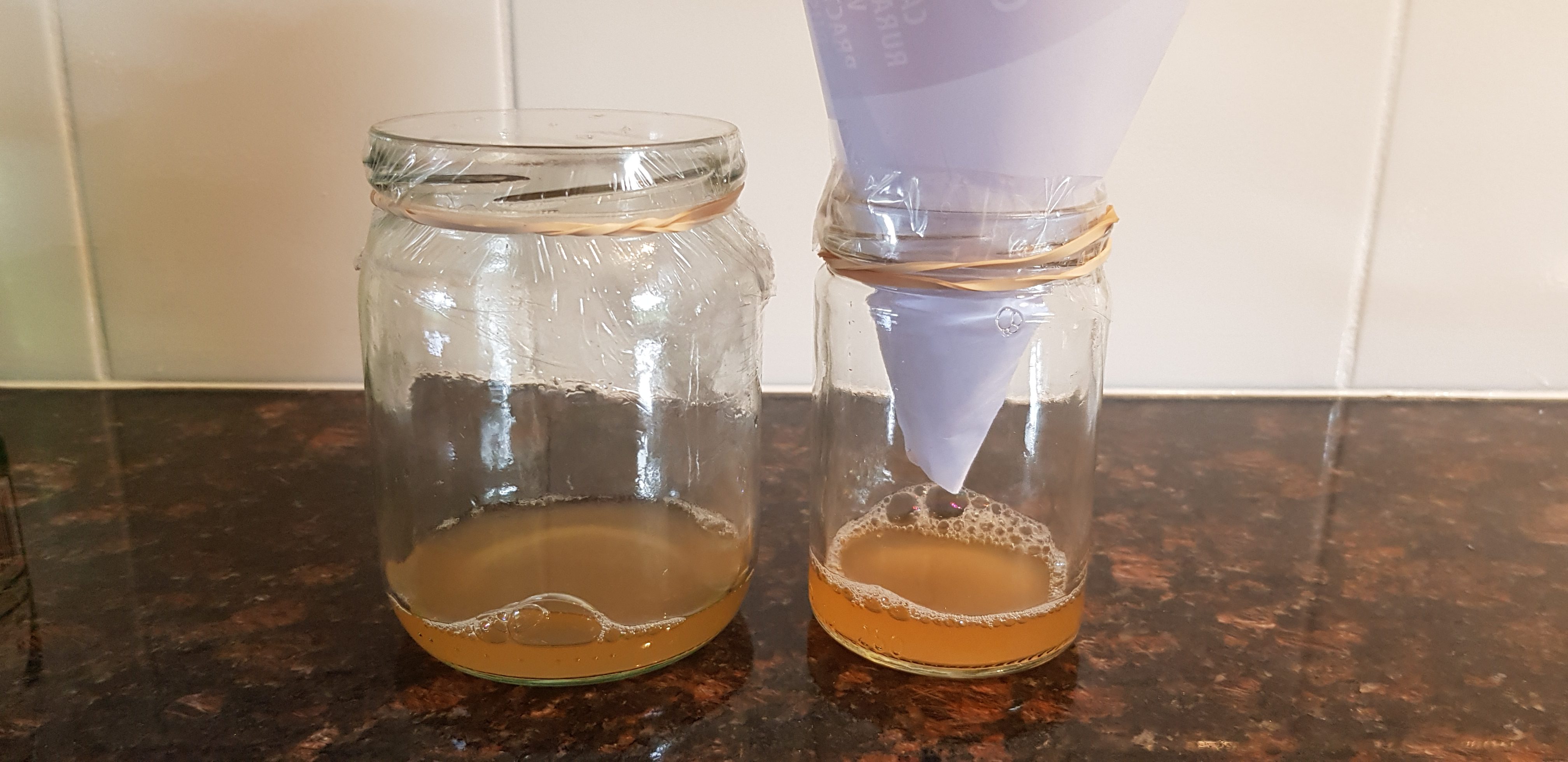
So, this year I decided to try making homemade traps. I asked my crack team of little assistants to each make a different trap and then we trialed them out in my shed next to my mushrooms growing crates and with the door closed.
Both trap types consisted of a jar, liquid bait, a method of letting the flies in but not out and an elastic band. My assistants both made traps using cider vinegar and detergent (this stops the flies being able to sit on the liquid indefinitely).
However for the one way entrance, one lad used plastic film with some skewer holes in it, the other a cone made from some scrap paper. I made one of the former myself and put it next to my worm farm.
You can’t see in this photo but after 1 hour they both type of trap had several dead flies in them. Just as well as the competition to see who got the most flies had heated up. 🙂

This is my one in the same time frame but next to the worm farms.

So, both traps work really well. I would say though that the plastic film version holds up better outside if you are expecting rain. If you are careful you can reuse the film again and again. Indoors
Enjoy,
PK
YOU MIGHT ALSO LIKE
ENVIRONMENTALLY FRIENDLY BUG CONTROL
Please consider subscribing to a weekly email summary of our posts or check us out on Facebook @growitcatchitcookit.
[mc4wp_form id=”15771″]
Written by
·
-
BadCritter: White Cabbage Butterfly
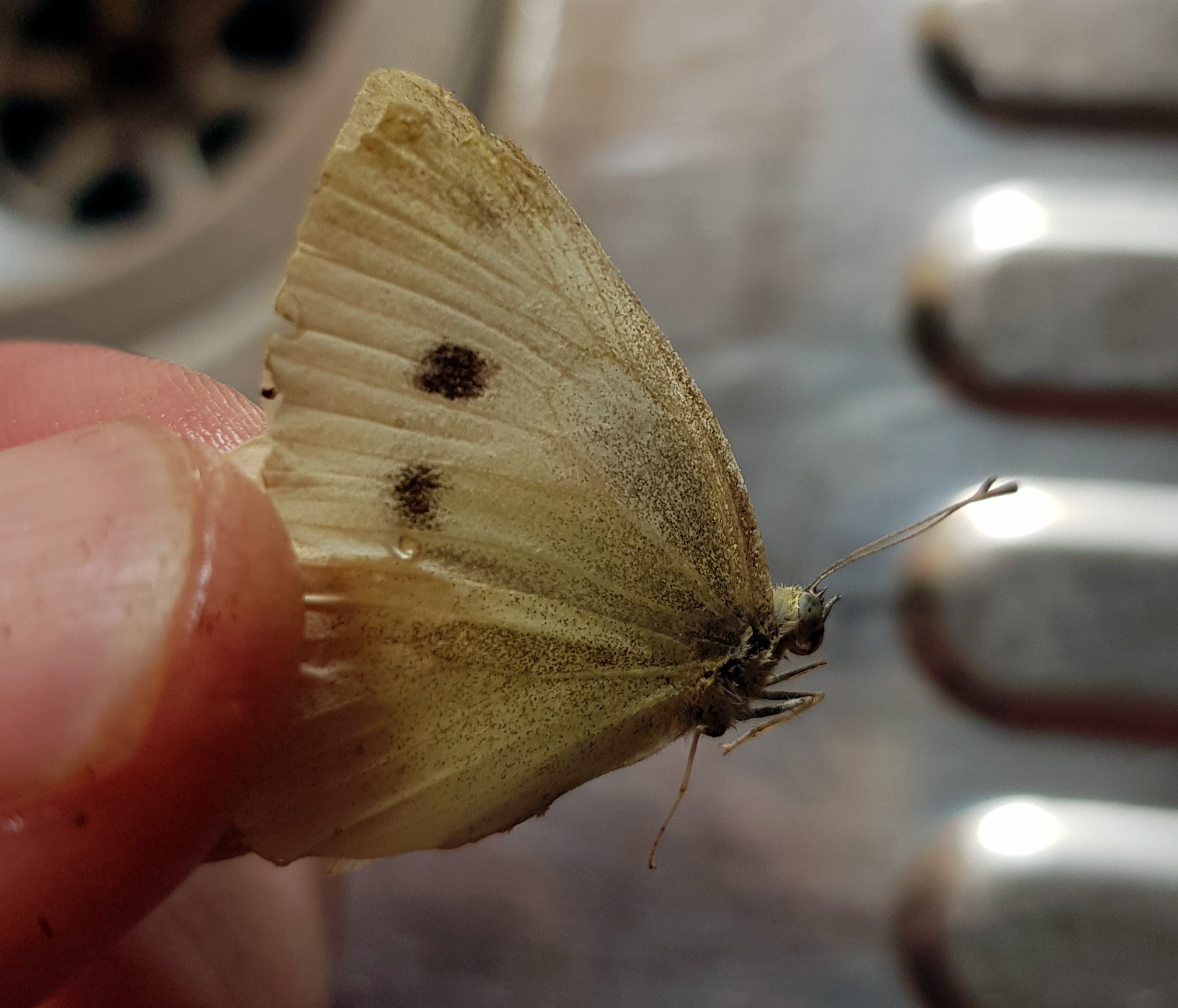
Oh but I hate these beautiful little butterflies. They are particularly active in spring and early summer. I don’t see them in January and February in Perth and suspect it is just too hot.
I squish them and their caterpillars, turning them back into the soil.
Species:
Identification:
Adult:

Eggs:

Caterpillar:

Damage:
They will munch your greens leaving the tell tale holes you see above. The caterpillars are hard to spot as you can see.
Control:
I usually spray my chili plants and greens with Dipel and pyrethrum (my go to natural insecticide spray) if I notice any damage. I found the first time I used Dipel was amazing. I didn’t think the caterpillars were doing that much harm to the plant but the returning plant vigor proved that wrong.
Ben swears by the use of butterfly shaped cardboard cutouts and I use egg shells. Both methods are thought to make the laying females move along to another patch.
More Resources:
- See more BadCritters here
Please consider subscribing to get a weekly email summary of our posts.
[mc4wp_form id=”15771″]
Written by
·
-
Pyrethrum Natural Insecticide
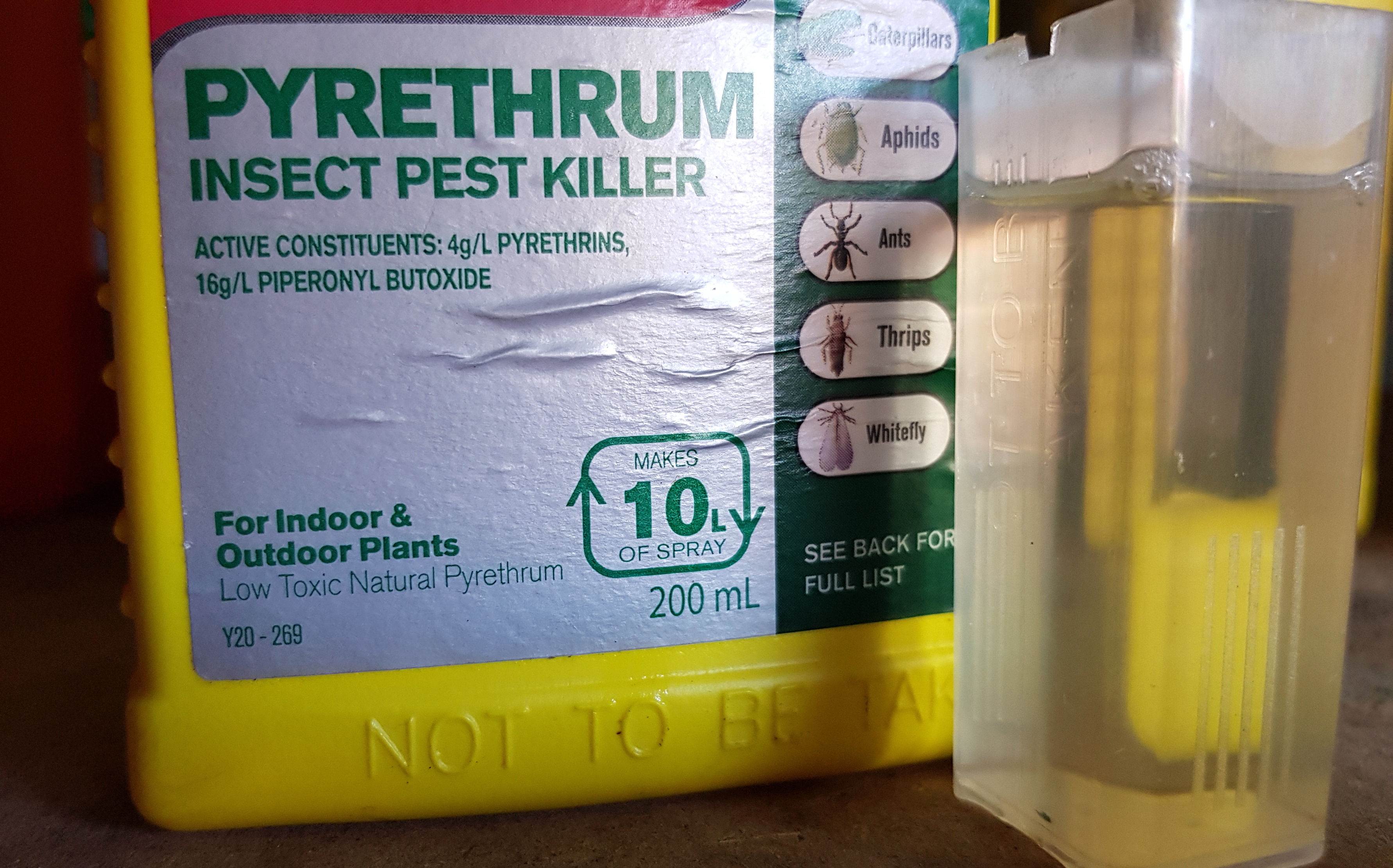
I always try to use pyrethrum spray and Dipel over man-made insecticides. That said, my favourite method of pest control in the garden is to squish the BadCritters or eat the vegetables before they do. 🙂
My main target critter is aphids and caterpillars but it also controls thrips and whitefly.
Why do I use this spray?
Pyrethrum spray is made from the pyrethrum daisy and is a low toxic, natural product that breaks down quickly in sunlight. It is a non-systemic and only works on direct contact. This means you can choose when and where to spray with a known result.
Most if not all pyrethrum products use a enhancer additive called piperonyl butoxide. This has been found to reduce the insects’ capacity to process pyrethrum hence keeping it killing them for longer. Piperonyl butoxide is deemed to have a low toxicity to other organisms and quickly breaks down naturally.
As always, take care of yourself and others. Wear safety glasses, a mask and gloves when applying any garden spray. I always spray in the late evening after my bee friends have gone home.
Enjoy,
PK
Related Links:
- see my main page about BadCritters
- see more insecticide posts here
Please consider subscribing to get a weekly email summary of our posts.
[mc4wp_form id=”15771″]
Written by
·
-
Dipel Caterpillar Control
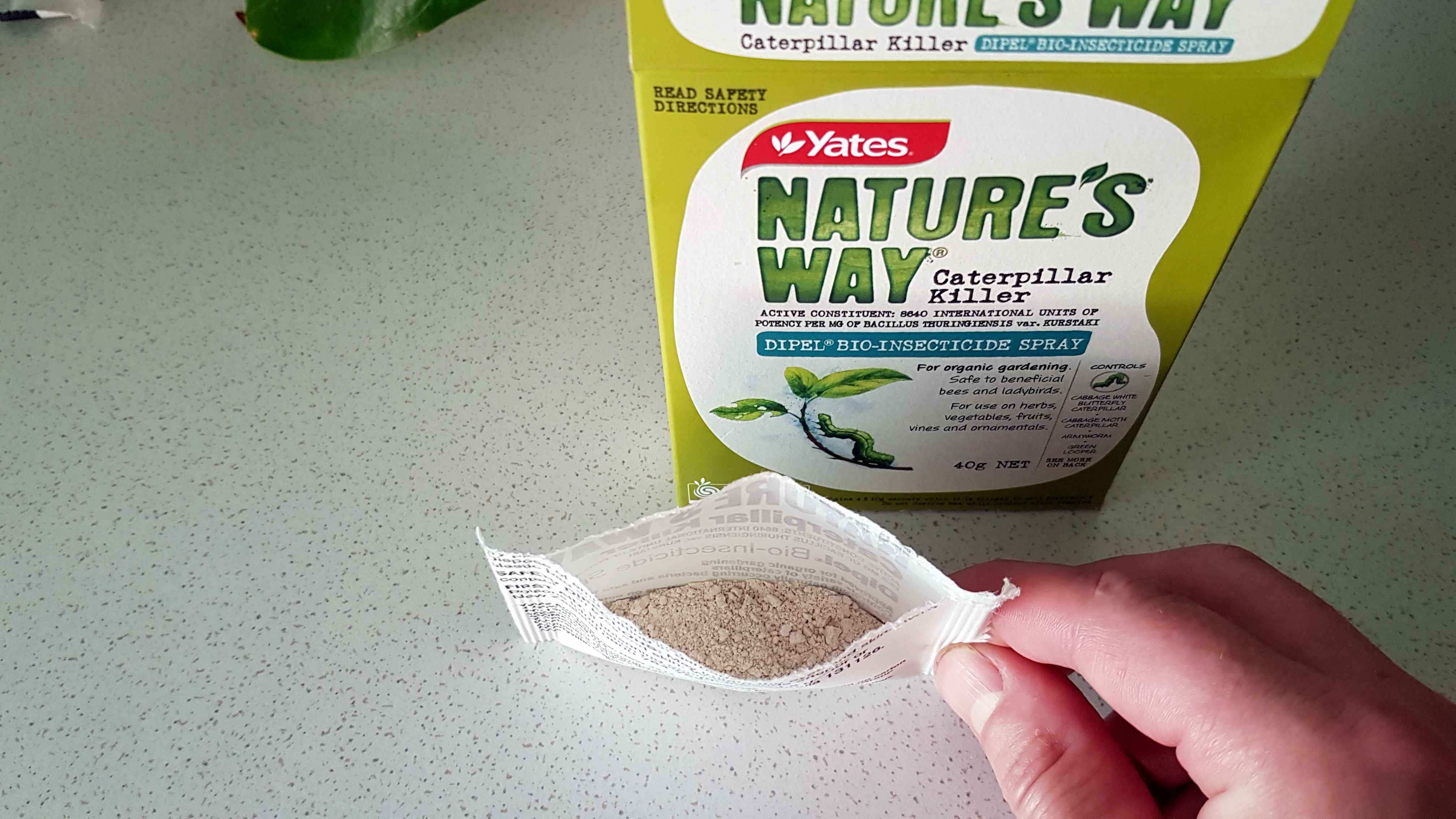
I don’t know why it has taken me so long to use this method of controlling that most common of gardening’s BadCritters, the pesky caterpillar.
Whilst I will still more often than not reach for the pyrethrum spray, Dipel has a place in my garden shed from now on. It comes in a powdered form and is not the bacteria (Bacillus thuringiensis) itself but the crystalised toxins it produces. These toxins disrupt the caterpillars’ digestive tracts as they eat the leaves of your vegetables. They stop eating and starve to death.
You don’t need to worry about hurting bees and other GoodCritters with this spray though. They are in little danger as they don’t ingest enough of the toxins ie they are not munching the leaves.
It might take a few days for you to notice dead caterpillars and see the return of vigour to your leafy greens in particular. I spray every 10 days or so over the summer months.
As always, take care of yourself and others. Wear safety glasses, a mask and gloves when applying any garden spray.
I have you now BadCritter:
Enjoy,
PK
Related Links:
- see more insecticide posts here
Please consider subscribing to get a weekly email summary of our posts.
[mc4wp_form id=”15771″]
Written by
·
-
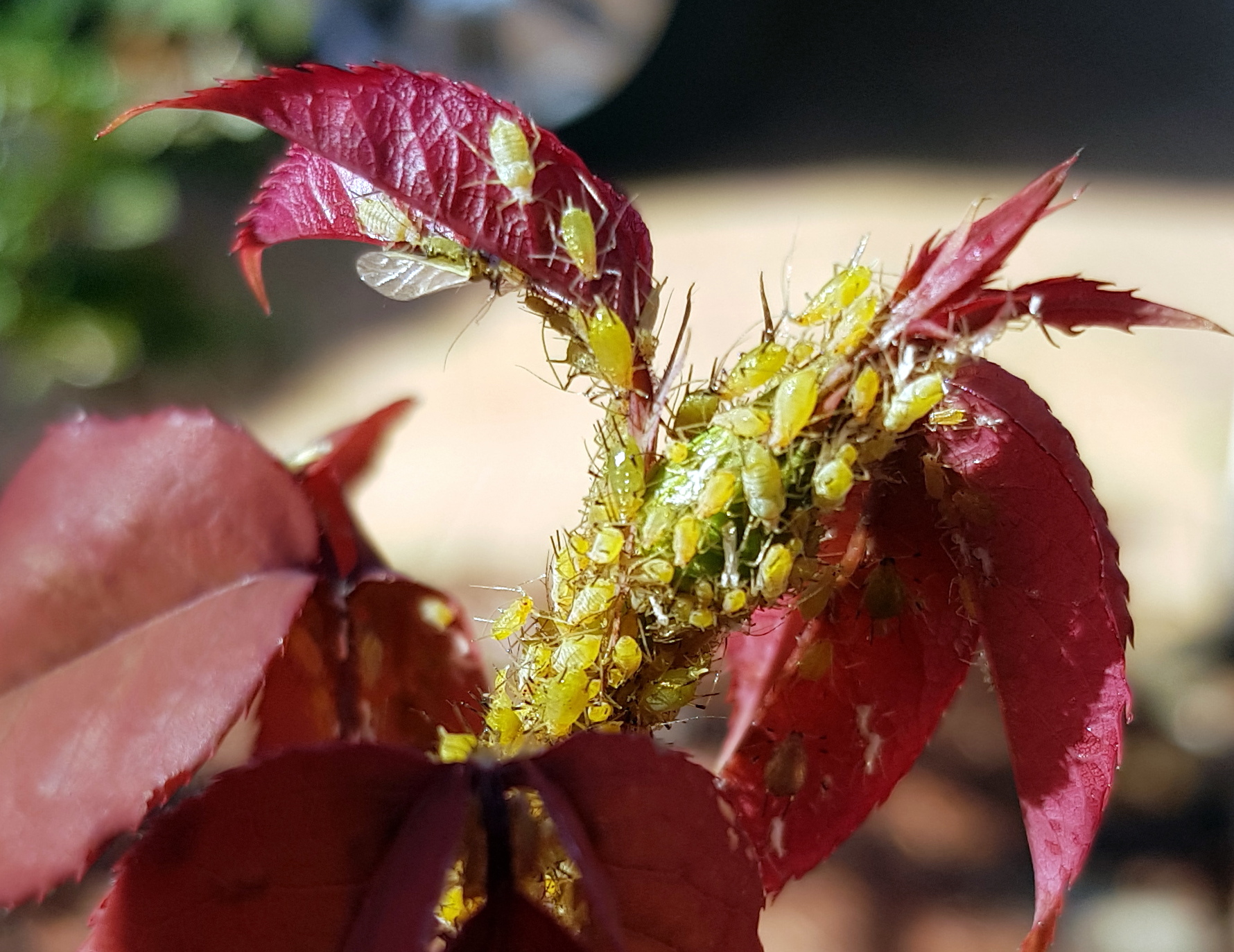
BadCritters: Aphids
These little plant suckers are often not noticed until their numbers are out of control. Another sign is that are often seen with ants that are “herding” them for the honeydew the aphids secret.
Species:
One of the many in the aphid superfamiy Aphidoidea.
Identification:

Damage:
Aphids suck the goodness out of the plants and this leads to them being in poor health. The honeydew they secrete attracts ants and fungal diseases and the holes they put in the plants can let in viruses.
Control:
I have only had a few infestations that my ladybird friends could not handle. In those cases I have used pyrethrum spray. I wait until my bee friends have gone to sleep though.
You can also use bio-oils or a good spray with the hose pipe will knock them off the plants.

More Resources:
Please consider subscribing to get a weekly email summary of our posts.
[mc4wp_form id=”15771″]
Written by
·
-

BadCritters: Common Garden Weevil
I actually think these little guys are cute but they still get an automatic squishing when I find them munching on my edible plants 🙂 .
They leave tell tale little holes in the leaves of your greens, fruit trees, strawberries, beans, peas and the like.
Their grubs live under ground munching on plant roots.
Species: Otiorhynchus sulcatus
Identification:
Damage:

Control:
I am lucky in that I have only experienced very light infestations. Prevention is best because removing whole plants is often the only solution to heavy infestations.
Here are some tips:
- Keep weeds down and hence reduce a food source for weevil larvae.
- Visual inspection of the top and bottom of leaves and removing adults helps break the cycle. I squish them and push them into the soil so their bodies are added to the soil mix or you could throw them to your chooks.
- I find that spraying pyrethum keeps the adults off the leaves.
More Resources:
- More on weevil damage
- See more BadCritters here
Please consider subscribing to get a weekly email summary of our posts.
[mc4wp_form id=”15771″]
Written by
·
-

BadCritters: Small Pointed Snail
I don’t see many examples of this very shy BadCritter in my garden but I suspect there are lots of them hidden in the leaf litter. This one was munching on some radish leaves and his friends will like all of your leafy green edibles. Shame they are so cute but they are my radishes 🙂 .
Species: Cochlicella barbara
Identification:
Adults are only a few millimetres long.

Damage:
I think they are only a minor problem. I think they eat more detritus than greens.
Control:
Visual inspection of the top and bottom of leaves and removing them is generally sufficient. I squish them and push them into the soil so their shells are added to the soil mix.
More Resources:
- See more BadCritters here
Written by
·
-

BadCritters: Tiger Moth Caterpillar
The caterpillar of this BadCritter will munch your salad greens just as happily as your non-edibles. Their hairy bodies have given them the nickname ‘woolly bears’.
I picked the caterpillar below of my snow pea plants and after its photo shoot it got dispatched 🙂 .
Bit of a shame as they are amazing to watch and the moth is attractive too.
Species: Ardices glatignyi
Identification:


Damage:
The caterpillars are voracious munchers of many trees, shrubs and vegetables found in the home garden.
Control:
Visual inspection of the top and bottom of leaves and removing any caterpillars is generally sufficient. You can buy traps and insecticides but I have never needed to use them.
More Resources:
- Check out this great resource http://lepidoptera.butterflyhouse.com.au/arct/glatig.html
- See more BadCritters here
Youtube:
Written by
·
-
Bucket Pond Make And Manage
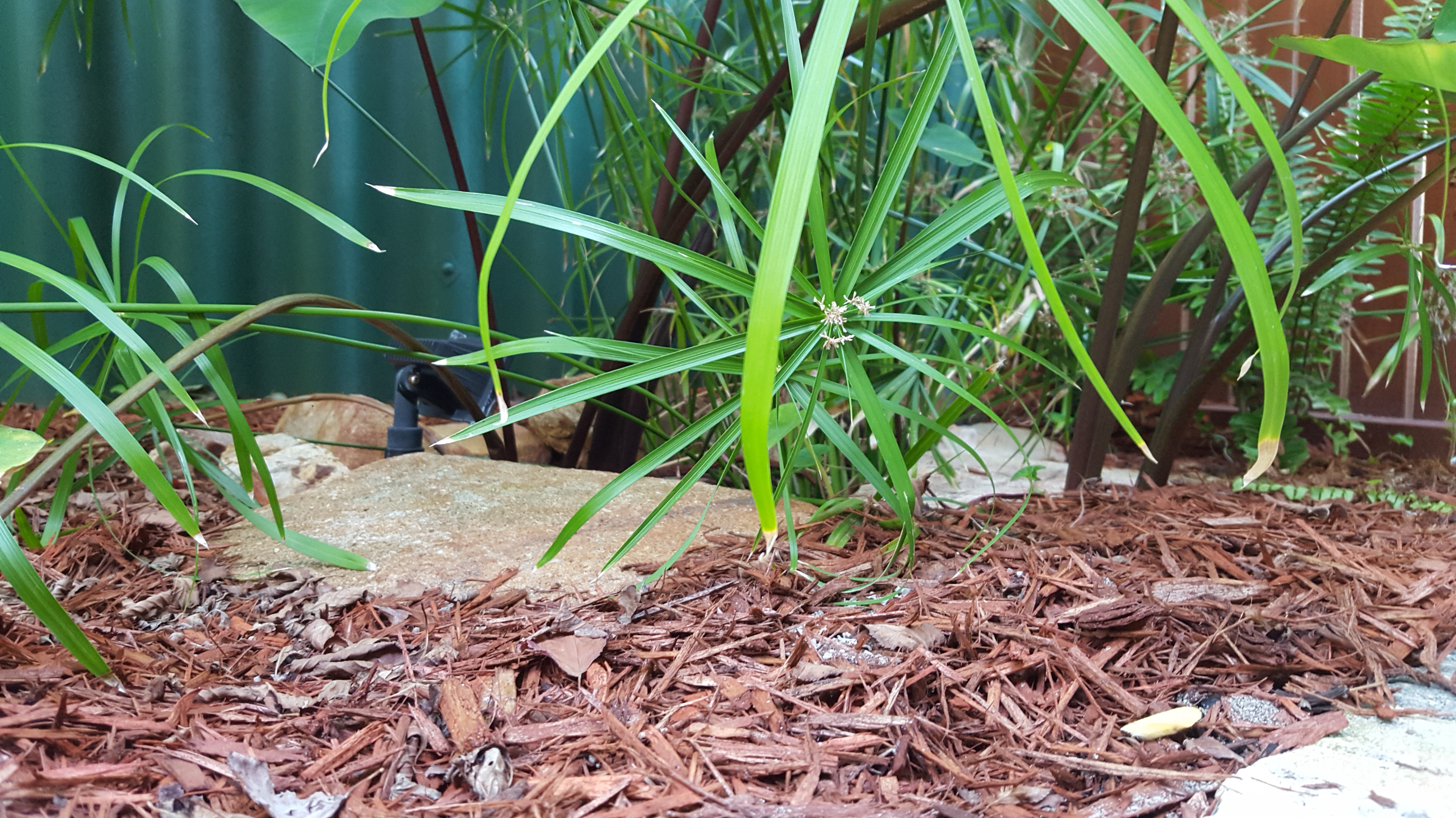
I just can’t bring myself to like mosquitoes. They suck your blood, make you itch and can give you some nasty diseases. Certainly entry grounds into my BadCritters club :).
So I take much pleasure in my bucket pond’s mosquito killing power. It was so easy and cheap to make. Maintenance varies from rarely to almost never but if you did do a water change you will get some nutrient rich water for your vegetable garden.
Here is how:
- Get two cheap round plastic pots (that are the same size and stackable) and some plastic pond lining from Bunnings or the like.
- Dig a hole and place one pot inside the other, making sure they are flush with the surrounding soil and level.
- Fold the liner over so it is double the thickness, then drape it over and into the top pot.
- Do a rough cut of the excess plastic now but not too much because when you add the water, the pond liner will flatten out and drop further into the pots. Besides, you will want some excess liner to sit under the rocks that you will add later for visual appeal.
- Slowly fill the bucket pond half full with water, letting the liner flatten and even out. You will get a fold, due to the square plastic sheet going into a round pond, so try and place it in a inconspicuous location. When the vegetation grows you won’t see it so don’t worry too much about it for now.
- Add several small water plants and some river stones into the pond’s base. The stones hold the plants in place and are an important part of the bacterial cycle that cleans the water.
- Place rocks around the edge and backfill with gravel, mulch or sand.
- Fill the bucket pond to the brim with water.
- Leave the water for several days or weeks until mosquito larvae are present. This indicates that the water is ready for fish to be added.
- Add cold water tolerant fish and watch as they smash the existing mosquito larvae.
I populated the bucket pond with White Cloud Mountain Minnows to eat any new mosquito eggs and to feed the pond plants with their waste.

They are a hardy fish regarding temperature and water conditions plus they swim on the surface. This is important because that is where the mosquito larvae live and the pond gets very little natural aeration. When I refill the bucket pond (in Perth evaporation can be severe so this action is every few days) I use a strong stream from the hose and make sure it aggressively breaks the water surface. That is all I do as far as re-oxygenation and water changes are concerned.
I don’t feed them as I want them to mostly eat mosquito larvae and the excess algae that grows during the summer months. There are visual signs that this system works. The water stays clear even in the sunny months and minnow fry can occasionally be seen swimming alongside their parents.
My pond also has a metal grill over the top to make it safe for small humans :).
Enjoy,
PK
Written by
·