Tag: asian greens
-
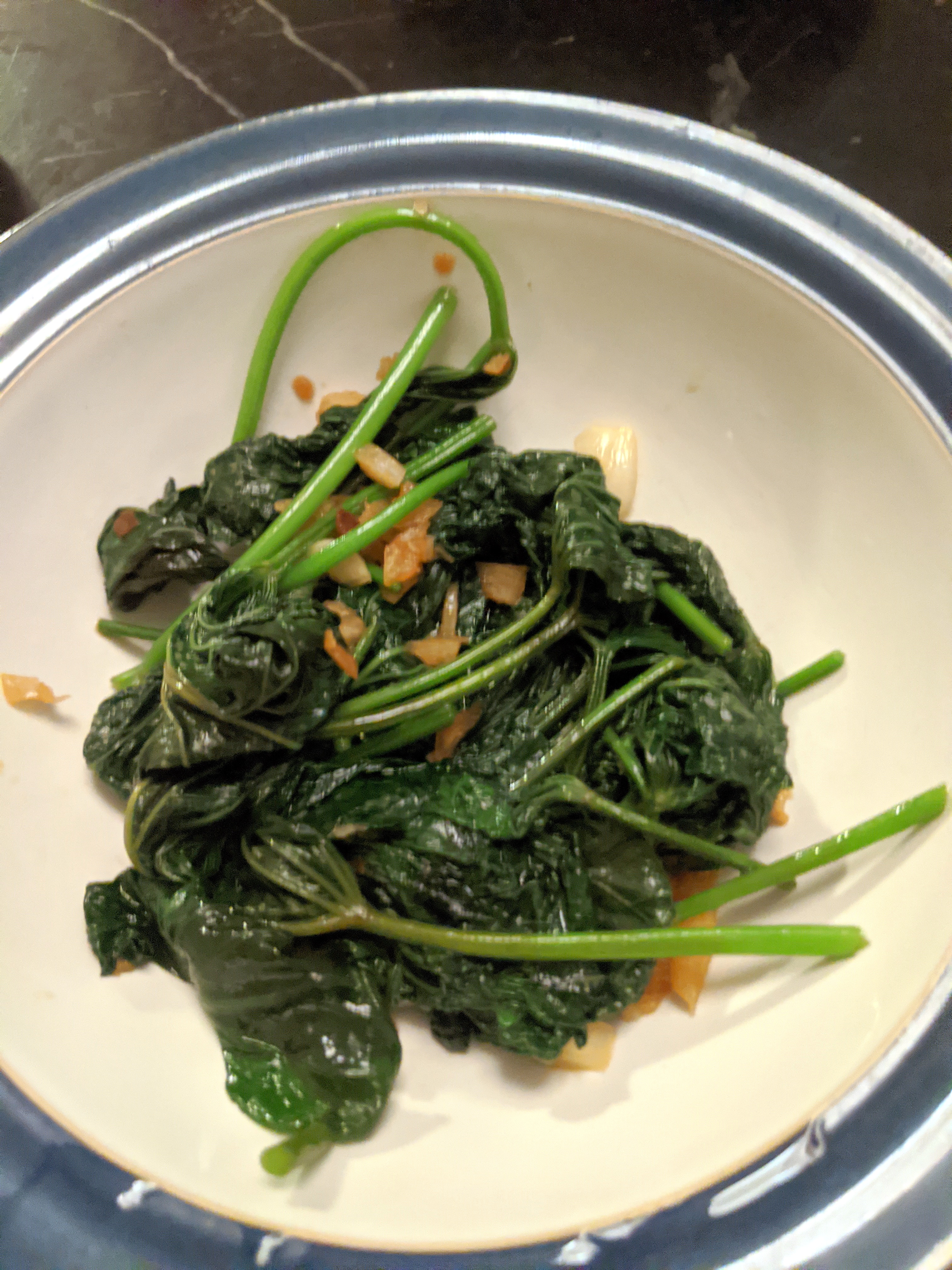
Bish’s Sweet Potato Surprise
I have grown plenty of sweet potatoes in my gardens over the years, and they’re really easy to grow generally, although I’ve had hit and miss crops from them in terms of the potatoes themselves.
But this year, when faced with a sprouting sweet potato in the cupboard, I decided to try something different, and to instead grow it for the leaves, which I didn’t realise were edible. And I’m really glad I did it.

The other night, I harvested a bunch of the smaller leaves off a bunch of runners in the pot, and trimmed them off the main stalks – so I had a bunch of leaves with stems attached, as you can see in the pictures of them in the bowl for washing. I washed them well, a few times, to make sure they were clean, and then I stir fried them.

I used what I had in the cupboard – so in this case it was a couple of cloves of garlic , which I let fry up a bit until they were nice and crunchy, and then tossed in the leaves, along with a splash of soy sauce and sesame oil. Once the leaves had wilted down, I grabbed them out and immediately served them as a side to a separate red curry I had made. The taste is a bit like spinach, and the texture reminds me of kang kong, another of my favourite asian greens.


It was a nice little addition to dinner – and afterwards when my wife told my mother-in-law (who is Chinese Malaysian, and is who I get a lot of my cooking inspiration from), she said they used to do it a lot, and she had forgotten it! So I got a few brownie points with her as well.
It’s a fast growing, prolific vegetable that I reckon is worth a try for both the leaves and the tubers themselves.
Bish
Here is some more from Josh and other baked goodies:
Written by
·
-
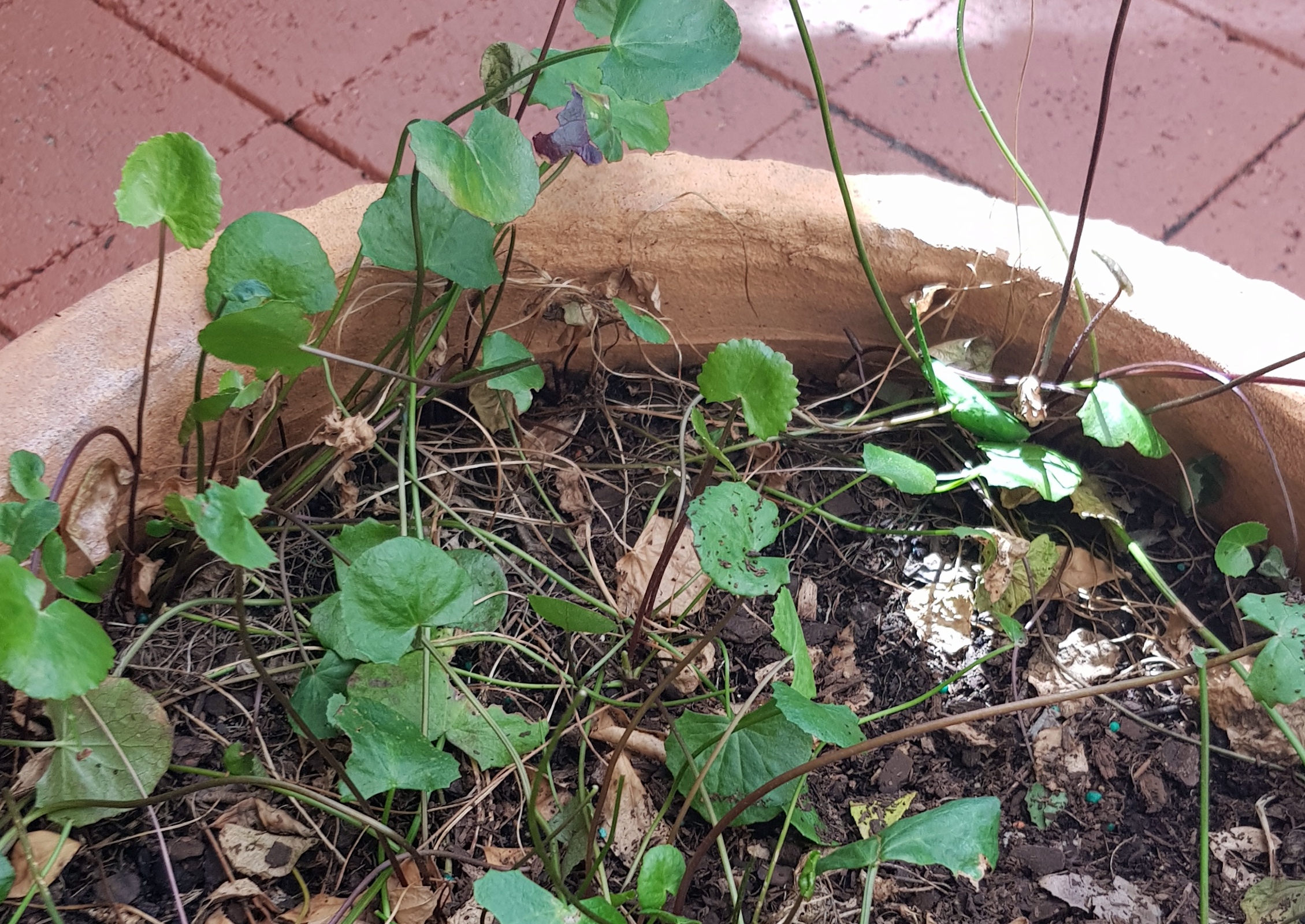
Gotu Kola
Gotu Kola is a herbaceous perennial native to Asia that can be grown as a ground cover or in a pot. It is often used in cooking as you would a leafy green in curries or soups. It can be eaten raw by itself or in a salad for that bit of zing.
It also has a reputation for its health benefits, especially aiding memory and relieving arthritis symptoms (hence one of its other common names, ‘arthritis herb’).
Taste/Aroma:
Gotu Kola is slightly bitter at first and then you quickly notice the astringent qualities. Eaten raw it leaves you with a pleasant tingle for several hour. It reminds me of Sichaun peppercorns in that respect.
Plant:

Planting/Care:
Please see the link at the bottom of the page for when to grow this plant in my Grow It Perth calendar.
Find a semi-shaded position in your garden with draining soil. The soil doesn’t need to be rich either.
In Perth the full sun tends to kill the leaves off and I suspect it will appear to die off in the coldest part of winter but will regrow when spring returns.
Related Links:
- go to all meal ingredients here
- go the Grow It Perth calendar
- see a work in progress map of edible plant species here
Please consider subscribing to get a weekly email summary of our posts.
[mc4wp_form id=”15771″]
Written by
·
-

Tatsoi
What a great addition to any salad or stir fry. It brings a little variety and that is great for your diet.
Tatsoi is an Asian cultivated variety of the same species as Komatsuna but with a subtler taste. I grow it as a ‘cut and regrow’ plant next to my other salad greens.
Taste/Aroma:
A very faint mustard aroma and taste. Very crisp punchy after taste but not a strong as rocket.
Plant:

Grow It Perth

Planting/Care:
Very easy to grow in rich friable soil. Occasionally use liquid fertiliser or pellets designed for use on vegetables. Nitrogen is useful when growing plants for their foliage.
You will get the normal suite of BadCritters such as caterpillars, weevils and the like. Visual inspection, keeping weeds down and eating the leaves before they do is the key 🙂 .
Related Links:
- see more asian green posts here
- go to all meal ingredients
- go the Grow It Perth calendar
Written by
·
-

Komatsuna
This really easy to grow leafy green will add that bit of special to your salads and stir fries. Use it as a substitute for spinach or along side. It is also called Japanese mustard spinach and is heavily used in Japan and throughout Asia.
I grow grow both green and red varieties (plants are about 10cm tall) and pick the leaves when they are still young.
Taste/Aroma:
Whilst the leaves look and smell like spinach their stronger taste is more like Mizuna and leaf beets,
Plant:

Grow It Perth
Planting/Care:
Very easy to grow in rich friable soil. Occasionally use liquid fertiliser or pellets designed for use on vegetables. Nitrogen is useful when growing plants for their foliage.
You will get the normal suite of BadCritters such as caterpillars, weevils and the like. Visual inspection, keeping weeds down and eating the komatsuna leaves before they do is the key 🙂 .
Related Links:
- see more asian green posts here
- go to all meal ingredients
- go the Grow It Perth calendar
Written by
·
-

Mizuna
This fancy looking asian green is a nice compliment or alternative to rocket in your green salads. It is so easy to grow and I used seeds from a mixed sprouts pack. It is also prized in Japanese dishes.
Taste/Aroma:
Tender texture and mildly peppery.
Plant:
Harvesting Months:
- All year
Planting/Care:
I planted them a spot that gets full sun (in both summer and winter) and has well draining rich soil. I have them planted intermingled with Choy Sum and english spinach.
Simply harvest the leaves as you need them and new shoots continue to come up.
Related Links:
- see more mizuna posts here
- see more asian greens here
- go to all meal ingredients
- go the Grow It Perth calendar
Written by
·
-

Choy Sum
One of my favourite asian greens and I eat it raw and in stir fries. It is very easy to grow, harvest and then retain the seeds for the next planting. Initially I used Mr Fothergill’s seed tape product. See http://www.mrfothergills.com.au/seeds-vegetables/vegetable-seeds/asian-greens-seeds.html.
Taste/Aroma:
New growth sweet tasting and very mild. Older leaves can be a bit bitter raw but fine cooked.
Flower:

Fruit/Seeds:


Plant:

Harvesting Months:
- March
- April
Planting/Care:
I used Ben’s tip for collecting seeds using a plastic bag:
Keep this plant well harvested to encourage young growth. When you are ready let it go to seed, in my case around November 2016.
Related Links:
- see more choy sum posts here
- see more asian greens posts here
- go to all ingredients
Written by
·