Category: growing
-

PK Reviews: Nylex 1.5L 360° Garden Sprayer
Product ranges get an automatic tick of approval from me if the bottom end of the range far exceeds expectations. The Nylex Garden Sprayer range is the perfect example of this. I am reviewing several of their models starting with the Nylex 1.5L 360° Sprayer which is my latest purchase. See the other reviews here.
I couldn’t be more pleased with it.
This pressure sprayer is perfect for spraying chili plants and tomato plants, for example, where you only want small quantities of solution but you need to get the underside of the leaves too. A trigger spray (although Nylex makes good/affordable versions of these) is not going to suffice as they can’t spray upside down. Turning the leaves is going to end up getting spray on you and also leaf/foliage damage.
Note: This is not a paid post.
Product Reviewed:
- Nylex 1.5L 360° Garden Sprayer
Pros:
- Very good build quality for a very low price
- 2 year warranty on the UV resistant plastic
- Feels balanced in the hands
- Adjustable nozzle from mist to stream
- Lockable trigger
- Easy to read 1.0L and 1.5L marks so you can easily mix your concentrate solutions
- Filter mechanism avoids blockages
- Spare o-rings etc are available
Cons:
- Not as versatile as a pressure sprayer with a wand for plants with dense foliage
- Lack of tag or other method to communicate purpose/type of the contents e.g. fungicide vs insecticide
Availability:
- Available at your local Bunnings https://www.bunnings.com.au/nylex-1-5l-360-garden-sprayer_p2961996
The Verdict:
Great product at a very reasonable price and small enough to store when not in use. Build quality is high and you should get many years out of it.
If you have any questions about the product range I recommend contacting the Nylex team at http://www.nylexwatering.com/contact-us/
Hope this review helps and feel free to send me any comments or corrections.
Enjoy,
PK
Hope this review helps,
PK
Related Links:
- See more Nylex posts here
- See our other product reviews here
- See more growing, catching and cooking equipment here
Please consider subscribing to get a weekly email summary of our posts.
[mc4wp_form id=”15771″]
Written by
·
-

Mole Crickets
The elusive mole cricket, Gryllotalpa pluvialis, caught by one of my boys. Love these things.

Males sing at the entrances of vertical burrows specially shaped to amplify their songs. Singing characteristically commences at dusk and usually ceases within a few hours. The songs of mole crickets are deeper than those of typical crickets and many people have attributed them to frogs.
This species has a strident, rapid, chirping song that can be quite intrusive whereas the other introduced species has a slower, quieter trill. Do you have these in your garden?
Dr C.
Written by
·
-

Choy Sum
One of my favourite asian greens and I eat it raw and in stir fries. It is very easy to grow, harvest and then retain the seeds for the next planting. Initially I used Mr Fothergill’s seed tape product. See http://www.mrfothergills.com.au/seeds-vegetables/vegetable-seeds/asian-greens-seeds.html.
Taste/Aroma:
New growth sweet tasting and very mild. Older leaves can be a bit bitter raw but fine cooked.
Flower:

Fruit/Seeds:


Plant:

Harvesting Months:
- March
- April
Planting/Care:
I used Ben’s tip for collecting seeds using a plastic bag:
Keep this plant well harvested to encourage young growth. When you are ready let it go to seed, in my case around November 2016.
Related Links:
- see more choy sum posts here
- see more asian greens posts here
- go to all ingredients
Written by
·
-

Chili Pepper: Yellow Wax
This plant is a vertical powerhouse and a really heavy producer of yummy mild chilis. Their addition to a green salad will add a bit of variety and might even wow your friends.
Taste:
Sweet and mild. Definitely not a capsicum though. Add slices to salads for a bit of a change but my favourite is stuffed with creme cheese and munched whole :).
Flower:

Fruit:

Plant:
Fruiting Months:
- January
- February
- March
- April
- December
Planting/Care:
I keep it topped to encourage flowering but also stop it shading its neighbours.
No need to wait for them to turn yellow in every case. Light greens as just as tasty.
Scale:

Related Links:
- see more posts about growing chilis here
- see more cooking with chili posts here
- go to all ingredients
Written by
·
-

Chili Pepper: Trinidad Scorpion Butch T
At 1.46 million Scoville heat units this wee red beastie packs a punch :).
It was derived from the Trinidad Scorpion (so called because the end of the chili looks like a scorpion stinger) and was originally propagated by a Mr Butch Taylor. It held the hottest chili record for a few years.
Most of my internet friends have suggested I toughen up and try one :). However as I max out at eating fresh whole cayennes, I really liked one person’s suggestion of using dried pods in my cooking. I have captured it here as a FoodHack.
This plant is a a spreader rather than a vertical powerhouse and is a really heavy producer.
Flower:

Fruit:

Plant:

Sprouts:

Source: Christhefuzzy via wikipedia.
Dried Pods:

Fruiting Months:
- March
- April
- May
Jobs:
My pods got hit hard by grubs in April 2017 so I sprayed with pyrethrum. This worked a treat and I got lots of large healthy pods through the rest of April through to the first week of June.
Scale:
Related Links:
- see more posts about growing chilis here
- see more cooking with chili posts here
- go to all ingredients
Written by
·
-

Bish’s Basil Pesto Experiment 1
I have two large planter boxes at the edge of our patio that are where I grow my herbs, along with a long thin veggie patch against a fence. Luckily this space is enough for me to play around with some different herbs and veggies.
Giving the long thin veggie patch a bit of a spruce:
Lately we’ve had a surfeit of basil in one of the planter boxes (the other is full of mint) and after some prompting we decided we’d have a go at making pesto.

After picking and washing a heap (and returning a few little spiders back to the patch) we decided we’d try to make a couple of varieties.
The first one we started with basil in a stick blender attachment, and poured in olive oil. It mulched the basil more than anything else, but as we added pine nuts it started to blend down a bit more. Adding some spring onions as a test didn’t help with the mulch-like consistency, though. That wasn’t a great experiment, especially when I didn’t close the blender attachment properly and got it all over myself, the kitchen bench and floor…
The second batch started with four cloves of garlic, and some olive oil. This went into a nice creamy paste quickly, and we added some more pine nuts and then started to add in some basil. This created a much creamier pesto, which went a vibrant light green pretty quickly. Unfortunately, 4 cloves of garlic is a bit much… it’s more like a garlic sauce.
On an earlier trip out that day I’d bought a couple of flip-top seal jars, and after they’d been washed and dried out I loaded up the basil into one each.

I was pretty chuffed with this, but anywhere where there is air (you can see the bubbles) went brown within minutes . I had poured some oil on top to help seal it away from the air but didn’t think about these little air pockets.
A week later we’ve been using the pesto in various dishes (pasta, mainly) but each time we have to scoop out the unsightly brown bits. It’s a bit of a pain, but it doesn’t take away from the taste. The next trick we will try is to blanche the basil and dry it before we turn it into pesto – this should help as the heat will destroy the enzymes that react with oxygen to cause the brown discolouration.
It’s not like we don’t have heaps more basil to test it on, anyway…
Bish
Related Links:
- see more of Bish’s posts here
Please consider subscribing to get a weekly email summary of our posts.
[mc4wp_form id=”15771″]
Written by
·
-

Chili Pepper: Trinidad Scorpion Cardi
Now we are getting into crazy hot territory :).
I have read that this variety was developed by the Caribbean Agricultural Research and Development Institute hence the CARDI part of the pepper’s name :). The scorpion part is because the end of the chili looks like a scorpion stinger.
Most of my internet friends have suggested I toughen up and try one :). However I liked one person’s suggestion that I have captured here as a FoodHack.
This plant is a a spreader rather than a vertical powerhouse.
Flower:

Fruit:
Immature:

Mature:

Plant:

Fruiting Months:
- November
- December
- January
- February
- March
- April
Position:
Full scorching hot Perth sun!
Jobs:
- Keep it lightly pruned to encourage flowering
- My TS Cardi and Jalapeno pods got hit hard by grubs in April so I sprayed with pyrethrum
Tomato worm damage:

Scale:
GICICI Grown Plants
[table id=chilis /]
Related Links:
- see more posts about growing chilis here
- see more cooking with chili posts here
- go to all meal ingredients here
- go the Grow It Perth calendar
- see a work in progress map of edible plant species here
Written by
·
-
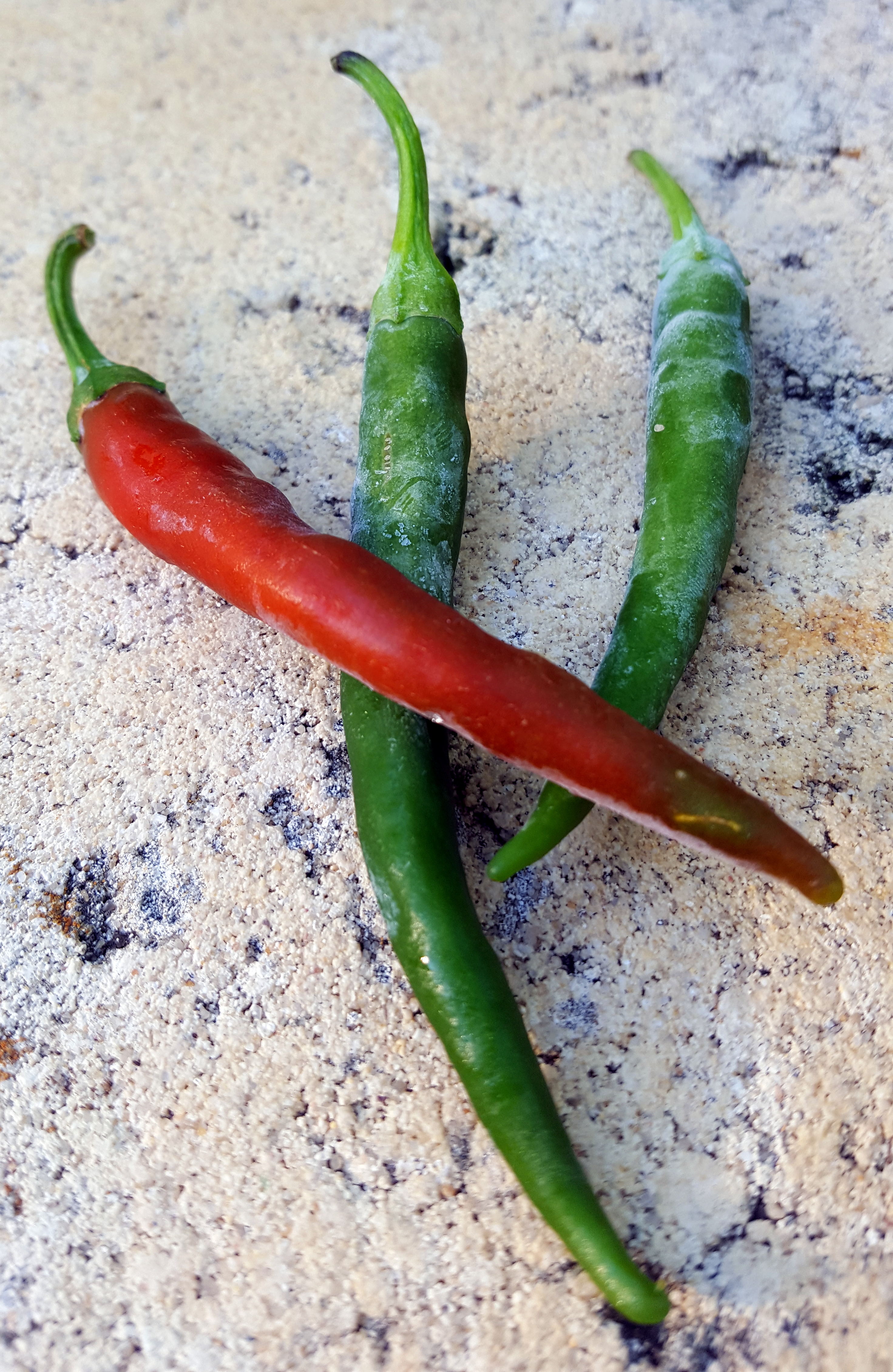
Chili Pepper: Cayenne
My second favourite chili is the humble Cayenne pepper, allegedly named for the city of Cayenne, the capital of French Guiana.
Although hotter than a Jalapeño I think it smells amazing and very distinctive. I love them green or red and ripe. This is where I max out chili-wise by the way. I am training myself but I just turn into a pool of sweat :).
Use them fresh, dried or powdered in soups and curry pastes. They are very versatile.
Flower:
Watch this space 🙂
Fruit: (sorry these are frozen hence the ice marks)

Plant:

Perth Fruiting Months:
- January
- February
- March
- April
Position:
Full scorching hot Perth sun!
Jobs:
I keep it topped to encourage flowering.
Scale:
Related Links:
- see more posts about growing chilis here
- see more cooking with chili posts here
- go to all ingredients
Written by
·
-
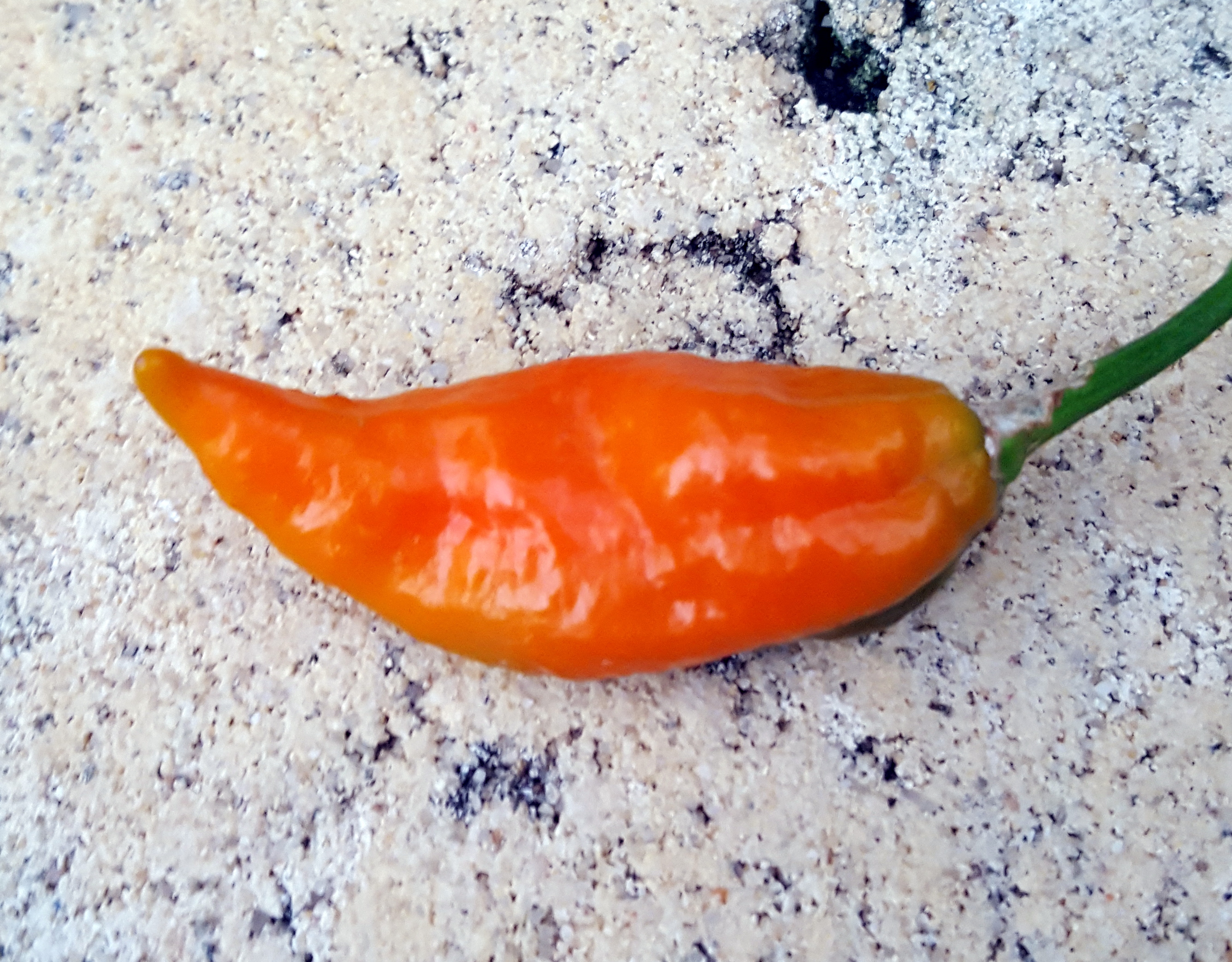
Chili Pepper: Bhut Jolokia
Not for the faint hearted :O.
I spent half an hour feeling quite ill after try some ghost pepper sauce once. So be careful!
I am only growing them to give to Ben who guests posts on this blog and facebook for me :). I am going to get him to describe the taste if he is game, they are 1,000,000 scovilles after all.
UPDATE: Ben and I tried some yesterday and they really are very fruity. The heat gets you on the top of the tongue and the back of the throat. Seems my chili eating training is paying off :).
Some great gardeners on Facebook have told me they have a fruity flavour and really enhance a meal if you can stomach them :). I CAN CONFIRM!
Like the habanero plant that I have, it seems to spread out rather that shoot up. It is a very nice looking plant to boot.
Flower:

Fruit:

Plant:

Perth Fruiting Months:
- March
- April
Position:
Full scorching hot Perth sun!
Jobs:
Keep feeding it during the fruiting months with eco-seaweed (an Australian made product).

Scale:
Related Links:
- see more posts about growing chilis here
- see more cooking with chili posts here
- go to all ingredients
Written by
·
-
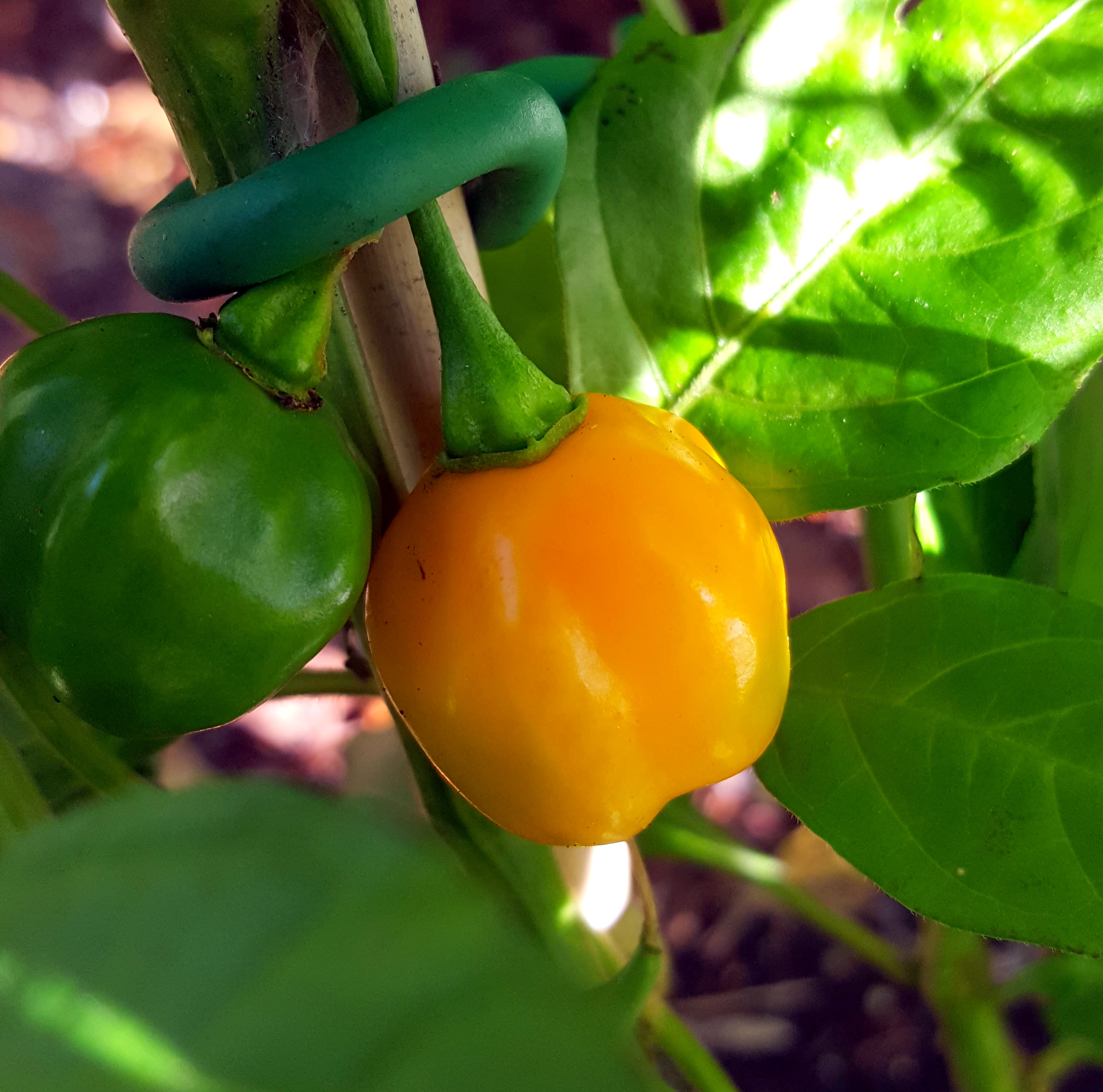
Chili Pepper: Habanero Orange
A beautiful looking and complex tasting chili pepper that is easy to grow. In Perth, Western Australia they are ripening in Summer and Autumn. The plant is a spreader rather than a vertical powerhouse.
Warning, they are hot :). I have also read that they impart a kind of apricot flavour.
Flower:

Fruit:

Plant:

Perth Fruiting Months:
December to April
Position:
Full scorching hot Perth sun!
Jobs:
I keep it topped to encourage flowering.
Scale:
Related Links:
- see more posts about growing chilis here
- see more cooking with chili posts here
- go to all ingredients
Written by
·