Category: growing
-
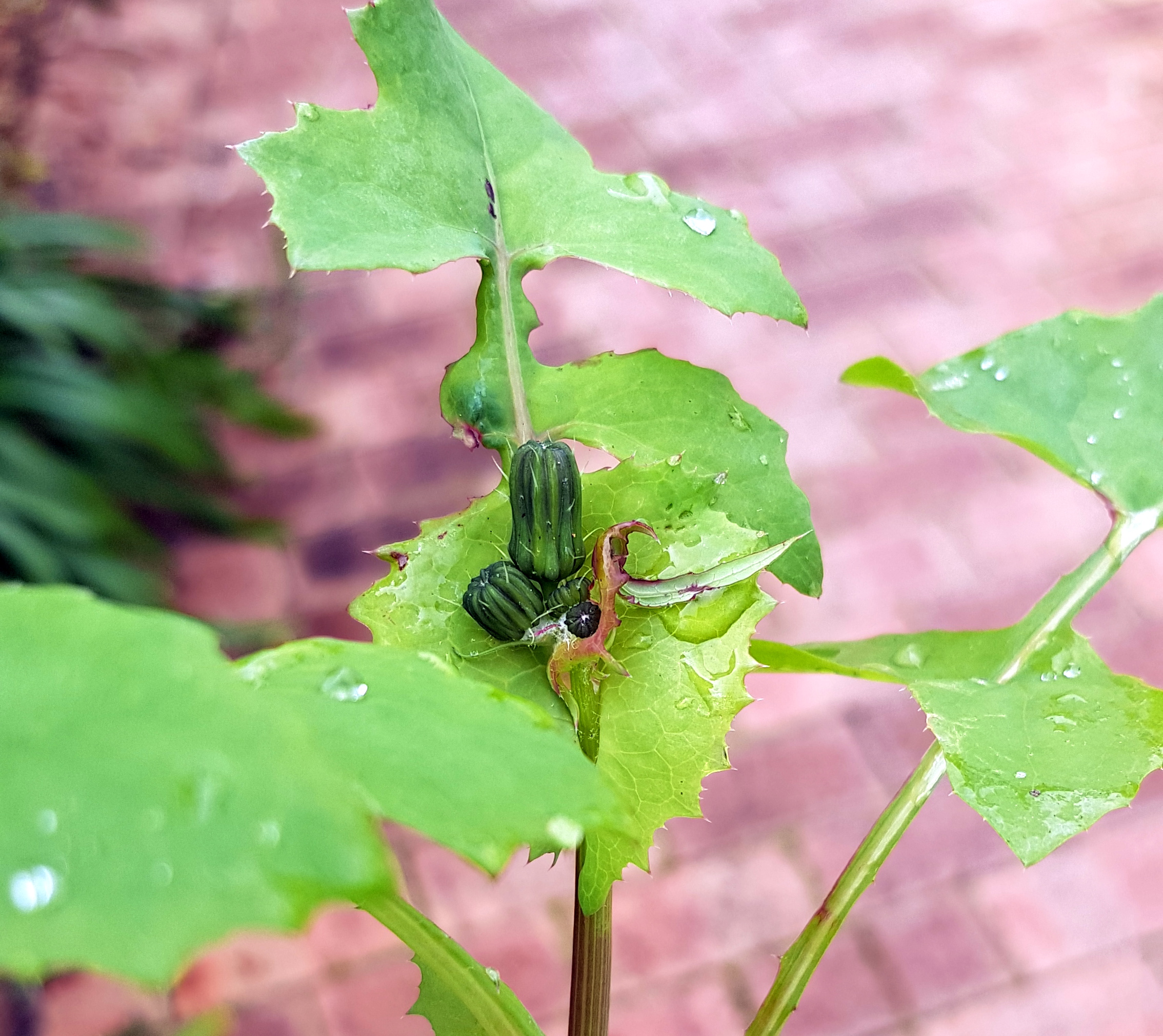
Environmentally Friendly Weed Control
I actually enjoy pulling weeds. I find it very relaxing and distracts me from the day’s little stresses.
Most people don’t and even for me when I am pushed for time the weed situation can get out of control. So I wanted to share a number of chemical free weed control methods I employ.
Till them into the soil
If I have a large area of weeds (of the type that don’t aggressively spread) I will turn them back into the soil with a hoe, or a rake or even a spade. Break the roots up enough and the weeds will break down and enrich the soil. At the very least you have thinned their numbers allowing for easier control of the rest.
Pull them and use in compost and worm farms
In my quest to keep up with my worm farms and compost bins I am always on the look out for new sources of vegetable matter. There is lots of conflicting opinion on using weeds in your compost. The fear being that the compost will then spread weeds anywhere you use it.
I only use the leafy varieties and not those that spread via runners and create a ground cover.
Pull seed pods off any weeds you are going to use or simply bypass them altogether.
If you are still worried you can make soup 🙂 . I have an old pot that I use for this purpose and it doubles as a collection bucket. I pop the weeds into it and then pour boiling water over them. I then put the pot somewhere safe from kids and the rain and allow to sit for a few days.
By then you will have a pile of sludge that can be poured into your compost bins and the like. The boiling water has rendered the weeds, any seeds or BadCritters you missed unlikely to cause you any trouble.


Boil them where you find them
This tip is great for those tenacious weeds growing in brick paving or growing right next to another plant. I guess you just have to weigh up for yourself the cost to the planet to use and boil the water vs the chemicals, water, power and plastic in a bottle of weed spray. For some that might not be worth the cost and I get that.
If you have any boiled water leftover in the kettle, simply pour it on the weeds where you find them until you see them blanch and wilt. This kills the weed and its roots outright and seems to inhibit the seeds too.

The effects are immediate.
Before:

After:

Hit them with white vinegar where you find them
White vinegar (not to be confused with white wine vinegar) can be used for so many purposes outside of cooking.
Try spraying weeds where you find them with straight vinegar or a vinegar and detergent mix. It knocks them around a bit.
Hope these tips help and please let me know your secret weed killing techniques 🙂
PK
Please consider subscribing to a weekly email summary of our posts or check us out on Facebook @growitcatchitcookit.
[mc4wp_form id=”15771″]
Written by
·
-
Bay Leaf Tree: Grow and Eat
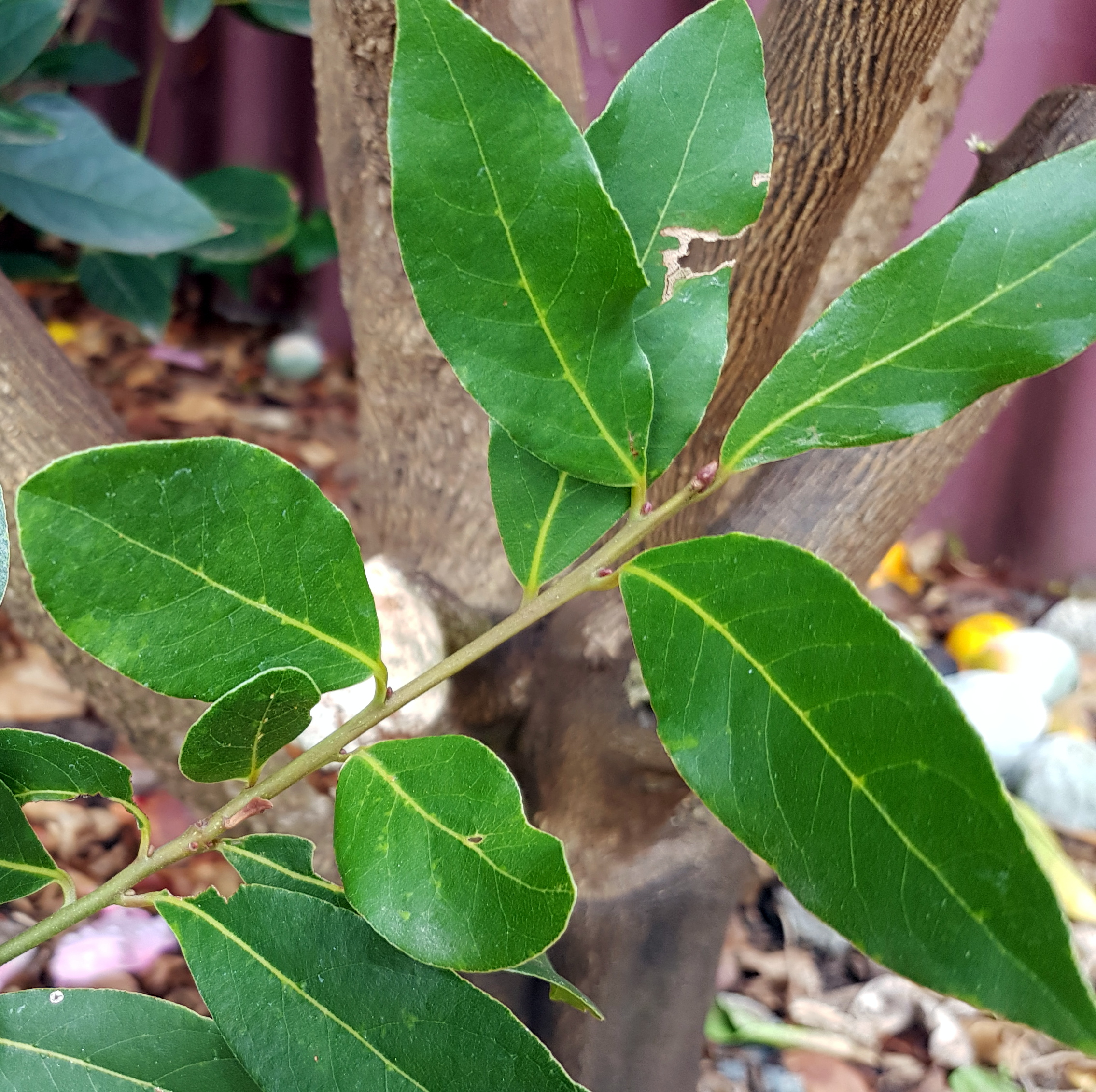
The humble Bay Leaf tree is a must have in a kitchen garden. Once you try fresh or freshly dried bay leaves in your cooking you won’t go back to the store bought version. Like many herbs, they lose their fullest, layer rich aroma and taste as they wait in transport and store shelves.

I normally use one or two small leaves fresh from the tree. I haven’t found them to be overpowering like some websites suggest.
I use them whole in stews, casseroles, curries, the list goes on. I always remove them post cooking (bouquet garni bags make this easier). They give the liquid in said dishes a earthy almost bitter tang. By itself this might not sound tasty but it works with the other ingredients to make a dish tastier than the sum of its parts.

I also recently got into bay leaf tea. It is a refreshing change despite it being reminiscant of a cup of mild green tea. It is like drinking the Aussie bush. 🙂

Dietary Info: Great for vegetarians, vegans and is gluten free.
This particular cooking ingredient is in PK’s Essential Pantry Cupboard Contents.
Enjoy,
PK
YOU MIGHT ALSO LIKE
MORE RECIPES USING BAY LEAVES
THE FULL GICICI INGREDIENTS LIST
MORE VEGAN , VEGETARIAN , GLUTEN-FREE INGREDIENTS AND MEALS
GICICI’S WHAT’S GROWING IN PERTH?
Follow these links to see what to plant in a given month or read my monthly journal where I talk about what I am doing, have learned and have harvested.
JANUARY’S PLANTS OR PK’s Journal
FEBRUARY’S PLANTS OR PK’s Journal
MARCH’S PLANTS OR PK’s Journal
APRIL’S PLANTS OR PK’s Journal
MAY’S PLANTS OR PK’s Journal
JUNE’S PLANTS OR PK’s Journal
JULY’S PLANTS OR PK’s Journal
AUGUST’S PLANTS OR PK’s Journal
SEPTEMBER’S PLANTS OR PK’s Journal
OCTOBER’S PLANTS OR PK’s Journal
NOVEMBER’S PLANTS OR PK’s Journal
DECEMBER’S PLANTS OR PK’s Journal
Please consider subscribing to a weekly email summary of our posts or check us out on Facebook @growitcatchitcookit.
[mc4wp_form id=”15771″]
Written by
·
-
Australian Finger Limes
I was very lucky to be bought one of these remarkable edible bushes a few years ago as a birthday present. They are an annual fruiting plant in the same genus as citrus and are native to Australia’s east coast.
The fruit is quite simply unique and you can believe the recent restaurant hype they have attracted. 🙂
So how do we grow and eat Australian finger limes?
Taste/Aroma:
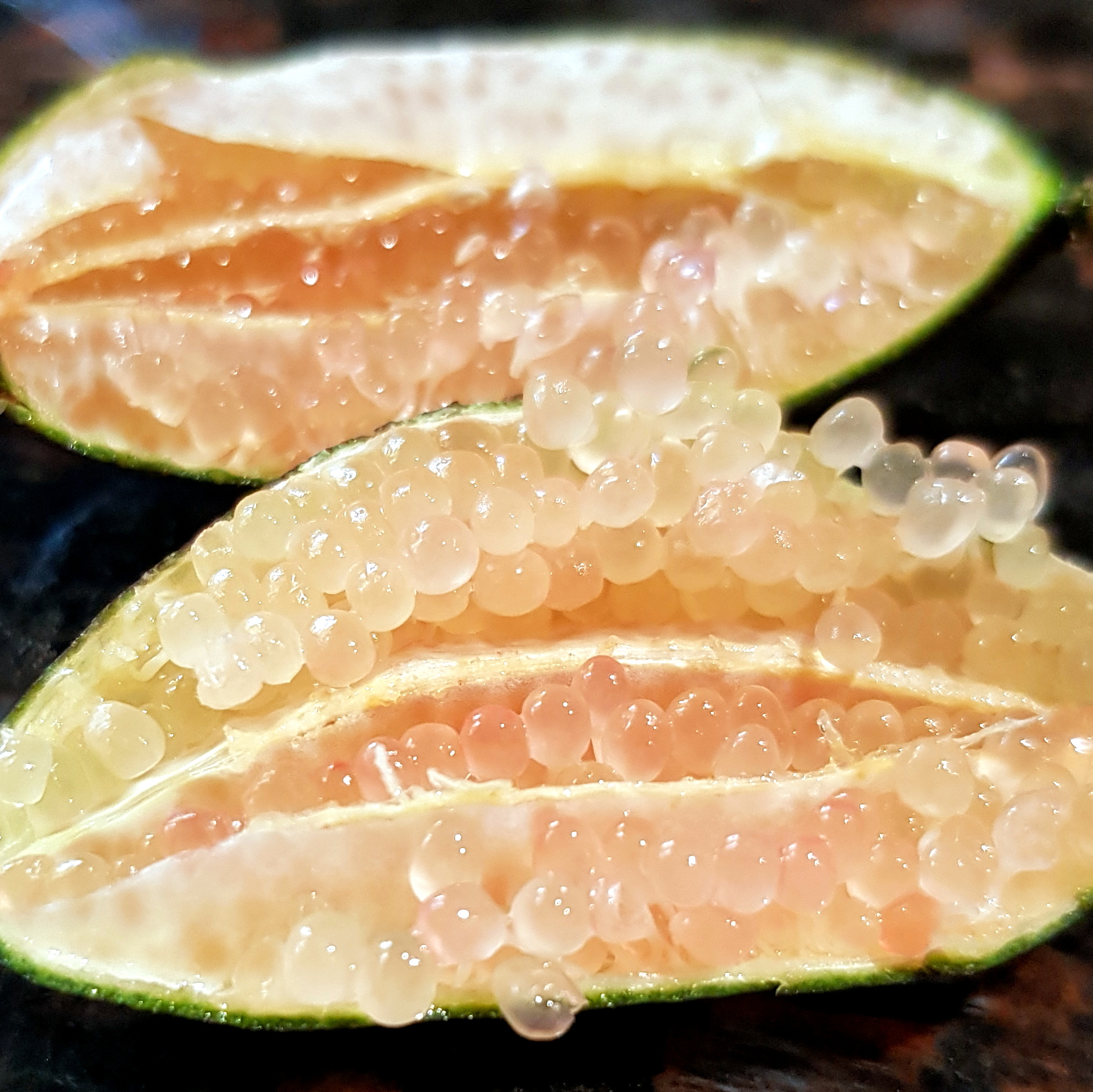
The long cylindrical fruit grows to about 6cm long and have a thickish green skin. These may turn brown as they ripen. Inside is the most amazing little globes filled with the most tangy juice you have ever eaten. These pop with a delightful crunch that makes you smile.
They smell and look amazing so I recommend you try them on their own or sprinkle the little globes over salads or cheese plates.

Flower:


Fruit:


Plant:
Planting/Care:
There is a school of thought that says these only fruit once every 2 years but I have had fruit every year on my 3 year old plant. I have had bumper crops and although it is April, I am still getting the odd fruit. If you are interested I keep monthly information Grow It Perth calendar (see link below).
It is in my standard soil profile which has organic matter, Perth sand and 10% clay by weight. I have fertilised with a standard vegetable raising fertiliser as opposed to a special native blend, with no problems. I also believe in several applications of wetta soil during spring, summer and autumn to encourage deep roots.
They can be hard to get in Perth so check your nurseries around January-February.
Enjoy,
PK
YOU MIGHT ALSO LIKE
THE FULL GICICI INGREDIENTS LIST
GICICI’S WHAT TO GROW IN PERTH GUIDE
Please consider subscribing to a weekly email summary of our posts or check us out on Facebook @growitcatchitcookit.
[mc4wp_form id=”15771″]
Written by
·
-
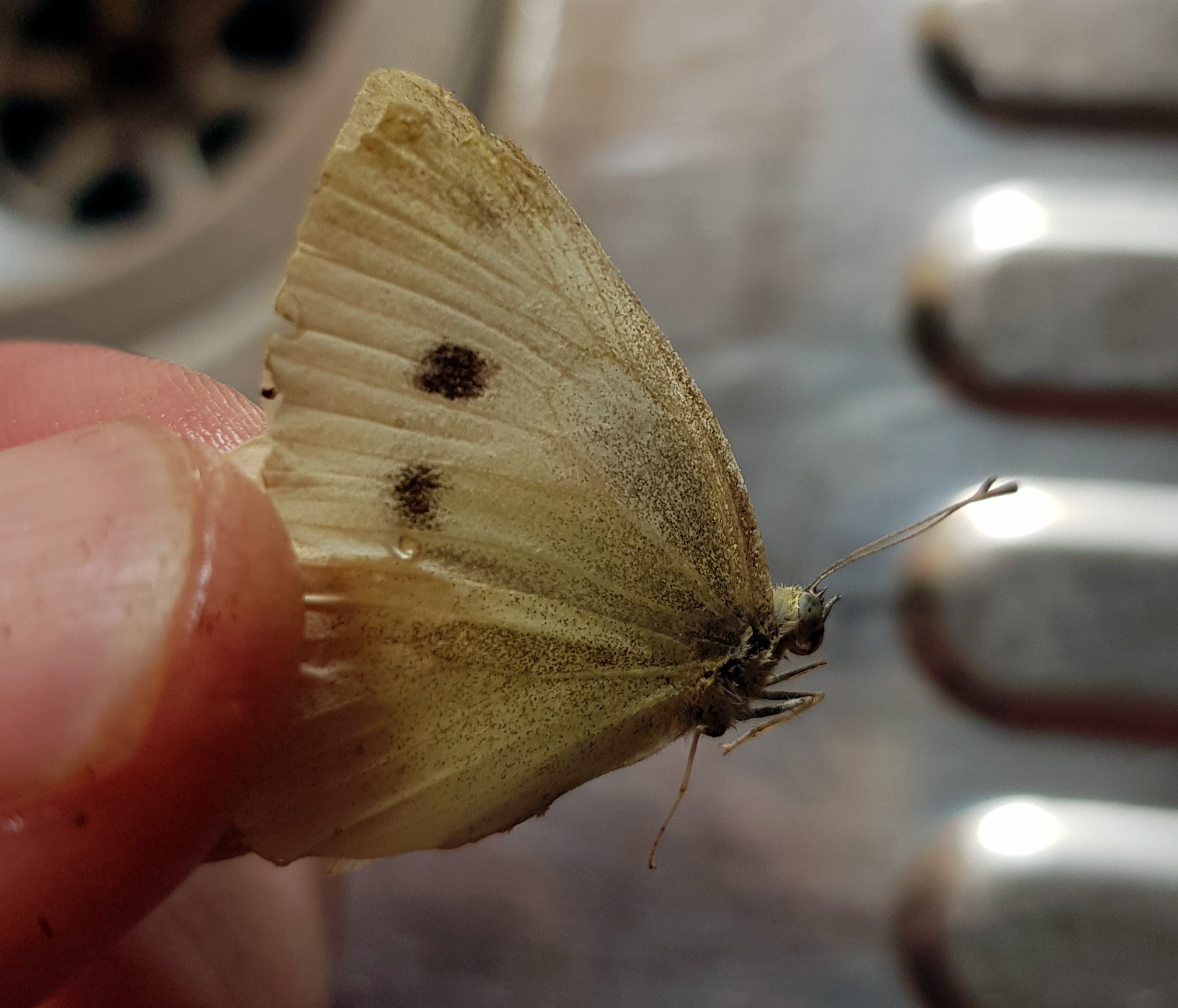
BadCritter: White Cabbage Butterfly
Oh but I hate these beautiful little butterflies. They are particularly active in spring and early summer. I don’t see them in January and February in Perth and suspect it is just too hot.
I squish them and their caterpillars, turning them back into the soil.
Species:
Identification:
Adult:

Eggs:

Caterpillar:

Damage:
They will munch your greens leaving the tell tale holes you see above. The caterpillars are hard to spot as you can see.
Control:
I usually spray my chili plants and greens with Dipel and pyrethrum (my go to natural insecticide spray) if I notice any damage. I found the first time I used Dipel was amazing. I didn’t think the caterpillars were doing that much harm to the plant but the returning plant vigor proved that wrong.
Ben swears by the use of butterfly shaped cardboard cutouts and I use egg shells. Both methods are thought to make the laying females move along to another patch.
More Resources:
- See more BadCritters here
Please consider subscribing to get a weekly email summary of our posts.
[mc4wp_form id=”15771″]
Written by
·
-
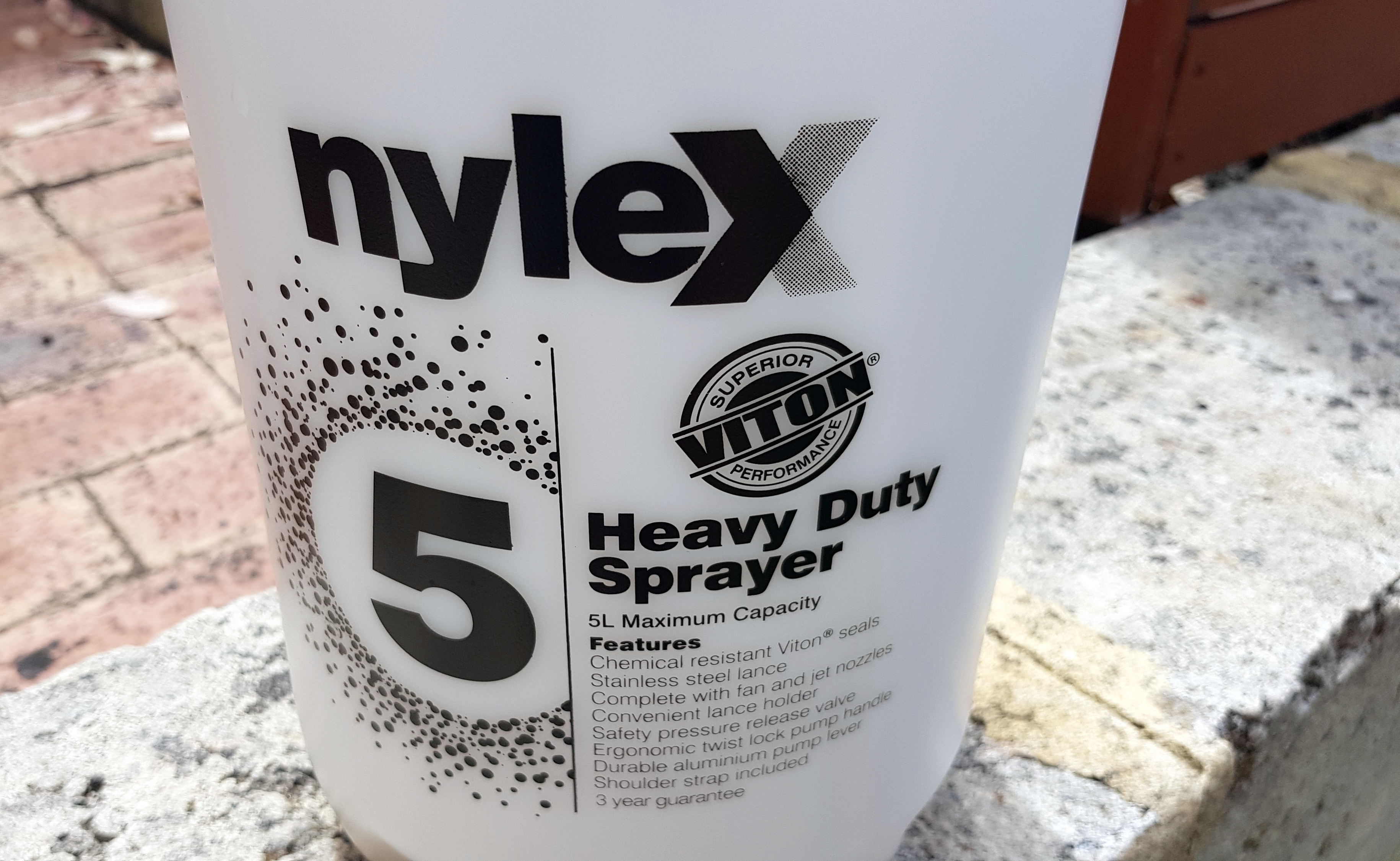
PK Reviews: Nylex Heavy Duty 5L Shoulder Sprayer
The Nylex 5L and 8L Shoulder Sprayer range is perfect for people with kitchen gardens, even large ones. I am reviewing several of the Nylex Sprayer range and I started with their Nylex 1.5L 360° Sprayer. Please see the other Nylex reviews here.
Today I am reviewing the heavy duty cousin of the Nylex 5l Sprayer (2017 review here).
This is a very good sprayer and you can see step up in build quality the extra money gets you. It will last you a long time and I don’t think you will regret buying it.
Spoiler Alert: I prefer the standard model’s feel in the hand and will continue to buy it. Perhaps Nylex is making the standard version to well and pricing it too cheap. 🙂 🙂
Why would you buy a pressure sprayer anyway?
With its superior seals and build quality, this pressure sprayer is perfect for spraying plants with dense hard to reach foliage (such as chili plants and tomato plants) with both targeted solutions such as pyrethrum or full plant coverage solutions such as bio-oil. You could even use it on trees such as large citrus plants.
A trigger spray (although Nylex makes good/affordable versions of these) is not going to suffice as they can’t spray upside down and don’t have the holding capacity. Turning the leaves is going to end up getting spray on you and end in foliage damage.
Note: This is not a paid post.
Product Reviewed:
- Nylex Heavy Duty 5L Shoulder Sprayer
Pros compared to standard model:
- Exceptional build quality for the seals, bottle, wand and pump
- An extra year for 3 years warranty on the UV resistant plastic bottle
- Stainless steel as opposed to a fiber glass wand with fan and jet nozzle
- Stronger D shaped handle also makes for easy pumping and even stores the wand when not in use
Similar feature to standard model:
- Safety pressure release valve that also makes for easy de-pressuring when you are finished
- Easy to read incremented 1.0L marks so you can accurately mix your concentrate solutions
- Plastic sleeve for holding labels to indicate what type of solution you are keeping the sprayer for e.g.. fungicides vs insecticides (this is one of my favourite features as I don’t like to use the same sprayer for different treatments)
- Filter mechanism avoids blockages
- Spare o-rings etc are available
Availability:
- Available at your local Bunnings https://www.bunnings.com.au/nylex-5l-shoulder-garden-sprayer_p2962002 for about $40 AUD
The Verdict:
This is a great product and I still think reasonably priced, even compared to the cheaper standard version, at the time of writing.
Build quality is very very high and you should get many years out of it. I have never had one of these block on me!
If you have never owned a pressure sprayer you will love it. You are going to use a lot less plastic packaging and save money by using concentrate sprays over premixes.
I have never had one of these block on me!
If you have any questions about the product range I recommend contacting the Nylex team at http://www.nylexwatering.com/contact-us/
Hope this review helps and feel free to send me any comments or corrections.
PK
Related Links:
- See more Nylex posts here
- See our other product reviews here
- See more growing, catching and cooking equipment here
Please consider subscribing to get a weekly email summary of our posts.
[mc4wp_form id=”15771″]
Written by
·
-
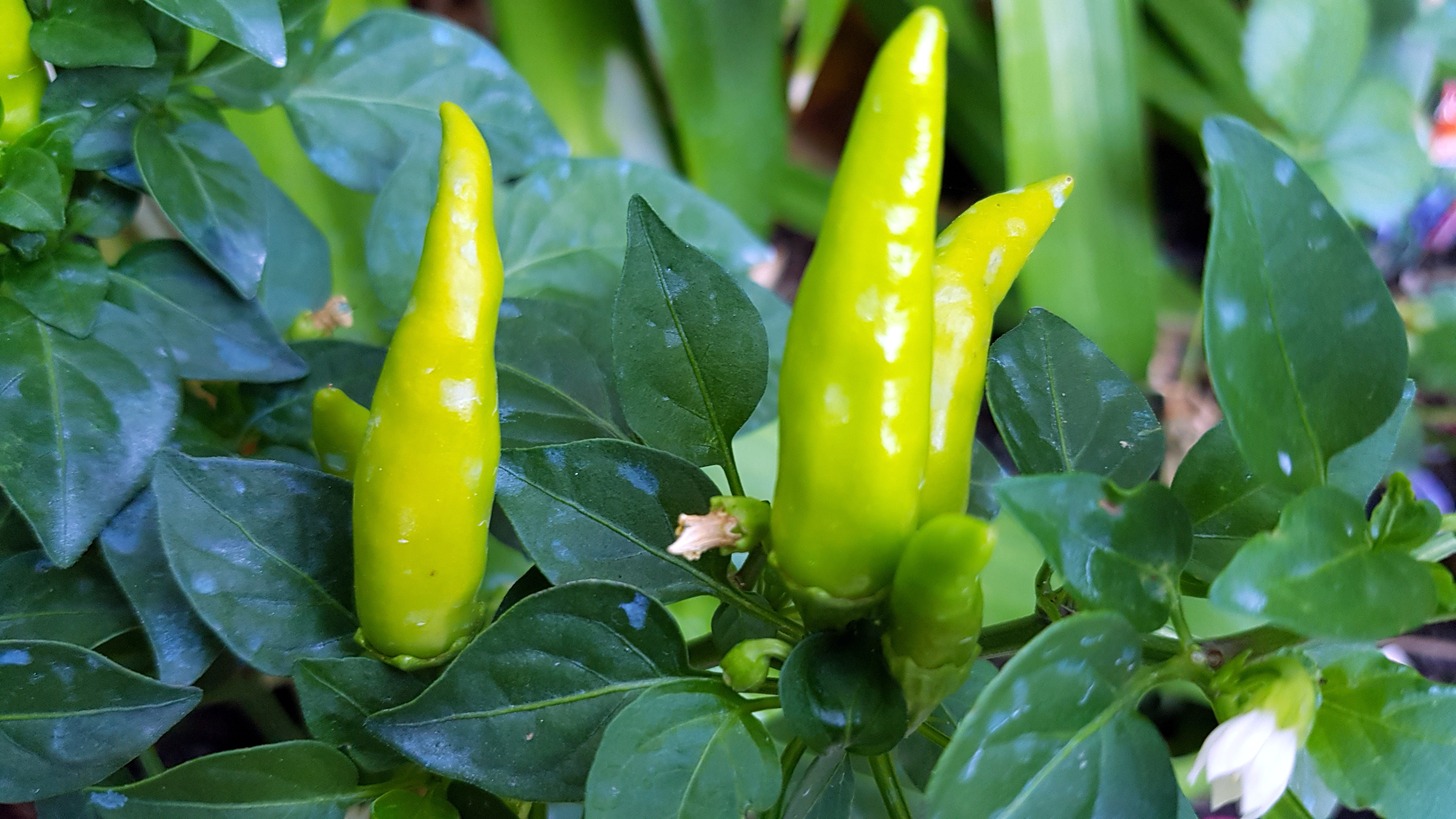
Chili Pepper: Hoa Lat
Hoa Lat is a bushy, heavy producer of medium sized, long tapered fruit. It is another of my mild heat range favourites and is so easy to grow.
The fruit starts of yellow-green and ripens to a bright glossy red.
Taste:
I have only eaten this raw in salads and haven’t cooked with it. It has a fruity almost tangy taste that swirls around your cheeks and then settles on the tip of your tongue. The initial punch can be severe but it dissipates quickly leaving a nice taste in your mouth.
The guys at the Western Australia Chilli Seed Exchange have the seeds for sale here http://wacse.org/product/hoa-lat/ and the lads there put it at 20,000 Scoville Heat Units.
Flower:

Fruit:


Plant:

Perth Fruiting Months:
November to June
Planting/Care:
I use a mid range nitrogen and high potassium fertiliser regime during the summer months. Soil is improved with compost and manure and has a ~5-10% by weight of clay to sand ratio. Drainage is good.
I usually spray my chili plants with Dipel and pyrethrum (my go to natural insecticide spray) if I notice grub damage to the pods. The tomato grub in particular likes the larger fleshier chilis like the Trinidad Scorpion.
Enjoy,
PK
GICICI Chili Plants
[table id=chilis /]
YOU MIGHT ALSO LIKE
GROWING CHILIS 101
THE FULL GICICI INGREDIENTS LIST
GICICI’S WHAT’S GROWING IN PERTH?
Follow these links to see what to plant in a given month or read my monthly journal where I talk about what I am doing, have learned and have harvested.
JANUARY’S PLANTS OR PK’s Journal
FEBRUARY’S PLANTS OR PK’s Journal
MARCH’S PLANTS OR PK’s Journal
APRIL’S PLANTS OR PK’s Journal
MAY’S PLANTS OR PK’s Journal
JUNE’S PLANTS OR PK’s Journal
JULY’S PLANTS OR PK’s Journal
AUGUST’S PLANTS OR PK’s Journal
SEPTEMBER’S PLANTS OR PK’s Journal
OCTOBER’S PLANTS OR PK’s Journal
NOVEMBER’S PLANTS OR PK’s Journal
DECEMBER’S PLANTS OR PK’s Journal
Please consider subscribing to a weekly email summary of our posts or check us out on Facebook @growitcatchitcookit.
[mc4wp_form id=”15771″]
Written by
·
-
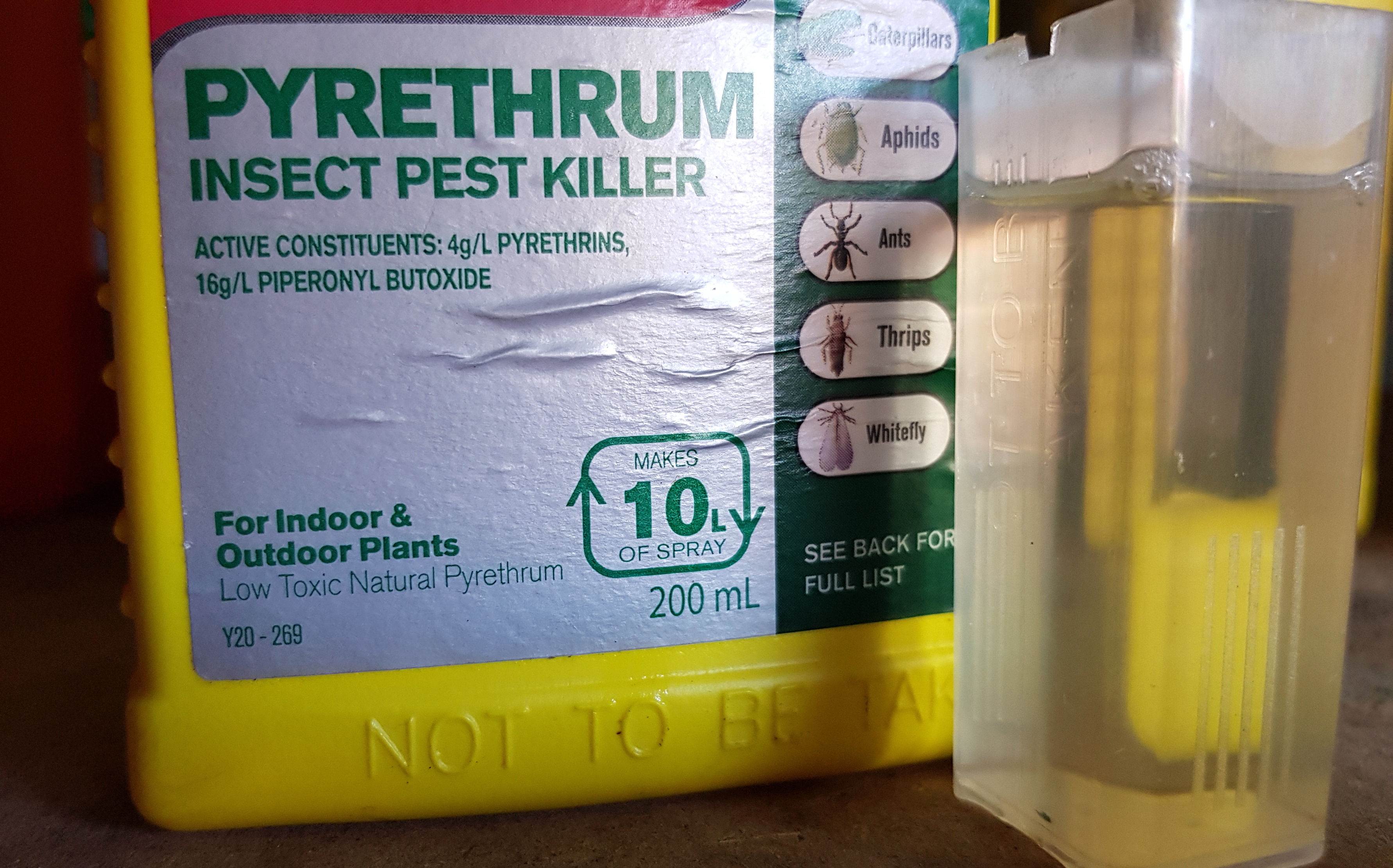
Pyrethrum Natural Insecticide
I always try to use pyrethrum spray and Dipel over man-made insecticides. That said, my favourite method of pest control in the garden is to squish the BadCritters or eat the vegetables before they do. 🙂
My main target critter is aphids and caterpillars but it also controls thrips and whitefly.
Why do I use this spray?
Pyrethrum spray is made from the pyrethrum daisy and is a low toxic, natural product that breaks down quickly in sunlight. It is a non-systemic and only works on direct contact. This means you can choose when and where to spray with a known result.
Most if not all pyrethrum products use a enhancer additive called piperonyl butoxide. This has been found to reduce the insects’ capacity to process pyrethrum hence keeping it killing them for longer. Piperonyl butoxide is deemed to have a low toxicity to other organisms and quickly breaks down naturally.
As always, take care of yourself and others. Wear safety glasses, a mask and gloves when applying any garden spray. I always spray in the late evening after my bee friends have gone home.
Enjoy,
PK
Related Links:
- see my main page about BadCritters
- see more insecticide posts here
Please consider subscribing to get a weekly email summary of our posts.
[mc4wp_form id=”15771″]
Written by
·
-
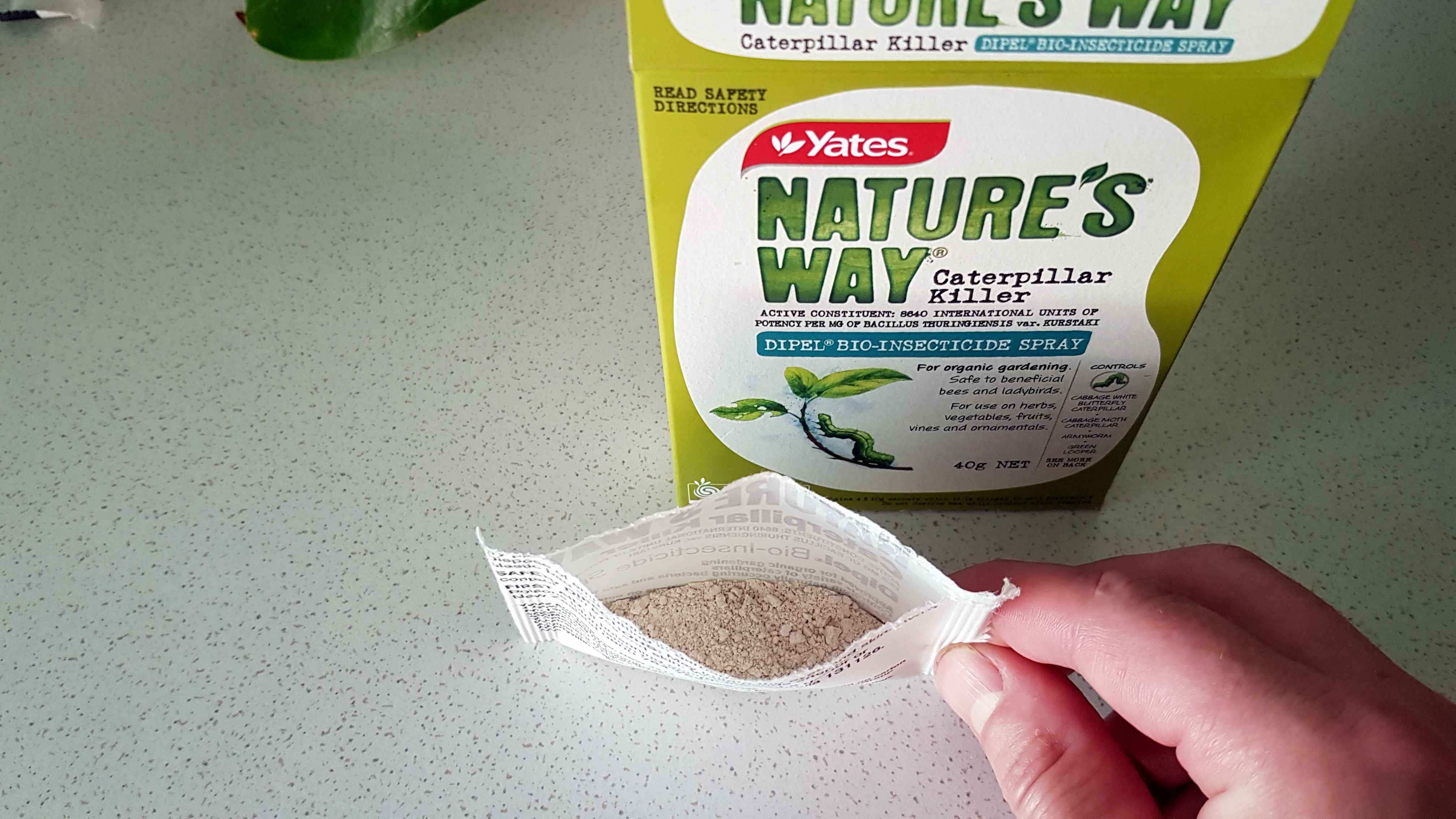
Dipel Caterpillar Control
I don’t know why it has taken me so long to use this method of controlling that most common of gardening’s BadCritters, the pesky caterpillar.
Whilst I will still more often than not reach for the pyrethrum spray, Dipel has a place in my garden shed from now on. It comes in a powdered form and is not the bacteria (Bacillus thuringiensis) itself but the crystalised toxins it produces. These toxins disrupt the caterpillars’ digestive tracts as they eat the leaves of your vegetables. They stop eating and starve to death.
You don’t need to worry about hurting bees and other GoodCritters with this spray though. They are in little danger as they don’t ingest enough of the toxins ie they are not munching the leaves.
It might take a few days for you to notice dead caterpillars and see the return of vigour to your leafy greens in particular. I spray every 10 days or so over the summer months.
As always, take care of yourself and others. Wear safety glasses, a mask and gloves when applying any garden spray.
I have you now BadCritter:
Enjoy,
PK
Related Links:
- see more insecticide posts here
Please consider subscribing to get a weekly email summary of our posts.
[mc4wp_form id=”15771″]
Written by
·
-

Beetroot
Beetroot is a cultivar of Beta vulgaris mostly grown for its swollen taproot (other cultivars are predominantly grown for their leaves e.g. chard or leaf beet).
Being Australian, my favourite way to eat beetroot is as pickled slices in a hamburger served with egg. 🙂
You can also boil, roast and puree it and it teams up nicely with carrot and celery.
The leaves make a great flavour and colour addition to salads and sandwiches. Indeed I mostly grow beetroot for this reason.
Dried and powdered, the roots make for an amazing natural food colouring for curries or a healthy snack if left as a chip shape.
It is a herbaceous biennial but if grown for the root you will be planting and pulling after a couple of months.
Taste/Aroma:
The leaves taste like spinach. Raw, the roots taste and smell earthy. I don’t really like them raw finding that they sweeten with cooking.
Leaves:

Root:

Planting/Care:
Please see the link at the bottom of the page for when to grow this plant in my Grow It Perth calendar.
Beetroot loves a Mediterranean climate like we have in Western Australia but isn’t so keen about us during the peak of summer. Find a slightly alkaline sunny spot that is well draining and organically enriched.
Related Links:
- see more beetroot posts here
- go to all meal ingredients here
- go the Grow It Perth calendar
- see a work in progress map of edible plant species here
Please consider subscribing to get a weekly email summary of our posts.
[mc4wp_form id=”15771″]
Written by
·
-

Dried Onions
A great way to preserve your onion crop (or in my case a bunch of onions on special) is to dice them and dry them. I quite often freeze onion slices too but I found both my cupboard and freezer devoid of onions 🙂 .
Note: This method is great for drying garlic too (see Dried Garlic).
Simply dice your onions. I am using brown ones here.

Dry them in a dehydrator until they have lost all of their water content. It was humid and rained a bit the day I did it so they took overnight.

On a sunny day I leave the trays out in the sunshine with some netting on, using the dehydrator only at night. It made my shed smell amazing.

Store them in a glass container with a good seal and you will have onions any time you need them.

Use them as is in soups and stews etc. For curries and stir fries etc you will want to re-hydrate them with a bit of warm water first.
Enjoy,
PK
Related Links:
- See recipes using onions here
- See more dehydrator posts here
- See more preserving posts here
- go to all meal ingredients here
Please consider subscribing to get a weekly email summary of our posts.
[mc4wp_form id=”15771″]
Written by
·