Category: growing
-
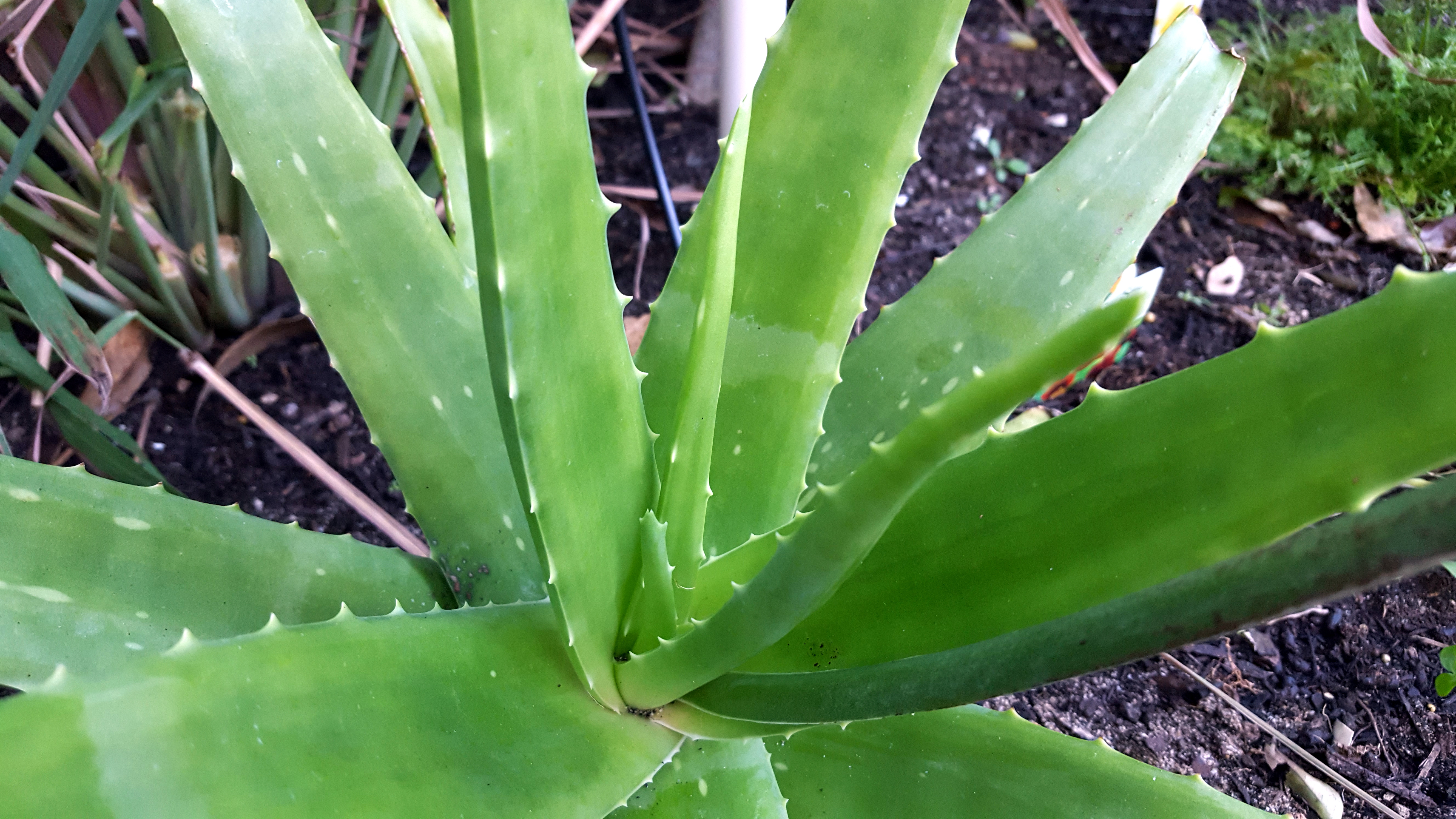
Aloe Vera
Aloe vera is one of those plants that everyone recognises on sight. I grow it because I love the look of it.
The thick fleshy leaves have little white barbs that look like teeth but this has to be one of the friendliest and useful plants.
Aloe extract pops up in all sorts of beverages, moisturising products and sunburn remedies. Here is an example of how you can make your own gel http://www.wikihow.com/Make-Aloe-Vera-Gel.
Here is a cut leaf showing the gel:

Taste/Aroma:
Apparently the gel and juice taste awful. I am not game to try 🙂
Freshly cut leaves and the gel have an unpleasant acrid smell but you have to get pretty close to smell it.
Flower:
The flower is very attractive, lasts a long time and is perched a top a metre tall stem.

Plant:

Planting/Care:
I have it planted in rich well-draining soil that gets a little sun during winter and afternoon sun during summer. I generally keep clear of it when using fertilisers and I find it low maintenance. If potted, it is also very happy to be inside for long periods.
Aloe spreads via ‘pups’ that bud off the edges as a ready-made plant. These are easily transplanted and potted aloe vera plants make a great gift.
Enjoy,
PK
Here are some more grow your own food posts and some of my favourite ingredients:
Written by
·
-
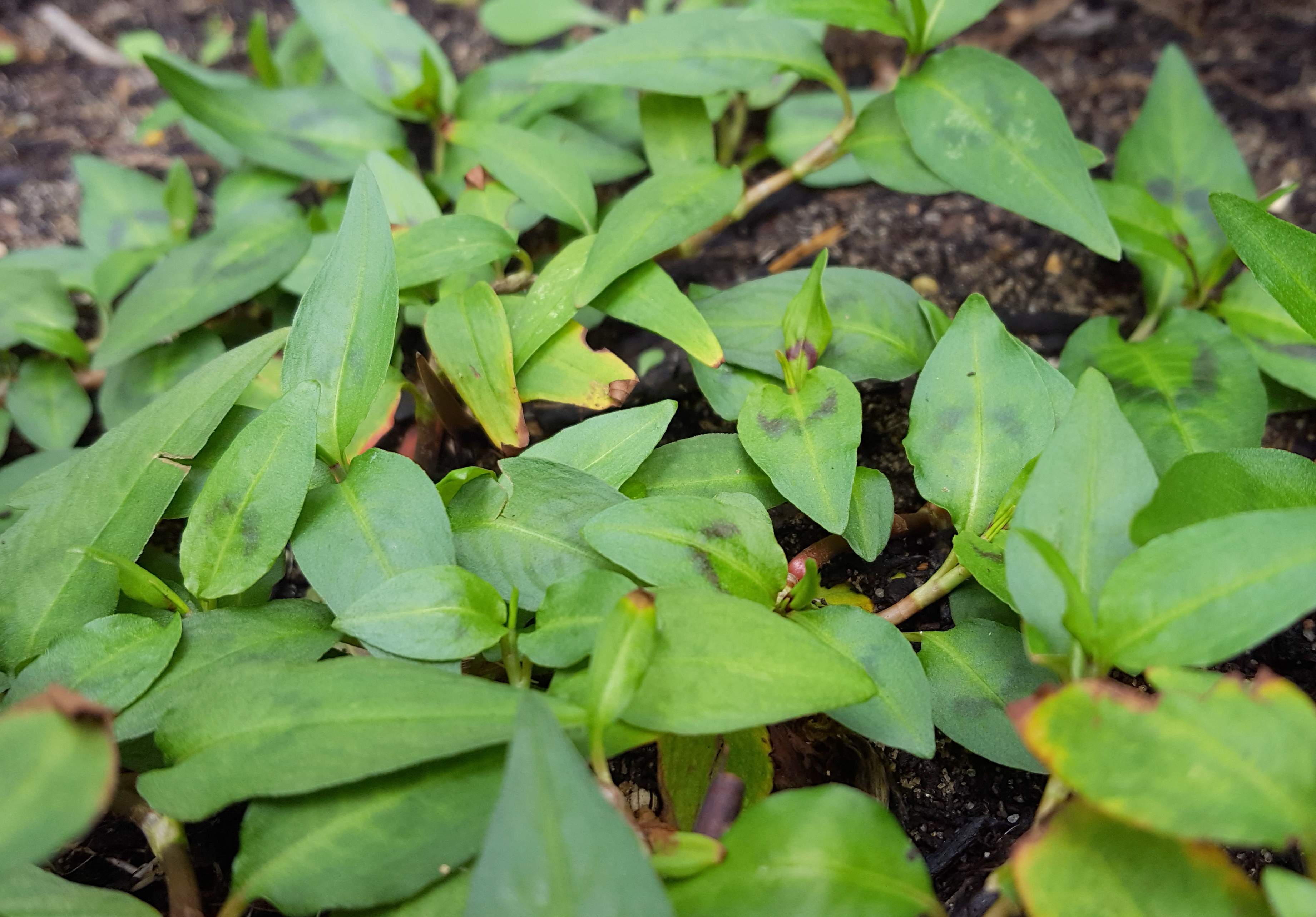
Vietnamese Coriander
Let’s face it, Coriander (also known as Cilantro) can be hard to grow in Perth conditions. It will bolt at the first sign of warm weather and dislikes full sun. So I also grow Vietnamese Coriander (also called Vietnamese Mint or Laksa Leaf) as a substitute herb and also a prized ingredient in its own right.
Taste/Aroma:
Heavily reminiscent of true Coriander but with a peppery bite. Just like true coriander, people either love or loath the taste. It goes well sprinkled on asian salads such as PK’s Thai Beef Salad or in soups and curries.
Flower:

Plant:

Harvesting Months:
- March
- April
- May
- June
Planting/Care:
Watering twice a week (less in winter) is all that is required. It is a very hardy herb and tolerates full sun to part shade and even boggy soils. It looks a bit like mint in the way it creeps out but it doesn’t send out troublesome runners and a quick prune is all that is needed to contain it.
Cuttings can be taken and will easily propagate in a dish of water (thanks Eira Clapton for the tip).
Related Links:
- go to all ingredients
Written by
·
-

Chili Pepper: Caysan
Coming in at a mere 30,000 – 50,000 Scoville units, the Caysan Chili is a great little prolific producer of large glossy fruit, and it isn’t too hot to eat. I got mine from the local Bunnings store and grew it in a little herb bed in full sun, and got far more than I needed during the growing season!
Enjoy – Bish
Taste:
I’ve used the fruit in a range of different recipes over the summer and autumn period here in Perth, including a really simple one – halve them, remove the seeds, and stuff them with cream cheese, wrap in prosciutto and grill for a few minutes… yum
Flower:
Fruit:

Plant:
Fruiting Months:
- January
- February
- March
- April
- May
- December
Planting/Care:
The fruit are pretty big and prone to splitting if you leave them on the bush too long. With the onset of colder weather here (this year, that was not until late May) they keep producing flowers and fruit, and are pretty hardy.
Scale:
Around the cayenne range.

Related Links:
- see more posts about growing chilis here
- see more cooking with chili posts here
- go to all meal ingredients here
- go the Grow It Perth calendar
- see a work in progress map of edible plant species here
- More Bish
Written by
·
-

Mizuna
This fancy looking asian green is a nice compliment or alternative to rocket in your green salads. It is so easy to grow and I used seeds from a mixed sprouts pack. It is also prized in Japanese dishes.
Taste/Aroma:
Tender texture and mildly peppery.
Plant:
Harvesting Months:
- All year
Planting/Care:
I planted them a spot that gets full sun (in both summer and winter) and has well draining rich soil. I have them planted intermingled with Choy Sum and english spinach.
Simply harvest the leaves as you need them and new shoots continue to come up.
Related Links:
- see more mizuna posts here
- see more asian greens here
- go to all meal ingredients
- go the Grow It Perth calendar
Written by
·
-
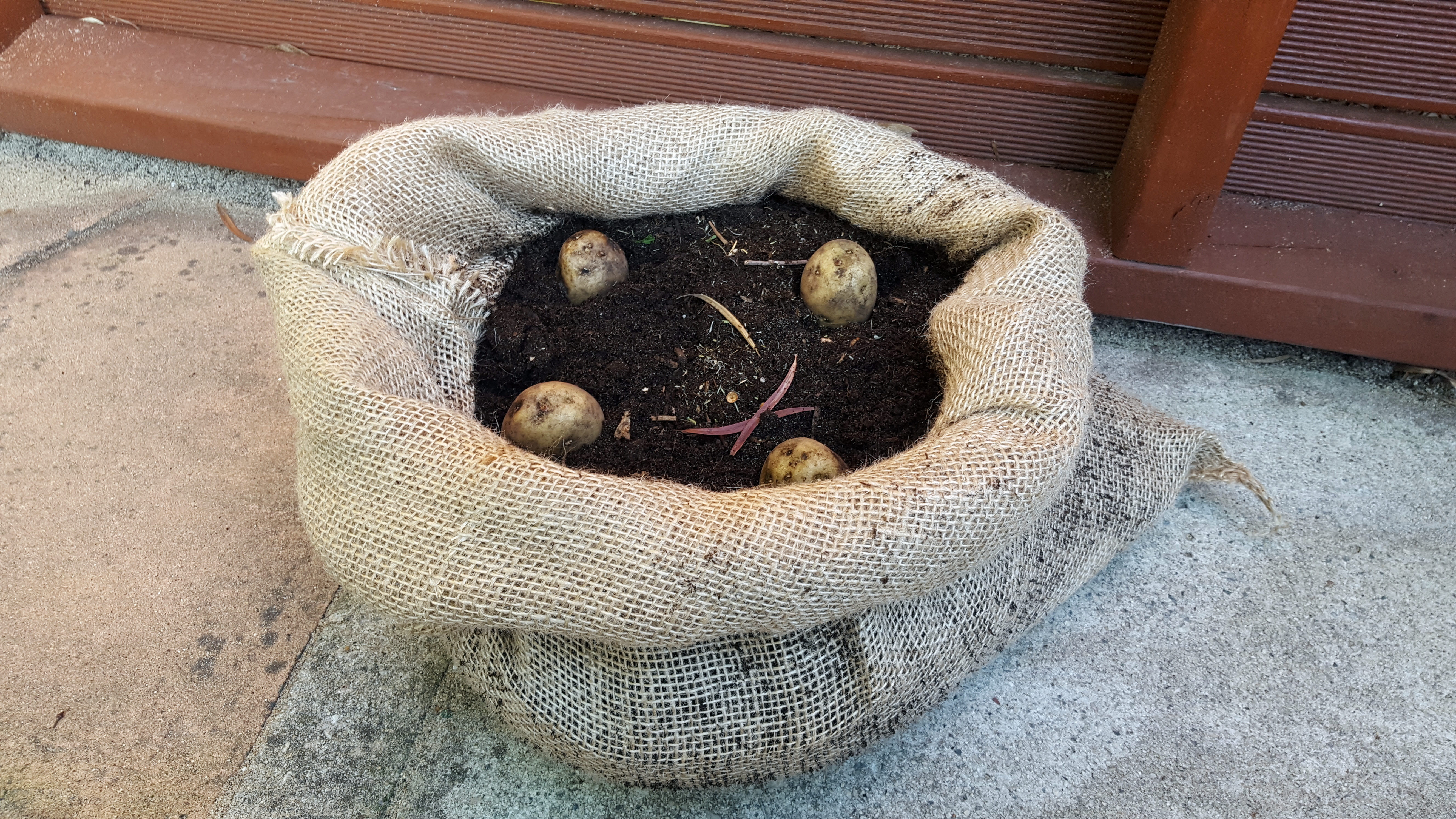
Potatoes
I have never grown potatoes before so I am very excited to be trying to do so now :).
I can’t wait to make PK’s Baked Mashed Potato, Bacon and Cheese Balls with my own ‘taters.
Taste/Aroma:
The tubers taste of “earthy, starchy, happy goodness” and can be prepared many ways :).
Warning: the green leaves and any potatoes that have green skins are highly toxic.
Flower:

Source:
Fruit:
There are many varieties and everyone has a favourite.

Plant:

Fruiting Months:
- June
- July
- August
- September
- October
- November
- December
Planting/Care:
I am a potato growing novice. I have chosen to grow them in hessian bags as I have a lack of space in my Working Garden.
I will add to the photos and information as we go. I hope to have a bunch of potatoes to show you and only a few with green skins.
These are the products I am using (not being paid to):

Growth Album 2017:
Storage:
Store your potatoes in a cool, dark and dry location. A box or hessian bag is best.
Never ever use a potato that has a green skin (it is caused by the plant making chemicals to ward of insect attack) and you should throw them into your compost bin immediately so they don’t ruin the others.
Related Links:
Written by
·
-

Chili Pepper: Tepin
I love the look of Tepin plants. The berry shaped fruit is small and grows in bunches that remind me of cherries. 🙂
The fruit starts of dark green and then turns dark purple on its way to red. It grows wild and this has led to it being called the ‘mother of all chilis’. You will get a lot of fruit during the summer months.
Taste:
I have only eaten this raw in salads and haven’t cooked with it. The initial punch hits you on the back of the throat and then the side of the mouth. It has a tangy almost sweet after taste.
Pepper Heads For Life puts it at a mere 300,000 SHU.
Flower:

Fruit:


Plant:

Fruiting Months:
November to March
Please see my Grow It Perth calendar.
Planting/Care:
This chili is very low maintenance.
I use a mid range nitrogen and high potassium fertiliser regime during the summer months. Soil is improved with compost and manure and has a ~5-10% by weight of clay to sand ratio. Drainage is good.
I usually spray my chili plants with Dipel and pyrethrum (my go to natural insecticide spray) if I notice grub damage to the pods. The tomato grub in particular likes the larger fleshier chilis like the Trinidad Scorpion.
GICICI Chili Plants
[table id=chilis /]
Related Links:
Written by
·
-

GICICI’s Chili Collection
I love chili peppers and the plants they grow on. There are lots of variety in the 5 main domesticated species and I am trying to grow as many of them as I can. 🙂
I buy most of the from Bunnings (I live in Perth, Western Australia) but you can order mature seedlings from Cantstandtheheat or the Western Australia Chilli Seed Exchange (neither links are paid for nor affiliated).
I am going to share what I learn about chili ranching as I go via the links below and please send me your own tips and tricks. I am especially concentrating on how to grow chillis in Perth.
The Main Cultivated Species (copied from Wikipedia)
Storing/Preserving
Cooking
GICICI Chili Plants
[table id=chilis /]
Related Links:
- see more posts about growing chilis here
- see more cooking with chili posts here
- go to all meal ingredients here
- go the Grow It Perth calendar
- see a work in progress map of edible plant species here
Please consider subscribing to get a weekly email summary of our posts.
[mc4wp_form id=”15771″]
Written by
·
-

Chili Pepper: Zimbabwe Bird
This has to be the prettiest chili plant I have in my collection. Despite the fruit’s small size they pack a real punch and the plant is a heavy producer.
Written by
·
-

PK Reviews: Nylex 5L Shoulder Sprayer
The Nylex 5L and 8L Shoulder Sprayers are perfect for people with kitchen gardens, even large ones. I am reviewing several of the Nylex Sprayer range and I started with their Nylex 1.5L 360° Sprayer. Please see the other Nylex reviews here.
In short I couldn’t be more pleased with my 5L Shoulder Sprayer and I bought it for next to nothing from my local Bunnings. At ~$22 AUD it is very good value for money and one of my units has been in use for 3 years now.
This pressure sprayer is perfect for spraying plants with dense hard to reach foliage (such as chili plants and tomato plants) with both targeted solutions such as pyrethrum or full plant coverage solutions such as bio-oil. You could even use it on trees such as large citrus plants.
My favourite bio-oil by the way is http://ecoorganicgarden.com.au/products/pest-disease/eco-oil/ and no they are not paying me to say that :).
A trigger spray (although Nylex makes good/affordable versions of these) is not going to suffice as they can’t spray upside down and don’t have the holding capacity. Turning the leaves is going to end up getting spray on you and also leaf/foliage damage.
Note: This is not a paid post.
Product Reviewed:
- Nylex 5L Shoulder Sprayer
Pros:
- Very good build quality for a very low price
- 2 year warranty on the UV resistant plastic bottle
- Fibre glass wand with fan and jet nozzles works well with the D shaped handle or supplied shoulder strap to allow you to spray where you want and only where you want
- D shaped handle also makes for easy pumping and even stores the wand when not in use
- Lockable trigger on the wand
- Safety pressure release valve that also makes for easy de-pressuring when you are finished
- Easy to read incremented 1.0L marks so you can accurately mix your concentrate solutions
- Plastic sleeve for holding labels to indicate what type of solution you are keeping the sprayer for e.g.. fungicides vs insecticides (this is one of my favourite features as I don’t like to use the same sprayer for different treatments)
- Filter mechanism avoids blockages
- Spare o-rings etc are available
Cons:
- None that I can tell, sorry 🙂
Availability:
- Available at your local Bunnings https://www.bunnings.com.au/nylex-5l-shoulder-garden-sprayer_p2962002
The Verdict:
Great product at a very reasonable price and easy to store when not in use. Build quality is very high and you should get many years out of it. Once I bought my first one I could not go back. You are going to use a lot less plastic packaging and save money by using such a sprayer.
If you have any questions about the product range I recommend contacting the Nylex team at http://www.nylexwatering.com/contact-us/
Hope this review helps and feel free to send me any comments or corrections.
Enjoy,
PK
Related Links:
Written by
·
-
Nylex 5L Shoulder Sprayer: PK Reviews
The Nylex 5L and 8L Shoulder Sprayers are perfect for people with kitchen gardens, even large ones. I am reviewing several of the Nylex Sprayer range and I started with their Nylex 1.5L 360° Sprayer. Please see the other Nylex reviews here.
In short I couldn’t be more pleased with my 5L Shoulder Sprayer and I bought it for next to nothing from my local Bunnings. At ~$22 AUD it is very good value for money and one of my units has been in use for 3 years now.
This pressure sprayer is perfect for spraying plants with dense hard to reach foliage (such as chili plants and tomato plants) with both targeted solutions such as pyrethrum or full plant coverage solutions such as bio-oil. You could even use it on trees such as large citrus plants.
My favourite bio-oil by the way is http://ecoorganicgarden.com.au/products/pest-disease/eco-oil/ and no they are not paying me to say that :).
A trigger spray (although Nylex makes good/affordable versions of these) is not going to suffice as they can’t spray upside down and don’t have the holding capacity. Turning the leaves is going to end up getting spray on you and also leaf/foliage damage.
Note: This is not a paid post.
Product Reviewed:
- Nylex 5L Shoulder Sprayer
Pros:
- Very good build quality for a very low price
- 2 year warranty on the UV resistant plastic bottle
- Fibre glass wand with fan and jet nozzles works well with the D shaped handle or supplied shoulder strap to allow you to spray where you want and only where you want
- D shaped handle also makes for easy pumping and even stores the wand when not in use
- Lockable trigger on the wand
- Safety pressure release valve that also makes for easy de-pressuring when you are finished
- Easy to read incremented 1.0L marks so you can accurately mix your concentrate solutions
- Plastic sleeve for holding labels to indicate what type of solution you are keeping the sprayer for e.g.. fungicides vs insecticides (this is one of my favourite features as I don’t like to use the same sprayer for different treatments)
- Filter mechanism avoids blockages
- Spare o-rings etc are available
Cons:
- None that I can tell, sorry 🙂
Availability:
- Available at your local Bunnings https://www.bunnings.com.au/nylex-5l-shoulder-garden-sprayer_p2962002
The Verdict:
Great product at a very reasonable price and easy to store when not in use. Build quality is very high and you should get many years out of it. Once I bought my first one I could not go back. You are going to use a lot less plastic packaging and save money by using such a sprayer.
If you have any questions about the product range I recommend contacting the Nylex team at http://www.nylexwatering.com/contact-us/
Hope this review helps and feel free to send me any comments or corrections.
Enjoy,
PK
Hope this review helps,
PK
Related Links:
- See more Nylex posts here
- See our other product reviews here
- See more growing, catching and cooking equipment here
Please consider subscribing to get a weekly email summary of our posts.
[mc4wp_form id=”15771″]
- see our other product reviews here
Please consider subscribing to get a weekly email summary of our posts.
[mc4wp_form id=”15771″]
Written by
·