Tag: chiliplant
-

Chili Pepper: Black Pearl
This has to be the most attractive chili plant I have in my collection. Despite the fruit’s small size they pack a real punch and the plant is a heavy producer.
The fruit starts off as deep oxblood colour that ripens to a rich red.

So if you’re into landscaping with beautiful, unique plants, or you love chilies that are mid range on the pepper scale, this is plant is for you. The heat is more than a jalapeño but less than a cayenne.
Taste:
The heat creeps up on you, similar to the much hotter ghost pepper in that way. The initial bite provides a mild citrus-like taste, but that’s followed up within a minute with a building spiciness going from back of throat to tip of tongue. The heat peaks within a few minutes and slowly begins to dissipate.
Flower:

Fruit:
Small globes packed full of seeds. The skin is firm and has a crunch.
Plant:

Fruiting Months:
November to June
Planting/Care:
It took a while for the seedling I bought to fruit initially so don’t panic. Apparently this is a fickle variety of chili but I have not done anything special and have had great luck.
I use a middle range nitrogen and high potassium fertiliser regime during the summer months. Soil is improved with compost and manure and has a ~5-10% by weight of clay to sand ratio. Drainage is still good.
I usually spray my chili plants with Dipel and pyrethrum (my go to natural insecticide spray) if I notice any grub damage. The tomato grub in particular likes the larger fleshier chilis like the Trinidad Scorpion.
Enjoy,
PK
Check out GICICI’s Chili Collection for more info on chili growing.
Here are some more chili varieties and some examples of cooking with them:
Written by
·
-
Chili Pepper: Hoa Lat
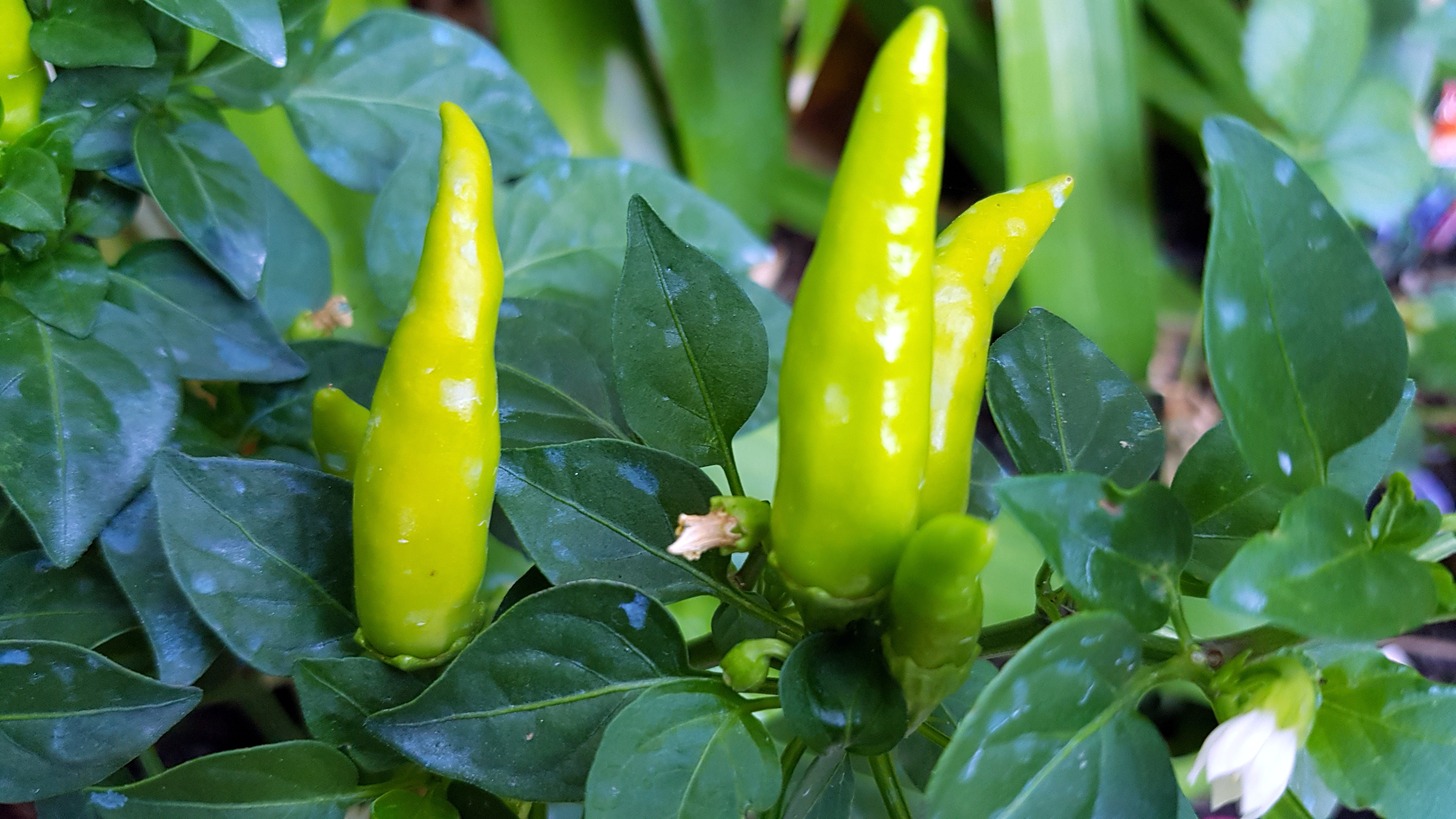
Hoa Lat is a bushy, heavy producer of medium sized, long tapered fruit. It is another of my mild heat range favourites and is so easy to grow.
The fruit starts of yellow-green and ripens to a bright glossy red.
Taste:
I have only eaten this raw in salads and haven’t cooked with it. It has a fruity almost tangy taste that swirls around your cheeks and then settles on the tip of your tongue. The initial punch can be severe but it dissipates quickly leaving a nice taste in your mouth.
The guys at the Western Australia Chilli Seed Exchange have the seeds for sale here http://wacse.org/product/hoa-lat/ and the lads there put it at 20,000 Scoville Heat Units.
Flower:

Fruit:


Plant:

Perth Fruiting Months:
November to June
Planting/Care:
I use a mid range nitrogen and high potassium fertiliser regime during the summer months. Soil is improved with compost and manure and has a ~5-10% by weight of clay to sand ratio. Drainage is good.
I usually spray my chili plants with Dipel and pyrethrum (my go to natural insecticide spray) if I notice grub damage to the pods. The tomato grub in particular likes the larger fleshier chilis like the Trinidad Scorpion.
Enjoy,
PK
GICICI Chili Plants
[table id=chilis /]
YOU MIGHT ALSO LIKE
GROWING CHILIS 101
THE FULL GICICI INGREDIENTS LIST
GICICI’S WHAT’S GROWING IN PERTH?
Follow these links to see what to plant in a given month or read my monthly journal where I talk about what I am doing, have learned and have harvested.
JANUARY’S PLANTS OR PK’s Journal
FEBRUARY’S PLANTS OR PK’s Journal
MARCH’S PLANTS OR PK’s Journal
APRIL’S PLANTS OR PK’s Journal
MAY’S PLANTS OR PK’s Journal
JUNE’S PLANTS OR PK’s Journal
JULY’S PLANTS OR PK’s Journal
AUGUST’S PLANTS OR PK’s Journal
SEPTEMBER’S PLANTS OR PK’s Journal
OCTOBER’S PLANTS OR PK’s Journal
NOVEMBER’S PLANTS OR PK’s Journal
DECEMBER’S PLANTS OR PK’s Journal
Please consider subscribing to a weekly email summary of our posts or check us out on Facebook @growitcatchitcookit.
[mc4wp_form id=”15771″]
Written by
·
-

Chili Pepper: Caysan
Coming in at a mere 30,000 – 50,000 Scoville units, the Caysan Chili is a great little prolific producer of large glossy fruit, and it isn’t too hot to eat. I got mine from the local Bunnings store and grew it in a little herb bed in full sun, and got far more than I needed during the growing season!
Enjoy – Bish
Taste:
I’ve used the fruit in a range of different recipes over the summer and autumn period here in Perth, including a really simple one – halve them, remove the seeds, and stuff them with cream cheese, wrap in prosciutto and grill for a few minutes… yum
Flower:
Fruit:

Plant:
Fruiting Months:
- January
- February
- March
- April
- May
- December
Planting/Care:
The fruit are pretty big and prone to splitting if you leave them on the bush too long. With the onset of colder weather here (this year, that was not until late May) they keep producing flowers and fruit, and are pretty hardy.
Scale:
Around the cayenne range.

Related Links:
- see more posts about growing chilis here
- see more cooking with chili posts here
- go to all meal ingredients here
- go the Grow It Perth calendar
- see a work in progress map of edible plant species here
- More Bish
Written by
·
-

Chili Pepper: Tepin
I love the look of Tepin plants. The berry shaped fruit is small and grows in bunches that remind me of cherries. 🙂
The fruit starts of dark green and then turns dark purple on its way to red. It grows wild and this has led to it being called the ‘mother of all chilis’. You will get a lot of fruit during the summer months.
Taste:
I have only eaten this raw in salads and haven’t cooked with it. The initial punch hits you on the back of the throat and then the side of the mouth. It has a tangy almost sweet after taste.
Pepper Heads For Life puts it at a mere 300,000 SHU.
Flower:

Fruit:


Plant:

Fruiting Months:
November to March
Please see my Grow It Perth calendar.
Planting/Care:
This chili is very low maintenance.
I use a mid range nitrogen and high potassium fertiliser regime during the summer months. Soil is improved with compost and manure and has a ~5-10% by weight of clay to sand ratio. Drainage is good.
I usually spray my chili plants with Dipel and pyrethrum (my go to natural insecticide spray) if I notice grub damage to the pods. The tomato grub in particular likes the larger fleshier chilis like the Trinidad Scorpion.
GICICI Chili Plants
[table id=chilis /]
Related Links:
Written by
·
-

GICICI’s Chili Collection
I love chili peppers and the plants they grow on. There are lots of variety in the 5 main domesticated species and I am trying to grow as many of them as I can. 🙂
I buy most of the from Bunnings (I live in Perth, Western Australia) but you can order mature seedlings from Cantstandtheheat or the Western Australia Chilli Seed Exchange (neither links are paid for nor affiliated).
I am going to share what I learn about chili ranching as I go via the links below and please send me your own tips and tricks. I am especially concentrating on how to grow chillis in Perth.
The Main Cultivated Species (copied from Wikipedia)
Storing/Preserving
Cooking
GICICI Chili Plants
[table id=chilis /]
Related Links:
- see more posts about growing chilis here
- see more cooking with chili posts here
- go to all meal ingredients here
- go the Grow It Perth calendar
- see a work in progress map of edible plant species here
Please consider subscribing to get a weekly email summary of our posts.
[mc4wp_form id=”15771″]
Written by
·
-

Chili Pepper: Zimbabwe Bird
This has to be the prettiest chili plant I have in my collection. Despite the fruit’s small size they pack a real punch and the plant is a heavy producer.
Written by
·
-

Chili Pepper: Yellow Wax
This plant is a vertical powerhouse and a really heavy producer of yummy mild chilis. Their addition to a green salad will add a bit of variety and might even wow your friends.
Taste:
Sweet and mild. Definitely not a capsicum though. Add slices to salads for a bit of a change but my favourite is stuffed with creme cheese and munched whole :).
Flower:

Fruit:

Plant:
Fruiting Months:
- January
- February
- March
- April
- December
Planting/Care:
I keep it topped to encourage flowering but also stop it shading its neighbours.
No need to wait for them to turn yellow in every case. Light greens as just as tasty.
Scale:
Related Links:
- see more posts about growing chilis here
- see more cooking with chili posts here
- go to all ingredients
Written by
·
-

Chili Pepper: Trinidad Scorpion Butch T
At 1.46 million Scoville heat units this wee red beastie packs a punch :).
It was derived from the Trinidad Scorpion (so called because the end of the chili looks like a scorpion stinger) and was originally propagated by a Mr Butch Taylor. It held the hottest chili record for a few years.
Most of my internet friends have suggested I toughen up and try one :). However as I max out at eating fresh whole cayennes, I really liked one person’s suggestion of using dried pods in my cooking. I have captured it here as a FoodHack.
This plant is a a spreader rather than a vertical powerhouse and is a really heavy producer.
Flower:

Fruit:

Plant:

Sprouts:

Source: Christhefuzzy via wikipedia.
Dried Pods:

Fruiting Months:
- March
- April
- May
Jobs:
My pods got hit hard by grubs in April 2017 so I sprayed with pyrethrum. This worked a treat and I got lots of large healthy pods through the rest of April through to the first week of June.
Scale:
Related Links:
- see more posts about growing chilis here
- see more cooking with chili posts here
- go to all ingredients
Written by
·
-

Chili Pepper: Trinidad Scorpion Cardi
Now we are getting into crazy hot territory :).
I have read that this variety was developed by the Caribbean Agricultural Research and Development Institute hence the CARDI part of the pepper’s name :). The scorpion part is because the end of the chili looks like a scorpion stinger.
Most of my internet friends have suggested I toughen up and try one :). However I liked one person’s suggestion that I have captured here as a FoodHack.
This plant is a a spreader rather than a vertical powerhouse.
Flower:

Fruit:
Immature:

Mature:

Plant:

Fruiting Months:
- November
- December
- January
- February
- March
- April
Position:
Full scorching hot Perth sun!
Jobs:
- Keep it lightly pruned to encourage flowering
- My TS Cardi and Jalapeno pods got hit hard by grubs in April so I sprayed with pyrethrum
Tomato worm damage:

Scale:
GICICI Grown Plants
[table id=chilis /]
Related Links:
- see more posts about growing chilis here
- see more cooking with chili posts here
- go to all meal ingredients here
- go the Grow It Perth calendar
- see a work in progress map of edible plant species here
Written by
·
-
Chili Pepper: Cayenne
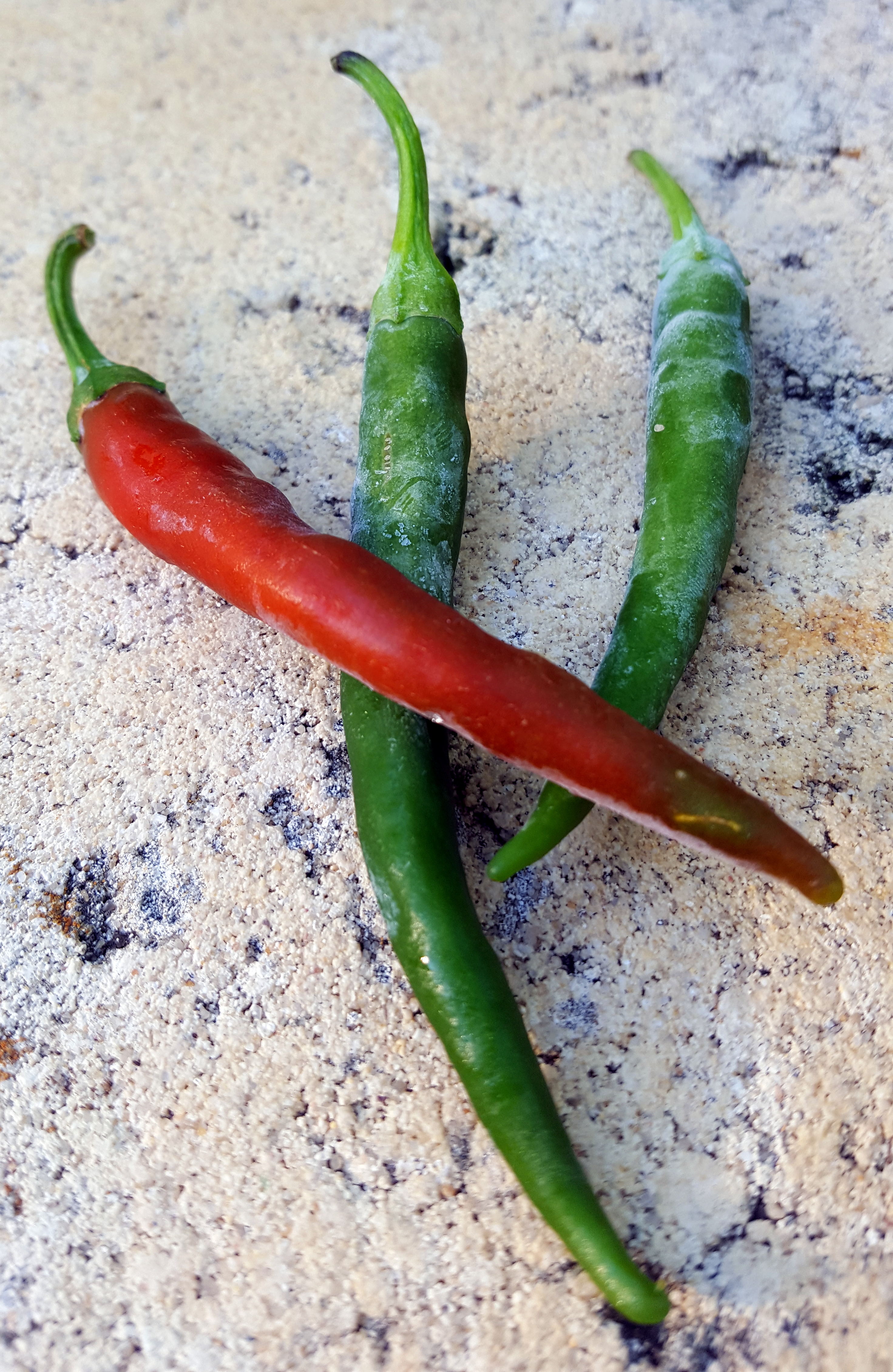
My second favourite chili is the humble Cayenne pepper, allegedly named for the city of Cayenne, the capital of French Guiana.
Although hotter than a Jalapeño I think it smells amazing and very distinctive. I love them green or red and ripe. This is where I max out chili-wise by the way. I am training myself but I just turn into a pool of sweat :).
Use them fresh, dried or powdered in soups and curry pastes. They are very versatile.
Flower:
Watch this space 🙂
Fruit: (sorry these are frozen hence the ice marks)

Plant:

Perth Fruiting Months:
- January
- February
- March
- April
Position:
Full scorching hot Perth sun!
Jobs:
I keep it topped to encourage flowering.
Scale:
Related Links:
- see more posts about growing chilis here
- see more cooking with chili posts here
- go to all ingredients
Written by
·