Tag: curry
-
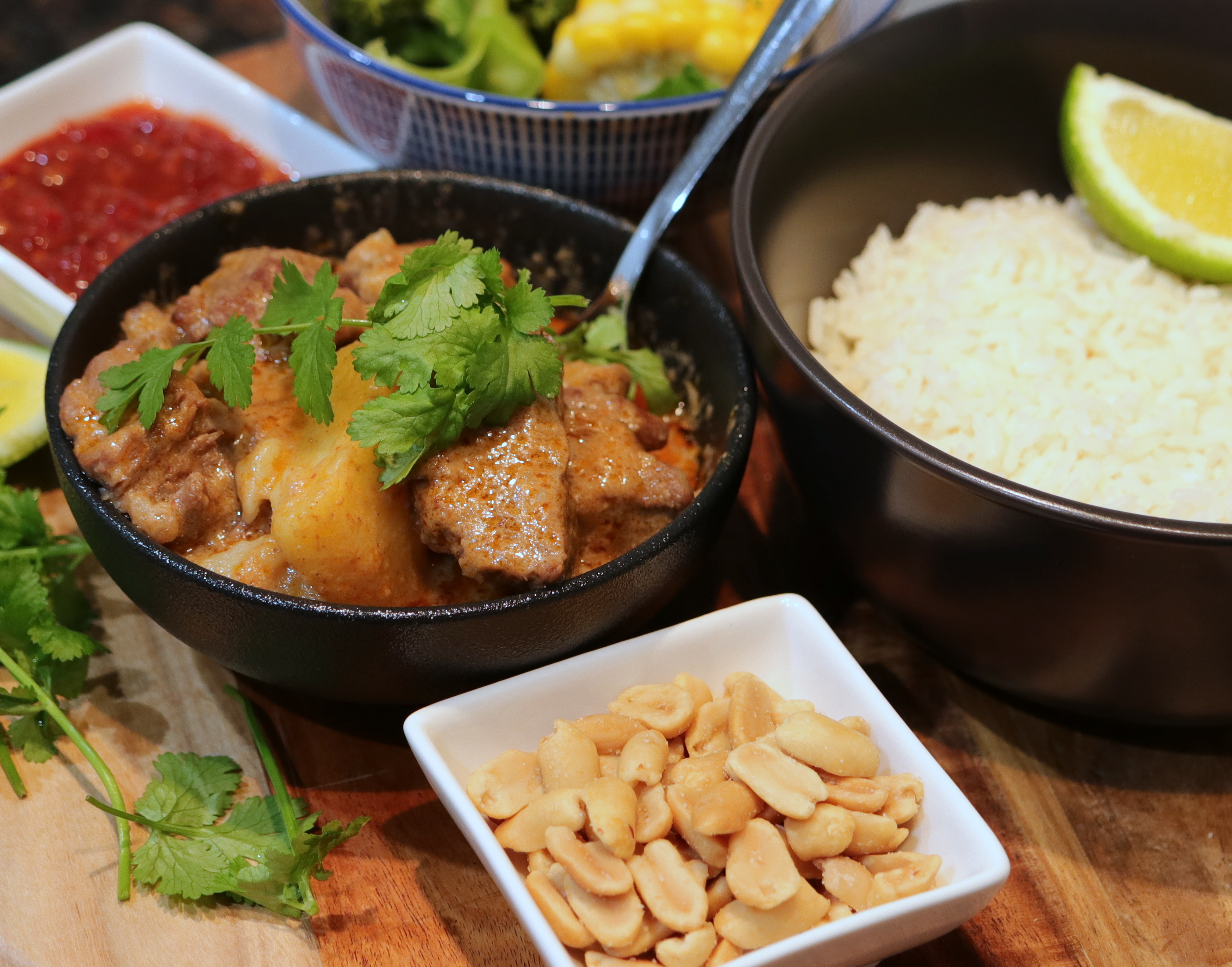
Thai Red Curry Beef In Your Pressure Cooker
I recently bought my first pressure cooker (the Phillips Slow Fast Cooker) and it came with an amazing cookbook. This is their Thai red curry with beef and pumpkin adapted to use potatoes.

INGREDIENTS
- 1 to 1.5kg beef chuck steak, cubed
- Plain flour to coat beef cubes
- A good slug of peanut oil
- 1/2 cup red curry paste
- 400ml coconut milk
- 500g potatoes, peeled, quartered
- 2 kaffir lime leaves
- 1 lemon grass stalk, bruised
- 1 -2 coriander roots
STEPS
- Browning the beef
- Mixing in the remaining ingredients
- Pressure cooking (30 mins)
- Serving
EQUIPMENT
- 1 chefs knife
- 1 chopping board
- A pressure cooker
Browning the beef
The modern pressure cookers with a sauté function make true one pot cooking a reality. All you need to do is chuck a slug of oil into the pot and set it to high sauté.
Then coat the beef cubes in flour and cook them until browned. Give the cubes a gentle mix every now and again so they don’t burn on one side.
Mixing in the rest of the ingredients
Throw in and gently mix the:
- 1/2 cup red curry paste
- 400ml coconut milk
- 500g potatoes, peeled, quartered
- 2 kaffir lime leaves
- 1 lemon grass stalk
- 1 -2 coriander roots
Pressure cooking
Set your pressure cooker timer to 30 minutes. If you have time, let the pressure release naturally at then end.
Serving
We had some corn cobs and broccoli that need using so we served the curry alongside them. Each person got some rice, peanuts and sriracha hot sauce.

Enjoy,
PK
Here are a few pressure cooker and curry posts to tide you over.
Written by
·
-
Banana Blossoms
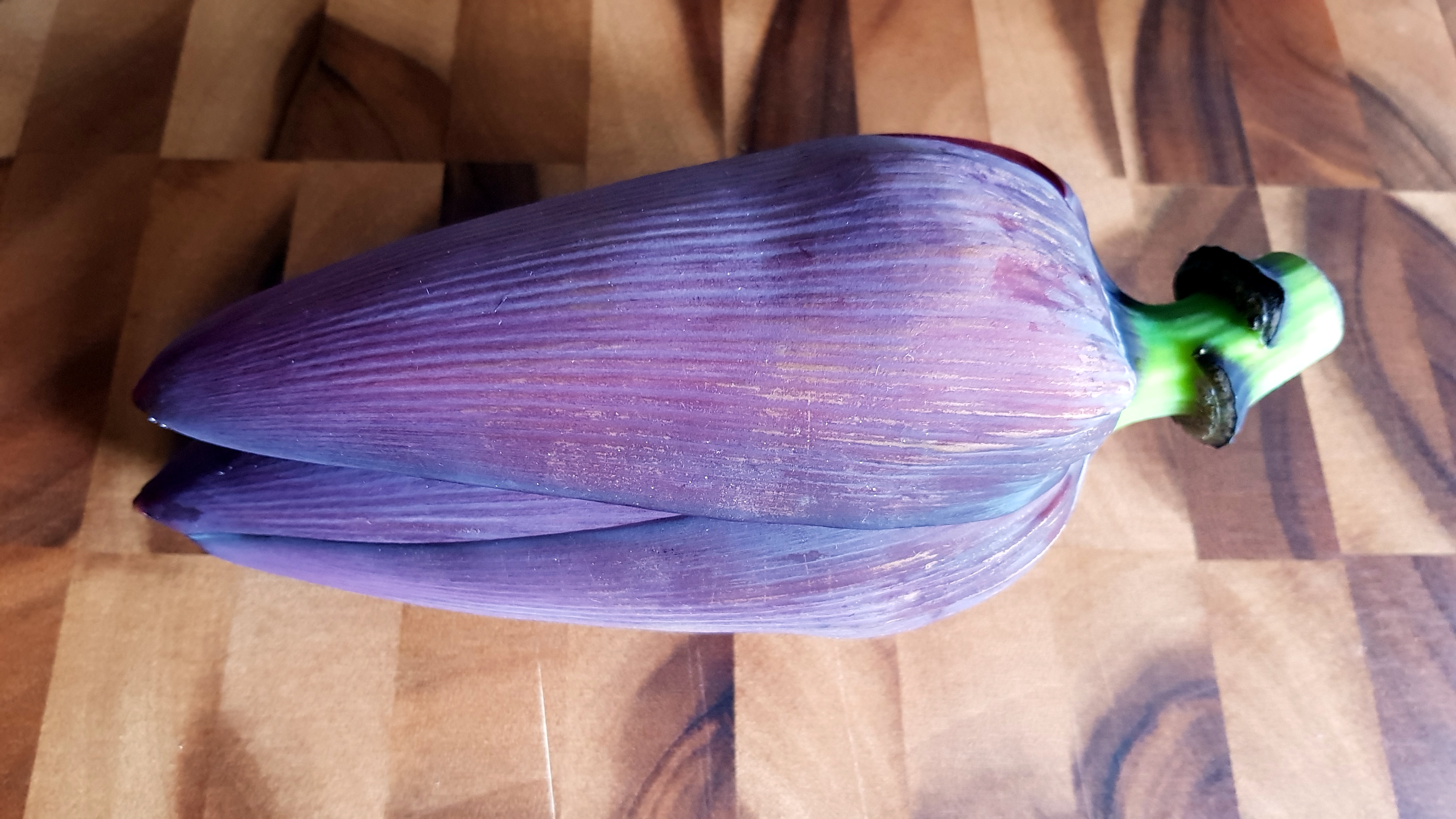
A friend of mine recently gave me a banana blossom.
I had never seen one before so I had to find out how to prepare and eat it. The process is fascinating and isn’t hard. It just takes a bit of time.
The blossom grows at the end of each cluster of bananas.

By Daniela Kloth – Own work, GFDL 1.2, https://commons.wikimedia.org/w/index.php?curid=73500454
They look and smell amazing.

There are two parts of the blossom that can be eaten. Part two is the inner heart which we get to as we peel away the tough purple outer leaves.
Part one though consists of the many long thin florets that would grow to be fruit. You can see them in the next two images. They need to be stripped of their pistil and hard outer layer and immediately put in salty water or a citrus, water and vinegar solution. Otherwise they discolour rapidly.


Once prepared and soaked they loose their initial bitterness and are great in stirfries.
Eventuall you get to the tender leaves and pale heart. They also need soaking for a few hours.


I then sliced the heart and leaves inor rings and used them in a thai fish curry.

Enjoy,
PK
Here are some more Southeast-Asian cuisine and curry posts.
Written by
·
-
River Cottage’s Thai Fish Curry
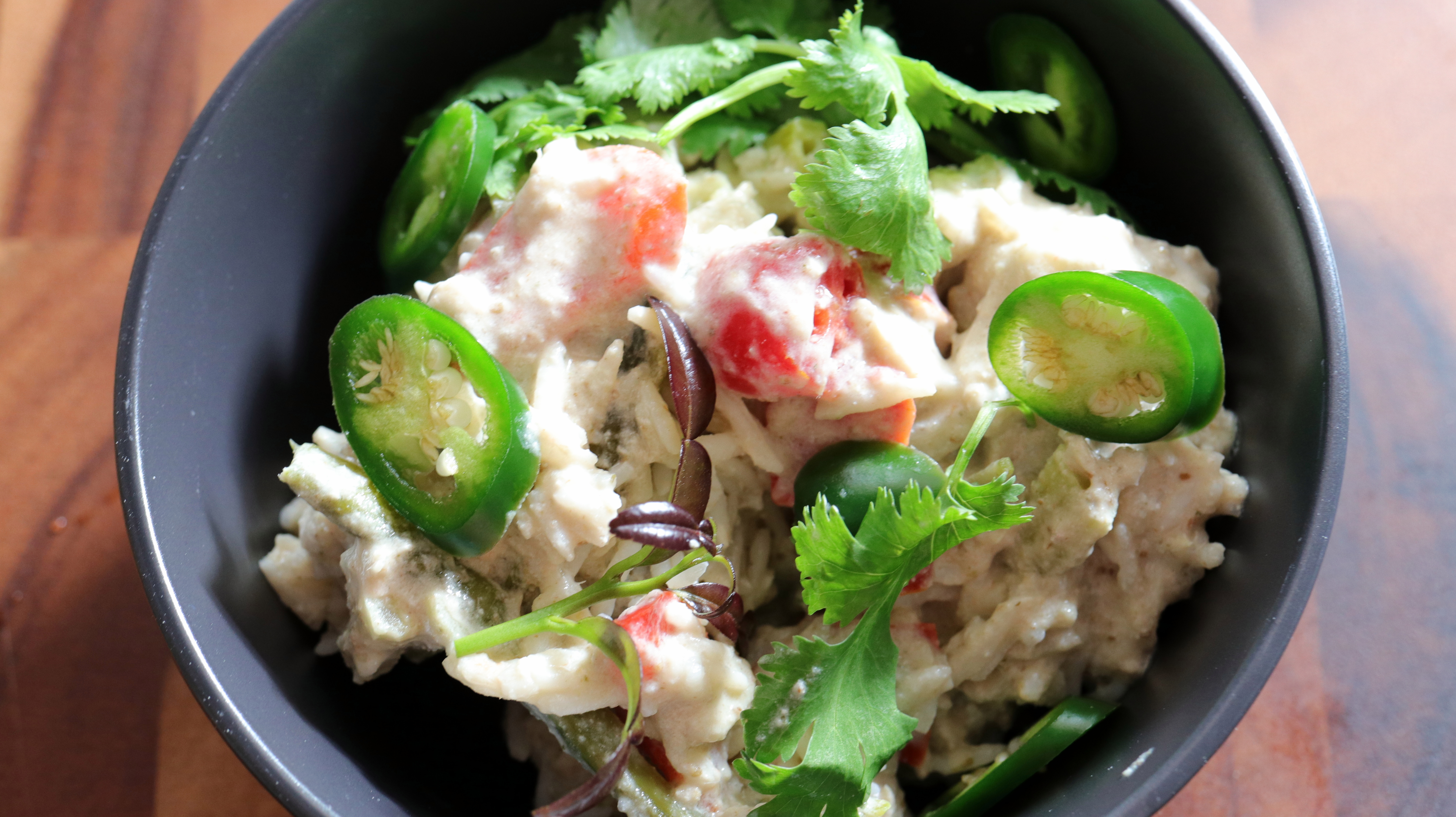
I couldn’t have picked a better recipe for my first ever homemade fish curry than River Cottage’s Thai Fish Curry.
It is so aromatic and the flavours are perfectly balanced. You can use firm fish fillets solely or a mix of fish and crab/crayfish meat. I reckon a couple of prawns would go amiss either.
Note: The River Cottage website says you can make and freeze the curry paste in larger batches ahead of time.
Steps
- Making the curry paste
- Cooking the curry
- Serving
Ingredients
- 2 Tbsp oil (I used peanut oil)
- 400ml coconut milk
- 200ml fish stock or water
- 2 Tbsp fish sauce
- 2 tsp raw sugar
- 125g French beans (I used snow peas instead), sliced on the diagonal
- 100g spring onions, sliced on the diagonal
- 800g firm fish fillets (I used pink snapper), skin off and roughly cubed
- Curry paste:
- 2-6 small green chillies
- 1 brown onion (small), chopped
- 100g fresh ginger, chopped
- 4 garlic cloves, peeled
- 2 Tbsp galangal paste (I used a small chunk fresh out of my garden)
- 3 lemongrass stalks, tough outer layers removed, finely sliced
- 2 tsp ground coriander
- 2 tsp ground cumin
- 1 lime, juice and zest
- 4 kaffir lime leaves, chopped (optional)
- 1 tsp Thai shrimp paste
- 1 tsp sea salt
Equipment
- 1 chef’s knife
- 1 chopping board
- 1 wooden spoon
- 1 deep saucepan
- 1 wet blender
Making the curry paste
- Add to your wet blender the:
- 2-6 small green chilies
- 1 brown onion
- 100g fresh ginger
- 4 garlic cloves
- 2 Tbsp galangal paste
- 3 lemongrass stalks
- 2 tsp ground coriander
- 2 tsp ground cumin
- 1 lime, juice and zest
- 4 kaffir lime leaves
- 1 tsp Thai shrimp paste
- 1 tsp sea salt
- Blend until you get a smooth paste.

Cooking the curry
- Heat the 2 Tbsp oil in your saucepan then fry the curry paste, keeping it gently moving, for several minutes on medium heat.
- Add the 400ml coconut milk and the 200ml fish stock or water, 2 Tbsp fish sauce and 2 tsp raw sugar.
- Bring to a simmer and cook for 20 minutes stiring occasionally.
- Now add the 125g French beans and the 100g spring onions and cook for another 5 minutes.
- Gently mix in the 800g of cubed fish and cook for another 3 minutes.
- If you are using any seafood (squid perhaps) that might go rubbery if over cooked, hold off till last minute.


Serving
Serve on bowls of rice and garnish with slices of chili and torn coriander leaves.

Enjoy and please visit the River Cottage website for more amazing meals,
PK
YOU MIGHT ALSO LIKE
THAI CUISINE
MORE SEAFOOD DISHES
MORE CURRIES
Please consider subscribing to a weekly email summary of our posts or check us out on Facebook @growitcatchitcookit.
[mc4wp_form id=”15771″]
Written by
·
-
How To Make Rick Stein’s Butter Chicken
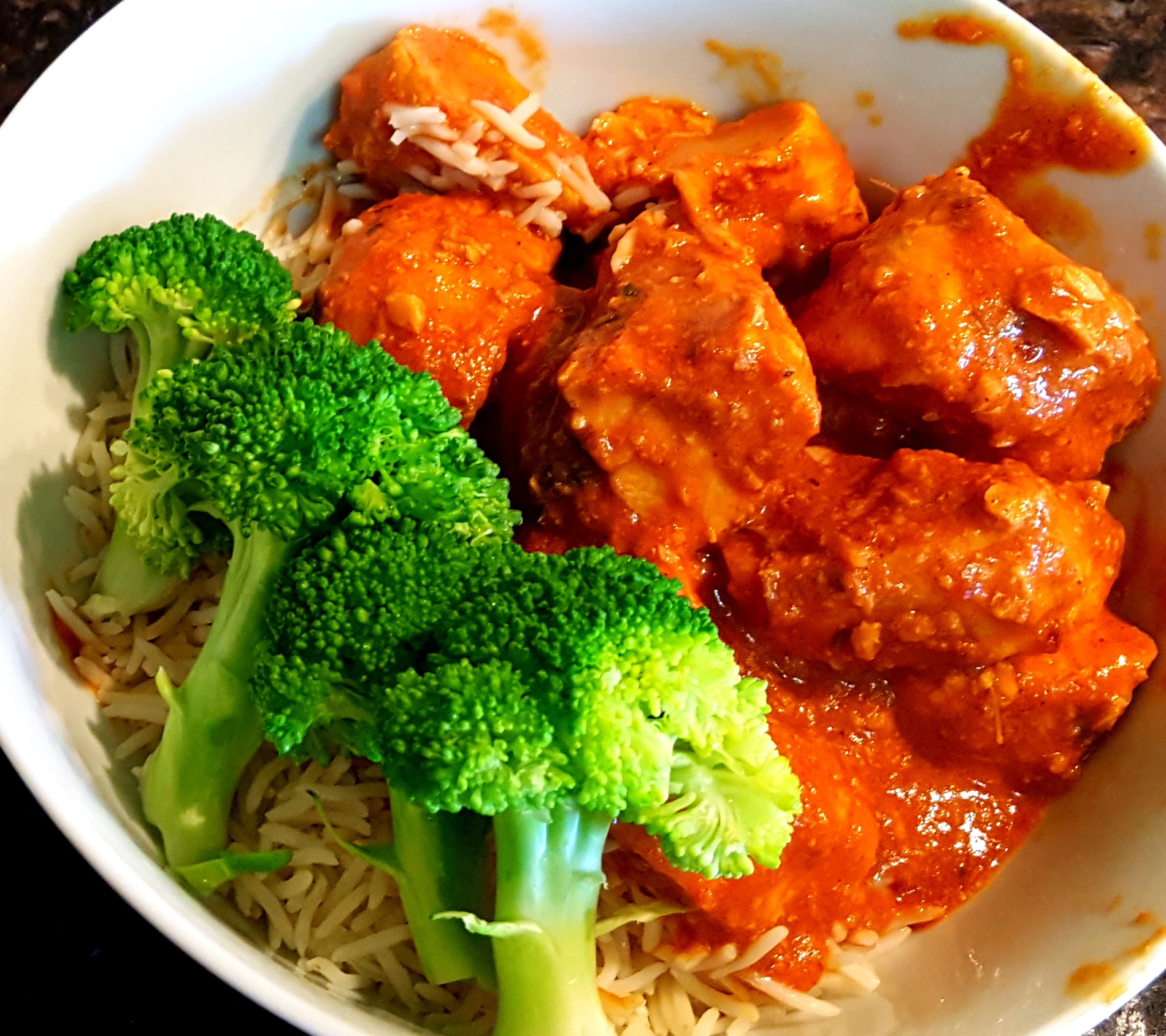
You simply can’t get this dish’s depth of flavours using a store bought Butter Chicken paste or simmer sauce. The result is the most succulent chicken in a creamy, nutty, tomato based sauce.
I won’t lie to you though. This is one of the trickier recipes on the blog.
Notes:
- I hope to char grill the chicken better next time but oh my it was amazing anyway. I think I might hit them with a chef’s torch for a bit.
- I also didn’t sprinkle it with Rick’s Chat masala at serving and want to do that next time.
Steps
- Marinating the chicken in marinade 1 for one hour
- Marinating the chicken in marinade 2 for four hours
- Charring the chicken pieces
- Making the sauce
- Serving
Ingredients
- 4 large chicken breasts, skinned and deboned
- Marinade 1
- The juice of 2 limes
- 1 tsp Kashmiri chili powder
- 1 tsp table salt
- Marinade 2
- 50g plain yoghurt
- 50g double cream
- 4 garlic cloves, diced
- 5cm ginger, roughly chopped
- 1 tsp Garam masala
- 1 tsp ground turmeric
- 3/4 tsp ground cumin
- 1/2 tsp beetroot powder (for color)
- The sauce
- 50g ghee
- 5 garlic cloves, diced
- 5cm ginger, diced
- 400g tomato passata
- 1/2 tsp Kashmiri chili powder
- 1/2 tsp ground cumin
- 1/2 tsp ground coriander seeds
- 1/2 tsp ground cinnamon
- 1/2 tsp Garam masala
- 1 tsp dessicated coconut
- 1.5 tsp table salt
- 200ml water
- 25g cashew nuts
- 25g pumpkin seeds
- 2 Tbsp boiling water
- 1 Tbsp fenugreek leaves
- 1/2 tsp caster sugar
- 45ml double cream
Equipment
- 1 chef’s knife
- 1 chopping board
- 1 wooden spoon
- 1 mixing bowl
- 1 bowl or dish for marinading
- 1 wet mixer/blender (used twice so you will need to clean it)
- 1 large heavy based saucepan
- Several skewers
Marinating the chicken in marinade 1 for one hour
- Cut each breast into 3 pieces.
- In a large bowl mix the:
- Two limes worth of juice
- 1 tsp Kashmiri chili powder
- 1 tsp table salt.
- Put the chicken pieces in the marinade and mix to coat.
- Pop the bowl in the fridge for 1 hour.

Marinating the chicken in marinade 2 for four hours
- In your wet mixer/food processor add the:
- 50g plain yoghurt
- 50g double cream
- 4 garlic cloves, diced
- 5cm ginger, roughly chopped
- 1 tsp Garam masala
- 1 tsp ground turmeric
- 3/4 tsp ground cumin
- 1/2 tsp beetroot powder (for color).
- Blend until smooth and add to the chicken making sure every knook and cranny is coated.
- Marinate for 4 hours in the fridge.

Charring the chicken pieces
- Preheat your fan forced oven to 240C.
- Thread the chicken pieces on either oiled metal skewers or pre-soaked (in water to stop them burning) wooden ones.
- Roast for 15-20 minutes aiming for slightly charred but not cooked fully through just yet.
- Start the next step while the chicken is roasting.

Making the sauce
- Grind, dice and chop the sauces ingredients.
- Heat the 50g ghee in the saucepan over a medium heat.
- Add the 5 diced garlic cloves and diced ginger and fry for a minute.
- Stir in the 400g tomato passata and simmer for 5 minutes.
- Stir in the:
- Simmer for another 10 minutes while you do the next step.
- In your wet mixer/food processor blend into a paste the:
- 25g cashew nuts
- 25g pumpkin seeds
- 2 Tbsp boiling water
- Stir the paste into the passata sauce and the rest of the water.
- Add the chicken to the sauce and gently mix everything.
- Simmer for 10 minutes and then stir in the:
- 1 Tbsp fenugreek leaves
- 1/2 tsp caster sugar
- 45ml double cream


Serving
I served this dish over a bed of basmati rice with some steamed vegetables and a plate of pappadums to share.
Spoon the chicken pieces onto the rice using a slotted spoon and then add as much sauce as the person likes.
Rick Stein says to garnish with some torn fresh coriander leaves, shredded ginger and a sprinkle of chat masala.

Enjoy,
PK
YOU MIGHT ALSO LIKE
INDIAN CUISINE
CURRIES GALORE
MORE CHICKEN DISHES
MORE RICK STEIN
Please consider subscribing to a weekly email summary of our posts or check us out on Facebook @growitcatchitcookit.
[mc4wp_form id=”15771″]
Written by
·
-
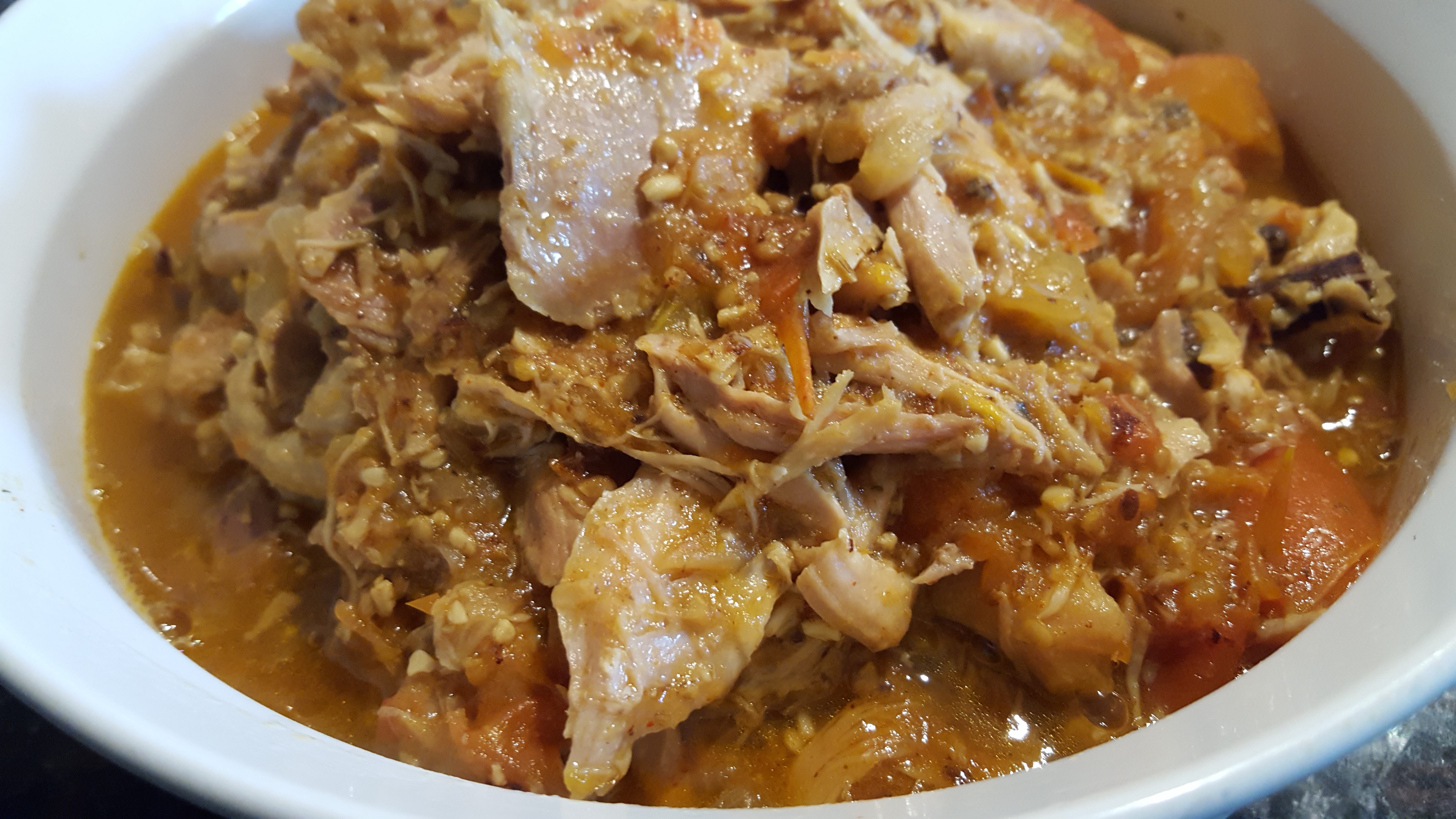
PK Makes Rick Stein’s Chicken Vindail
I love the beguiling simplicity of this curry. For me, the fenugreek makes the dish but everything works together to make a most tender, most aromatic meal.
My wife loves it too as it is a one pot, low mess deal. 🙂

Steps
- Preparing everything
- Cooking the curry
- Serving
Ingredients
- A good slug of olive oil
- 2cm cinnamon stick
- 1 clove
- 1 star anise
- 2 brown onions, chopped
- 10 garlic cloves, finely diced
- 1 Tbsp ground cumin
- 2 tsp Kashmiri chili powder
- 0.5 tsp ground fenugreek
- 0.5 tsp ground turmeric
- 1 tsp salt
- 500g fresh tomatoes, roughly chopped
- 1kg chicken drumsticks, bone in
- 1 Tbsp white wine vinegar
- 1 tsp sugar
Equipment
- 1 chef’s knife
- 1 chopping board
- 1 wooden spoon
- 1 heavy fry pan, or equivalent
Preparing everything
- Finely dice the 10 garlic cloves.
- Chop the 2 brown onions.
- Rough chop the 500g fresh tomatoes.
Cooking the curry
- Chuck a generous slug of olive oil into your chosen dish and bring to medium heat.
- Throw in the cinnamon stick, the clove and the star anise.
- Fry for a few minutes to allow the spices to infuse the oil with their flavour.
- Add the chopped onions and soften them up.
- Stir in the 2 finely diced garlic cloves, the 1tsp of ground cumin and fry for a few more minutes.
- Add the:
- 2 tsp Kashmiri chili powder
- 0.5 tsp ground fenugreek
- 0.5 tsp ground turmeric
- 1 tsp salt
- Give everything a thorough but gentle mix.
- Add the 500g chopped tomatoes and cook for about 5 minutes to soften them up.
- Cover the pan and cook for about 35 minutes.
- Add the 1 Tbsp white wine vinegar and the 1 tsp sugar.
- Gently mix everything and cook for another 5 minutes or the chicken is cooked through.


Serving
Serve on a bed of basmati rice and provide lots of pappadams.

Enjoy,
PK
YOU MIGHT ALSO LIKE
INDIAN CUISINE
MORE CHICKEN DISHES
MORE RICK STEIN
Please consider subscribing to a weekly email summary of our posts or check us out on Facebook @growitcatchitcookit.
[mc4wp_form id=”15771″]
Written by
·
-
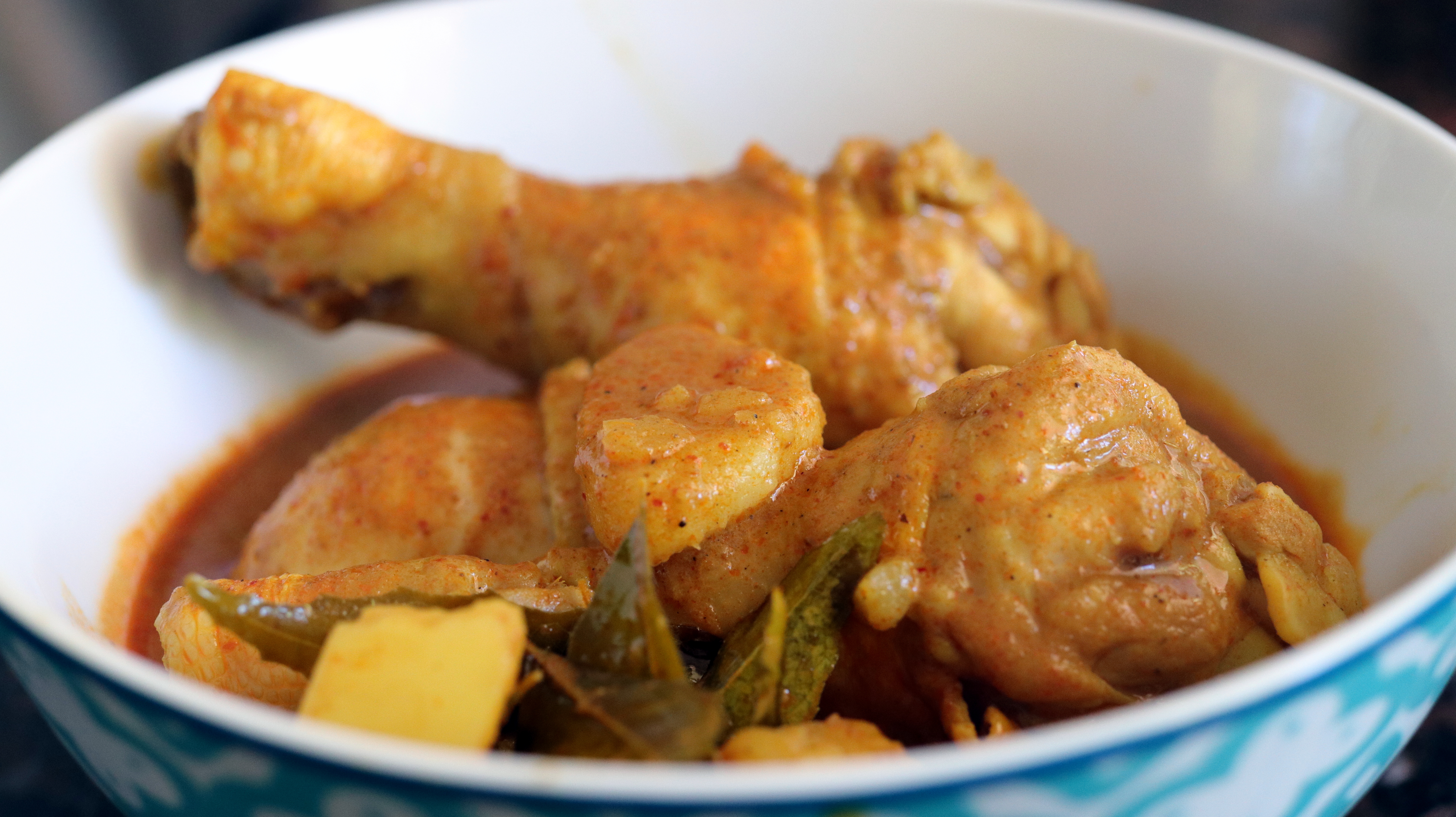
PK Makes Heng’s Brand Nyonya Chicken Curry
Malaysian cuisine features some of my favourite comfort food. I was in my local Asian grocer last week and saw a Chicken Nyonya Curry ‘ready to cook’ paste made by the Heng’s brand.

I love making Nyonya rempah from scratch but I thought I would give this product a try. I was thinking forward to times I might need a comfort curry but can’t be bothered cooking one from scratch.
It was amazing and I am going to stock up this and their other flavours. The colours and fragrances balanced perfectly and there was just the right amount of chili kick.
Heng’s has posted a youtube video here and I am going to show you what I did too.
Note: This is not a paid post.
First I parboiled about 600g of peeled chunky sliced potatoes in boiling water with a pinch of saffron. I misunderstood the label’s directions and thought I needed 1.5kg of chicken pieces and potatoes combined. It is actually 1.5kg of chicken pieces and additional potatoes. No problem, it still worked out fine and the paste didn’t miss a beat.
While I was doing that I heated the paste until the oil started to separate out.

I very gently mixed in my ~900g chicken pieces, coating every bit of them with the paste.

I added the potatoes and a generous handful of fresh curry tree leaves.

After gently mixing everything, I added 500ml of water (taking care not to wash the paste off the chicken and potatoes).
I slowly brought everything to a gentle boil and then simmered, covered, for about 15 minutes. Just look at the colours!

I then added 100ml of coconut milk and let the sauce simmer for a few more minutes. You can certainly skip this step if you want a runnier sauce.


Serving
Gently place the chicken and potato into serving bowls and then spoon lots of sauce over everything.
White rice and plenty of roti wouldn’t go amiss either. 🙂


Enjoy,
PK
YOU MIGHT ALSO LIKE
MORE MALAYSIAN DISHES
SOUTHEAST ASIAN CUISINE
Please consider subscribing to a weekly email summary of our posts or check us out on Facebook @growitcatchitcookit.
[mc4wp_form id=”15771″]
Written by
·
-

What Are Soups, Stock, Broths And Stews?
Is it just semantics or is there a real difference between soups, broths, stews and stocks? If you do a search online you will find a lot of conflicting definitions and see that the terms are used interchangeably.
So I am going to throw in my two cents too. 🙂
I believe it is all about the desired outcome.
Stock
For me, stock is an ingredient of broths, soups and stews.
I keep my vegetable stock very simple. It is basically the holy trinity (celery, carrot and onion) in water cooked on low heat overnight. I make chicken, beef, lamb and rabbit stock by also adding their bones and scrap meat.
Hot tips:
- Always start with room temperature water as hot/boiling water traps the flavours in the vegetables, we want the opposite affect.
- Make stock in large batches and freeze it for future use. For examples see my Slow Cooker Chicken Stock or Rabbit Stock.
Broth
I might then take a stock and build flavours on top, generally by the use of additional vegetables, herbs and spices. If I am using a vegetable stock I might add bones too.
I don’t cook it for long and it is for immediate use. After straining you could eat it right away.
Soup
I then take stock or broth and add ingredients (sometimes separately cooked) like meat, pasta, noodles, potato and then garnish with fresh vegetables. As a rule of thumb you need a bowl and a spoon.
Stews and casseroles
For me, a stew is something you can eat off a plate and generally has little sauce. It is as much about the method of cooking ie stewing the meat in juices, as any other characteristic.
We generally use casserole and stew interchangeably in Australia.
Enjoy,
PK
Here are some more cooking techniques:
Written by
·
-

Poh’s Nyonya Chicken Curry
What I like most about this dish is that you get to make your own curry paste (or in Nyonyan cuisine ‘a rempah’). Please see Malay for spice if you want more information.
When I cook this meal I reduce the sauce until it sticks to the chicken, the roof of your mouth and, of course, your fingers :).
I have tried it with boneless chicken breast but I have to say I prefer using chicken drumsticks. The bones make for a tastier sauce and the thighs for tenderer meat. If you don’t like the look of the bones at serving time use two forks to jerk the chicken.
My notes say that I originally got the recipe from Taste.com.au and that it was by Poh Ling Yeow. I can’t find that original post now but she wrote that it took her lots of trial and error to get that ‘authentic taste.’ She wrote “The first time I made this and it worked, I jumped around like a lunatic, I was so happy. I felt like I had conjured magic, to make a dish like this and have it hitting all those familiar notes of home”.
The ingredients list might look a bit daunting at first but trust me it is worth it. I have of course tweaked it a bit for my lazy cooking style and reduced the chili content for my family. Add your favourite whole chilis after the paste has been sautéed if you like it hot.
Oh, by the way, you can double the recipe as this meal freezes well. I recommend keeping any leftover rice in a separate container for a stress free microwave reheat though.
STEPS:
- Make the rempah
- Cook the spices and then mix everything in one pot
- One pot simmer
You will need:
- Rempah Ingredients:
- 1 tsp table salt
- 1 tsp brown sugar
- 3.5 Tbsp whole coriander seeds
- 1.5 tsp whole cumin seeds
- 1.5 tsp whole fennel seeds
- 1 tsp powdered kashmiri chili (at the minimum)
- 1 Tbsp dried belacan (shrimp paste)*
- 1 Tbsb powdered turmeric
- 3 cloves garlic
- 270g red shallots (sliced)
- 1/3 cup vegetable oil
- Note *: I sometimes use a treacle consistency type of belacan but find it too sticky and harder to blend than the dried version.
- Curry Ingredients
- 3 Tbsb coconut cream
- 10 sprigs of curry leaves
- 1 star anise
- 2 whole cloves
- 1 cinnamon stick
- 1.5kg chicken thigh fillets
- 500g potatoes
- 500ml coconut milk
- Rempah Equipment
- a chopping board
- a long sharp knife
- a medium sized bowl
- a small plate
- a wet blender with a very small bowl
- a dry spice mixer (or a mortar and pestle)
- Curry Equipment
- a chopping board
- a long sharp knife
- a measuring cup for the coconut milk
- 2 large plates
- a large deep frypan or stockpot
Make the rempah
I listed all the ingredients for the curry itself and the rempah for your shopping lists but I’ve actually posted the rempah recipe separately here – A Nyonya Rempah.
Cook the spices and then mix everything in one pot
In summary:
Steps:
- Peel, halve and parboil the 500g of potatoes in the saucepan. Rinse and then drain them.
- Bring the 3 Tbsp coconut cream, 1 star anise, 2 whole cloves and the 1 cinnamon stick together. Then chuck them in the pot.
- Bring your Nyonya curry paste out of the fridge and let it come up to room temperature somewhat. If you are using a frozen batch you should have defrosted it fully by now. Chuck the paste in the pot too.
- Sauté everything that is in the pot for about 10 minutes. Watch the colour of the Nyonya paste change and the oil start to separate out. See the image below showing the raw paste on the left and the cooked paste on the right. By now your kitchen is smelling amazing :).

- To the pot, add the 1.5kg chicken thigh fillets, pausing to mix them with the spice blend as you go.
- Add the now parboiled potatoes, 10 sprigs of curry leaves and 500ml of coconut milk to the pot and simmer until the potatoes and chicken legs are cooked through.
Serve with lots of your favourite rice. Mine is Basmarti and please don’t tell anyone I use the store bought packets you microwave for 90 seconds.

Poh is amazing,
PK
Related Links:
Please consider subscribing to get a weekly email summary of our posts.
[mc4wp_form id=”15771″]
Written by
·
-

How To Make A Nyonya Rempah Paste
This Malaysian curry paste looks hard to make on first glance. After a few goes though you will be able to make it blindfolded and I hope like me you find it an enjoyable process :).
I make it well ahead of time for my favourite south-east Asian curry, a sticky Nyonyan Chicken Curry (see the post here). Please give this paste recipe a try, you won’t be disappointed. The only drawback is that you might not look at store bought pastes in the same light ever again.
Look at the colourful ingredients:

Note:
- All my recipes have their chili quota curbed at my family’s request. I am slowly increasing the amount on the sly so don’t tell them :). Add extra chili for that authentic taste if you can get away with it.
- The paste freezes well.
You will need:
- Ingredients:
- 1 tsp table salt
- 1 tsp brown sugar
- 3.5 Tbsp whole coriander seeds
- 1.5 tsp whole cumin seeds
- 1.5 tsp whole fennel seeds
- 1 tsp powdered kashmiri chili (at the minimum)
- 1 Tbsp dried belacan (shrimp paste)*
- 1 Tbsb powdered turmeric
- 3 cloves garlic
- 270g red shallots (sliced)
- 1/3 cup olive oil
- Note *: I sometimes use a treacle consistency type of belacan but it is so sticky and harder to blend than the dried version.
- Equipment
- a chopping board
- a long sharp knife
- a small bowl
- a small plate
- a wet blender with a very small bowl
- a dry spice mixer or a mortar and pestle
Make the rempah
Steps:
- Bring all of the rempah ingredients together (see What Does Mise en Place Mean?.
- Dry fry the whole spices (3.5 Tbsp whole coriander seeds, 1.5 tsp whole cumin seeds and 1.5 tsp whole fennel seeds).
- Let them cool and add to your spice mill. Mill them in bursts to avoid cooking the spices further in the heat caused by the blades. Keep going until you get a fine powder. Add this powder to your wet mixer and enjoy the aroma.
- Roughly chop the 270g red shallots and 3 garlic cloves and add to the wet mixer.
- I use Sim Seng Lee brand dried belacan (1 Tbsp worth), it stores really well and doesn’t smell out the house! Add it to the wet mixer.
- Add the rest of the ingredients to the wet blender (1/3 cup olive oil, 1 tsp salt, 1 tsp sugar, 1 tsp kashmiri chili and 1 Tbsb powdered turmeric).
- Blend to a smooth paste, spoon it into a bowl and place in the fridge.
Better than a store bought paste by a long shot:

Enjoy,
PK
Written by
·
-

Curry Leaf Trees
I love curry leaf trees.
The sight and the aroma they release when you brush past them make me smile. They can be hard to find in a nursery and they are not cheap. I got mine from Bunnings as a small seedling.
I am keeping it to less than two meters tall through regular harvesting and pruning. The soil around it drains well and is about 6.5 to 7.0 pH. As you can see, I have removed the lower branches completely and planted other herbs around the base with no problems.
Occasionally, ripe fruit drops and successfully germinates. I transplant these into pots and give them away once they are matured enough.

Edit: I have had my first flowers (4 years in):

I was a bit unsure myself what a sprig of curry leaves is as some of the recipes I use call for 10 sprigs. On the right of the plate below is about 5 sprigs, it seems a lot but trust me it is right. I am yet to ‘over do it’ on the curry leaf front ☺.
Strip the leaves off the twigs and add them as required to the dish If you are wondering, the leaves are safe to eat.
Fresh is best, then refrigerated from your local Asian grocer, then and only then, dried leaves. 🙂

Whenever I ask people if they want some fresh curry leaves from my kitchen garden they mostly ask what you can do with them. If you click on this link you will find a growing list of recipes that use curry leaves.
Enjoy,
PK
Here are some curry leaf and general ingredients posts:
Written by
·