Tag: soy sauce
-
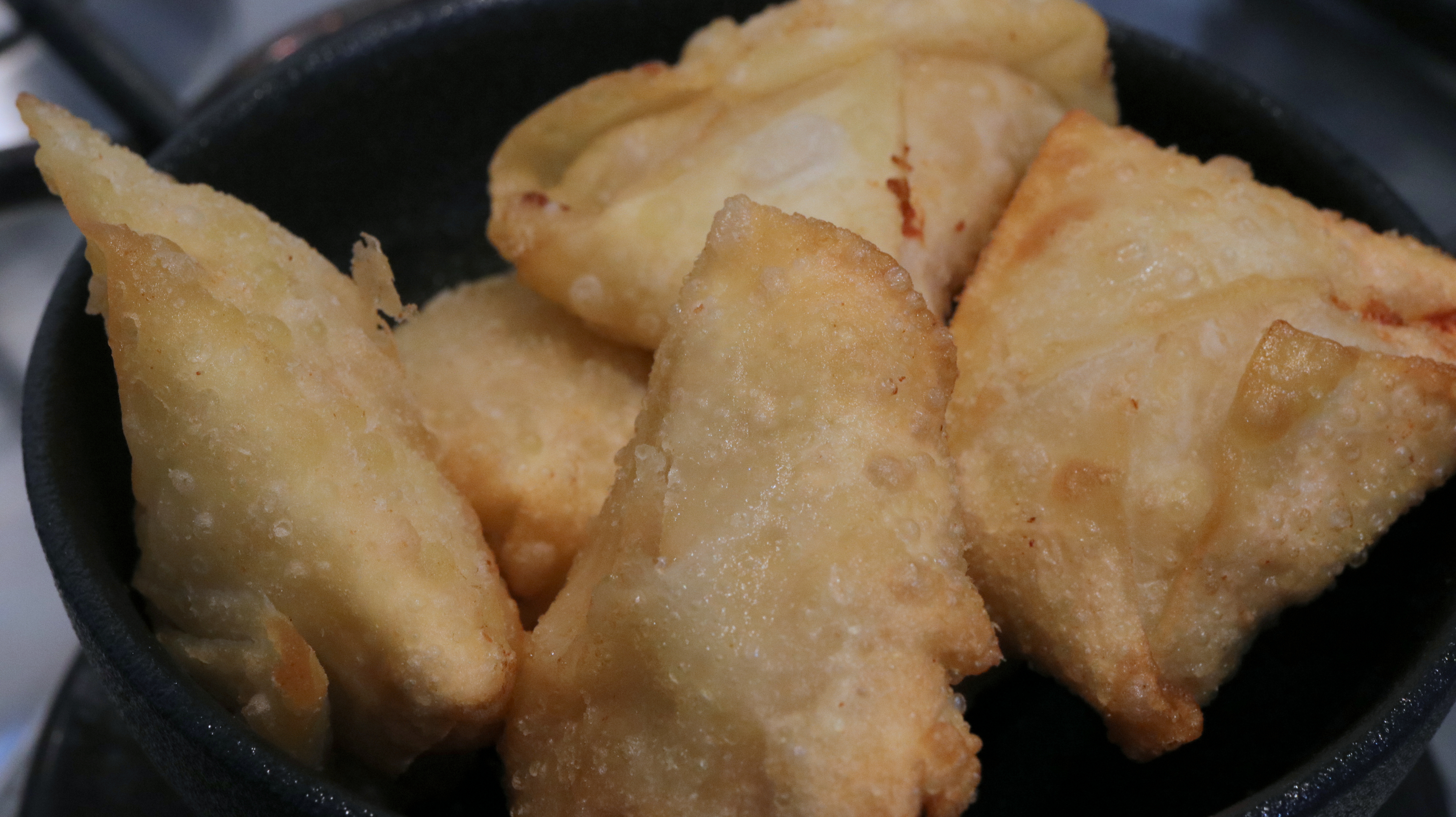
Welchy’s Chicken Wontons
Last night I made wontons using Welchy’s Wontons step by step guide.
They turned out amazing and are so much fun to make.
Whilst I used her recipe, I doubled the amount of mince and used chicken instead of pork. I got 40 wontons instead of 20 due to the extra mince. We ate 20 that night and froze the rest.
Steps

Spoon a small amount into the centre of each wonton, wet the edges with water and fold into a triangle.

Press down on the edge of the triangle to get a good seal.
Serving
Like Welchy, we had some with the broth they were cooked in but I couldn’t resist frying some of them too.
Enjoy,
PK
Here are a few soup ideas and Asian dishes for you.
Written by
·
-
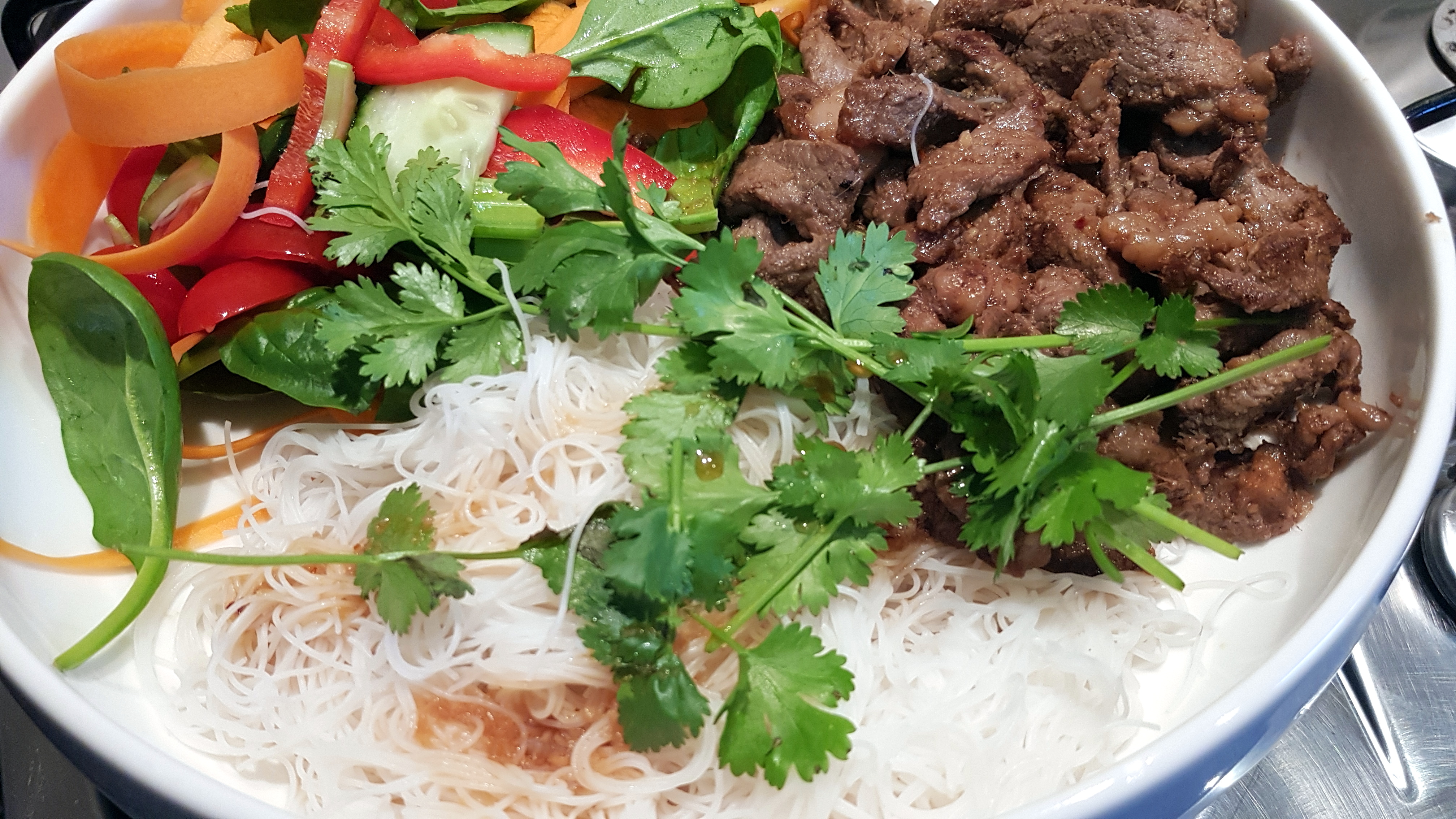
PK’s Vietnamese Beef Noodle Salad
This simple Vietnamese inspired salad could not be easier.
Think of it as a start though and experiment every time you make it. I have said it before, Southeast Asian flavours are hard to get “perfect” but so easy to get “tasty”. The trick is in tailoring the sauce ratios to your preferences. 🙂
Note: I marinade the beef first and then use very little in the way of sauces on the salad and noodles afterwards. Some soy sauce and I am good to go. Your options are endless though.

You will be:
- Preparing everything
- Cooking the beef strips
- Serving
You will need:
- Ingredients:
- PK’s Vietnamese Beef Marinade #1
- several beef scotch fillet or eye fillet (tenderloin) steaks
- a couple of slugs of peanut oil
- a green salad of your choice (see KT’s NoRecipe Green Salad but add things like mint leaves and coriander sprigs)
- Equipment:
- a long sharp knife
- a chopping board
- a fry pan
- a sauce pan or pot for the noodles
- a bowl to marinade the beef in
Preparing everything
- Earlier in the day or the night before, slice the beef steaks into strips and marinade them using something like PK’s Vietnamese Beef Marinade #1.
- Pop the bowl into the fridge.
- Closer to serving time, make a yummy green salad and drizzle with a bit of vinegar.
- Pull the bowl of beef strips out of the fridge to get them to room temperature just as they are going onto the barbecue or hot plate.

Cooking the beef strips
- Chuck the noodles into a bowl of hot water and let them soften as per the instructions on the pack.
- Heat a fry pan, throw a couple of slugs of peanut oil in and start cooking the beef strips.

Serving
Take the meat off the fry pan and allow to cool some. Bring everything together and drizzle with some soy sauce.


Enjoy,
PK
Related Links:
Please consider subscribing to get a weekly email summary of our posts.
[mc4wp_form id=”15771″]
Written by
·
-
PK’s NoRecipe Beef Marinade #1
I experimented with this marinade last weekend and it worked a treat. I hope you try it with different ratios of the ingredients 🙂
Mix together using a wet mixer:
- a slug of lemon juice
- a slug Worcestershire sauce
- a slug of soy sauce
- black peppercorns to taste.
Enjoy,
PK
Related Links:
Please consider subscribing to get a weekly email summary of our posts.
[mc4wp_form id=”15771″]
Written by
·
-

Ketjap Manis (kecap manis)
This distinctly Indonesian take on soy sauce is not salty but is instead sweet, aromatic and full of umami goodness :).
I think the taste is surprising the first time you try it but there is no denying what it brings to nasi goreng and Indonesian style satays.

Related Links:
Written by
·
-

Welchy’s Wonton Noodle Soup
And so I’m back
From out of space
I just walked in to find you here with that sad look upon your face …the sad face I am referring to is that of my older brother’s. I have been a bit busy and whilst I have been taking lots of photos – I then never got around to writing the actual blog. So here goes…
My boyfriend loves Wonton Noodle Soup and will only eat it from one place (International Food Court in Morley if you ever get a chance). It’s divine – with slivers of pork, crunchy bok choy for texture, a gorgeous broth and then these silky full of flavour wontons… it’s basically Heaven in a bowl. And to top it all off they scatter crumbled pork crackling over the top.
I finally convinced him to let me have a go at cooking my own and suffice to say the results were amazing. Like most men (my younger and ‘opinionated about food even though he never cooks’ brother is one) if he goes for a second helping then you know you are onto a winner. It’s a little fiddly so unless you make it on a weekend, try and make the wontons ahead of time as they can sit in the fridge until you are ready 🙂
Ingredients:
For the Soup- 2½ cup chicken stock
- 2½ cup water
- 1 tsp. soy sauce
- 3 garlic cloves, smashed
- 3 to 4⅛-inch thin fresh ginger root slices (approximately 1 oz.)
- 2 green onions, cut in halves
- salt and pepper to taste
For the Wonton Filling- 4 oz. ground pork
- 1 tsp. soy sauce
- 1 tsp. Shaoxing wine (Chinese cooking wine, you can substitute with dry sherry)
- 1 tsp. cornstarch
- ¼ tsp. sugar
- ¼ tsp. sesame oil
- ¼ tsp. ground fresh ginger root
- 1 small garlic clove
- 1 green onion, finely chopped
- small pinch of black or white pepper
- 20 square wonton wrappers
For the Garnish- chopped green onion
- Cilantro leaves
Method
1. In a medium/large pot, add all ingredients for the soup. Cover, bring it to boil, reduce heat to low and simmer for 10 to 15 minutes. Turn off heat and let all the flavor come together. Meanwhile, let’s make wontons!
2. In a mixing bowl, combine all ingredients for the wonton filling and mix well with a spoon until cornstarch incorporated with other wet ingredients.
3. Take a wonton wrapper on your left hand(if you are right handed) and paint edges of square lightly with cold water using your finger tip. Put ½ teaspoon of filling in centre of wrapper. Fold in half, triangle shape and seal it tightly by pinching edges together with your fingers. Paint one of lower side corners of triangle with water and bring right and left corner together (water painted side down) and press well to make traditional curved wonton shape. Place wontons 1 to ½-inch apart on a parchment paper lined baking sheet. Repeat until you finish with wonton filling and wrappers.
4. When your wontons are ready, discard solid ingredients from soup base and bring it to boil.
5. Carefully add wontons and cook for 10 to 15 minutes. wontons will be fully cooked in 3 minutes, but cook it longer so all flavour from wontons will melt in to soup. Taste and add salt and pepper to your taste at this point.

6. Transfer to a serving bowl, garnish with green onion, cilantro and pepper to your taste.

And then…being super sneaky…I fried a couple of the wontons while the wontons were cooking in the soup. So totally worth it! Would be amazing on a cold night, but no matter the weather I’d eat this haha.

Katie
Related Links:
- see more Welchy posts here
Written by
·
-

PK Makes Ching He Huang’s Beef in Oyster Sauce
My hat off to the BBC chef Ching He Huang and her simple but flavoursome Beef in Oyster Sauce recipe.
This dish caught my eye because it calls for tenderising, with a mallet or rolling pin, beef eye fillet (tenderlion) steaks. I can see you shaking your head but trust me it is a transformational part of the recipe. The meat literally melts in your mouth!

Ching’s “… approach is to demystify the notion that Chinese cooking is complicated and time consuming by demonstrating traditional recipes that can be easily adapted for the home cook…”.
Mission accomplished!
You will be
- Bashing and flash seasoning the beef.
- Stir frying the vegetables
- Stir frying the beef
- Serving
You will need
- Ingredients (as the only main it served 2 adults and a hungry toddler very well):
- 350g beef eye fillet steaks
- 1 tsp light soy sauce
- 1.5 Tbsp oyster sauce
- a pinch of raw sugar
- ground rock salt and ground black peppercorns
- 2 slugs of peanut oil
- 3 cloves garlic, finely diced
- 300g baby spinach leaves
- 1 carrot, chopped into matchsticks
- a handful of snow peas, sliced or whole
- 1 Tbsp dry Sherry
- 1 cup of your favourite rice (mine is basmati)
- Equipment
- a chopping board
- a long sharp knife
- several sheets of baking paper
- a bowl for marinading the meat
- a tenderising mallet or a rolling pin
- a wok or deep fry pan
- a serving dish
Steps:
Bashing and flash seasoning the beef
- Place the eye fillet steaks in between two sheets of baking paper and bash the stuffing out of it with a rolling pin or tenderising mallet. I know right :).
- Thinly slice the bashed beef and place into a bowl.
- Season with the:
- 1 tsp light soy sauce
- 1.5 Tbsp oyster sauce
- a pinch of raw sugar
- ground rock salt and black peppercorns to taste.


Stir frying your vegetables
- Chop and slice all of the vegetables.
- Add a slug of peanut oil to the frypan and get it nice and hot.
- Add the 3 cloves garlic (finely diced) and chopped chili to taste if you like it hot.
- Add the 1 carrot (sliced into sticks).
- Add the handful of snow peas.
- Keep everything moving all the time and then when you think it is time chuck in the 300g baby spinach leaves.
- As soon as the spinach leaves wilt and become warm put the whole lot into a serving dish. I sometimes cover them to keep everything piping hot.


Stir frying the beef
- Add another slug of peanut oil to the frypan and get it nice and hot again.
- Add the now seasoned beef slices and stir fry for a few minutes at most, remember that they will continue to cook after you take them out of the pan. We don’t want them to be chewy.
- Pour the 1 Tbsp dry Sherry over the meat and quickly toss everything.
- Add the now cooked beef to the cooked vegetables waiting in the serving dish.

Serving
Serve from a central dish and let everyone take what they need. Make sure there is plenty of rice and good conversation. 🙂

Thanks again to Ching,
PK
Here are some more Chinese and asian fusion posts:
Written by
·
-
PK Makes Beef in Oyster Sauce
This was simply the best stir fry I have ever cooked. I literally sighed when I first tasted it and you couldn’t wipe the smile of my face.
I knew it was good because everyone came back for seconds, even my toddler :).
This dish caught my eye because it calls for tenderising, with a mallet or rolling pin, beef eye fillet (tenderlion) steaks. I can see you shaking your head but trust me it is a transformational part of the recipe. The meat literally melts in your mouth!
My hat off to the BBC chef Ching He Huang and her simple but flavoursome recipe. I modified it slightly by leaving out the chili (at my family’s request), adding a lot more vegetable variety and served it with basmati rice rather than sautéed mushrooms.
Ching’s “… approach is to demystify the notion that Chinese cooking is complicated and time consuming by demonstrating traditional recipes that can be easily adapted for the home cook…”.
Mission accomplished mate!
As per my normal practice, I marinaded the beef first thing in the day. In this case I did it to make it easier, having everything ready to go, when I cooked the meal in the evening. That said, this dish will blow you away even if you just flash marinade the meat for a few minutes.
You will be:
- Bashing and flash seasoning the beef.
- Prepping, quickly stir frying the vegetables and putting them aside.
- Quickly stir frying the beef and combing everything as you serve.
You will need:
- Ingredients (as the only main it served 2 adults and a hungry toddler very well):
- 350g beef eye fillet steaks
- 1 tsp light soy sauce
- 1.5 Tbsp oyster sauce
- a pinch of raw sugar
- ground rock salt and ground black peppercorns to taste
- 2 slugs of peanut oil
- 3 cloves garlic, finely diced
- 300g baby spinach leaves
- 1 carrot, chopped into matchsticks
- a handful of snow peas, sliced or whole
- 1 Tbsp dry Sherry
- 1 cup of your favourite rice (mine is basmati)
- Equipment
- a chopping board
- a long sharp knife
- several sheets of baking paper
- a bowl for marinading the meat
- a tenderising mallet or a rolling pin
- a wok or deep fry pan
- a serving dish
Steps:
Prepare the beef
- Place the eye fillet steaks in between two sheets of baking paper and bash the stuffing out of it with a rolling pin or tenderising mallet. I know right :).
- Very thinly slice the bashed beef and place into a bowl.
- Season with the:
- 1 tsp light soy sauce
- 1.5 Tbsp oyster sauce
- a pinch of raw sugar
- ground rock salt and black peppercorns to taste.


Prep and stir fry your vegetables
- Add a slug of peanut oil to the frypan and get it nice and hot.
- Chop and slice all of the vegetables.
- Add the 3 cloves garlic (finely diced) and chopped chili to taste if you like it hot.
- Add the 1 carrot (sliced into sticks).
- Add the handful of snow peas.
- Keep everything moving all the time and then when you think it is time chuck in the 300g baby spinach leaves.
- As soon as the spinach leaves wilt and become warm put the whole lot into a serving dish. I sometimes cover them to keep everything piping hot.


Stir fry the beef:
- Add another slug of peanut oil to the frypan and get it nice and hot again.
- Add the now seasoned beef slices and stir fry for a few minutes at most, remember that they will continue to cook after you take them out of the pan. We don’t want them to be chewy.
- Pour the 1 Tbsp dry Sherry over the meat and quickly toss everything.
- Add the now cooked beef to the cooked vegetables waiting in the serving dish.

Serving:
Serve immediately :).


Thanks again to Ching,
PK
Written by
·
-

Ben’s Beef Jerky
Beef jerky is a great snack.
Its healthy, flavoursome, and gives you a little burst of energy. I never follow a recipe, so everything is quantity based and taste based. I use a dehydrator to dry the beef, however a light box will be just as good (if not better), it just takes longer.
If I had to roughly write down what I do, this would be it:
- Put into a bowl ~2 tbsp each of Soy sauce and Worcestershire sauce. Add in ~1 tsp malt or brown vinegar, and ~3 tbsp sugar. Mix till dissolved, taste and adjust as necessary until you have a nice flavour.

- Add in any other flavours you like. I will usually add a combination of chilli, smoked paprika, smoke water, coriander seeds (ground), onion or garlic powder.
- Cut ~1 -1.5 kg beef (try to get a topside or silverside) into strips ~1x1cm, as long as you like.
- Trim any fat off.
- Soak the beef in the sauce for 2-3 hours, making sure it is all well mixed.
- Place beef into dehydrator/light box, turn on and leave until you are happy with the toughness of the jerky (I like it tough, so ~24 -36 hours in the dehydrator). Also make sure it is preserved well enough to avoid food poisoning.
Couldn’t be easier,
Ben
Here are some additional Jerky recipes and more from Ben:
Written by
·
- Put into a bowl ~2 tbsp each of Soy sauce and Worcestershire sauce. Add in ~1 tsp malt or brown vinegar, and ~3 tbsp sugar. Mix till dissolved, taste and adjust as necessary until you have a nice flavour.
-

Bish’s Chicken Congee for the Soul
The health benefits of your favourite comfort foods should not be underrated. Traditional recipes especially because they have been handed down from generation to generation for a reason.
Special guest blogger Bish writes:
I’ve been crook most of the week, and as a result I ended up cooking one of my “comfort” foods, congee, or rice porridge.
The thing is, when you are feeling sick, you really don’t feel like doing much, and you sure don’t feel like taking photos of the food you are doing for a potential blog down the road, so PK is going to have to steal some photos from elsewhere to illustrate this post.
Congee is eaten in many parts of the world, and it’s called all sorts of other things in other languages, but in my house (and my mother-in-law’s house) it gets called congee. My mother-in-law and I do bond a bit over cooking and gardening and she’s taught me a few things over the years – like adding dried scallops to my congee while it is cooking.
Anyway, congee has to be one of the simplest dishes to cook and (placebo or whatever) always makes me feel better.
You’ll need:
• Uncooked white rice
• Stock (like Ben’s medicinal chicken broth or PK’s slow cooker chicken stock)
• Other stuff you might want to throw in, like dried scallops
• Condiments – soy sauce, sesame oil, dried shallots and white pepper are my favouritesTo make it:
When I cook up a batch of stock, I freeze it into those takeaway containers that you have lying around, and so there’s always a few of these stored in the freezer – I should label them “in case of illness, make congee with this”. So I’ll start on the assumption that you have some in the freezer…Here we go:
- Take the frozen block of stock out of the freezer, and chuck it in a saucepan on low heat.
- Go take some more cold and flu medications while it defrosts, and turn up the heat a little as you get more liquid.
- When it comes to the boil, chuck in the optional bits you like, and a cup or two of uncooked rice. The amount you put in depends on how much you want to heat, as you’ll probably need to play with the liquid ratios anyway – two cups would do about four big bowls of congee.
- Intermittently come back and take a look at the pot – if it is too dry, add water (or if you have more stock, add more stock), if it is too wet, you can chuck in a bit more rice – but I tend to need to add more water than rice. It’s done when the rice has broken down into a sort of slurry (I know that’s not appetising).
- Turn off the heat and ladle out a bowl full of it. Then you want to finish it off; add in a splash of soy sauce (watch how salty your stock was), a few drops of sesame oil, white pepper and dried shallots. Then go and rug up, and sit and eat it all up. Usually, I then go and have a sleep for an hour or two and then come back, turn the pot back on, warm up the congee, and eat more, then repeat.
- If there’s still some left in the pot that evening, I throw it in the fridge overnight (pot and all) and then have it again for breakfast.
This is not the most amazing recipe in the world or anything, but if you are feeling lousy from a cold or whatever, it’s really easy to make and it does seem to help me get over colds and flus quicker.
I’m going back to bed now.
Bish
Here are more southeast asian inspired cuisine and posts from Bish:
Written by
·
-
Bish’s Chicken Porridge for the Soul
Comfort foods’ health benefits should not be underrated. Traditional recipes especially because they have been handed down from generation to generation for a reason.
Special guest blogger Bish writes:
I’ve been crook most of the week, and as a result I ended up cooking one of my “comfort” foods, congee, or rice porridge.
The thing is, when you are feeling sick, you really don’t feel like doing much, and you sure don’t feel like taking photos of the food you are doing for a potential blog down the road, so PK is going to have to steal some photos from elsewhere to illustrate this post.
Congee is eaten in many parts of the world, and it’s called all sorts of other things in other languages, but in my house (and my mother-in-law’s house) it gets called congee. My mother-in-law and I do bond a bit over cooking and gardening and she’s taught me a few things over the years – like adding dried scallops to my congee while it is cooking.
Anyway, congee has to be one of the simplest dishes to cook and (placebo or whatever) always makes me feel better.You’ll need:
• Uncooked white rice
• Stock (like Ben’s medicinal chicken broth or PK’s slow cooker chicken stock)
• Other stuff you might want to throw in, like dried scallops
• Condiments – soy sauce, sesame oil, dried shallots and white pepper are my favouritesTo make it:
When I cook up a batch of stock, I freeze it into those takeaway containers that you have lying around, and so there’s always a few of these stored in the freezer – I should label them “in case of illnesss, make congee with this”. So I’ll start on the assumption that you have some in the freezer…Here we go:
- Take the frozen block of stock out of the freezer, and chuck it in a saucepan on low heat.
- Go take some more cold and flu medications while it defrosts, and turn up the heat a little as you get more liquid.
- When it comes to the boil, chuck in the optional bits you like, and a cup or two of uncooked rice. The amount you put in depends on how much you want to heat, as you’ll probably need to play with the liquid ratios anyway – two cups would do about four big bowls of congee.
- Intermittently come back and take a look at the pot – if it is too dry, add water (or if you have more stock, add more stock), if it is too wet, you can chuck in a bit more rice – but I tend to need to add more water than rice. It’s done when the rice has broken down into a sort of slurry (I know that’s not appetising).
- Turn off the heat and ladle out a bowl full of it. Then you want to finish it off; add in a splash of soy sauce (watch how salty your stock was), a few drops of sesame oil, white pepper and dried shallots. Then go and rug up, and sit and eat it all up. Usually, I then go and have a sleep for an hour or two and then come back, turn the pot back on, warm up the congee, and eat more, then repeat.
- If there’s still some left in the pot that evening, I throw it in the fridge overnight (pot and all) and then have it again for breakfast.
This is not the most amazing recipe in the world or anything, but if you are feeling lousy from a cold or whatever, it’s really easy to make and it does seem to help me get over colds and flus quicker.
I’m going back to bed now.
Bish
Written by
·