Tag: pk
-

Equipment: Slow Cooker
A slow cooker is an essential piece of kitchen kit. It allows you to very slowly simmer the cuts of meat that do the most work in an animal, turning the meat tender and breaking down the connective tissue. An example is lamb shanks, one of my favourite meals (see my take on River Cottage’s Citrus Braised Lamb Shanks).
I got mine second hand from my sister in law (read free) and yours shouldn’t cost and arm and a leg if bought new either.

Most recipes can be adjusted to suit slow cooking by adding more liquid and significantly extending the cooking time. At the other end, it is so easy to clean up and sometimes it is the only dish used in the whole meal
Related Links:
- see more equipment posts here
Written by
·
-
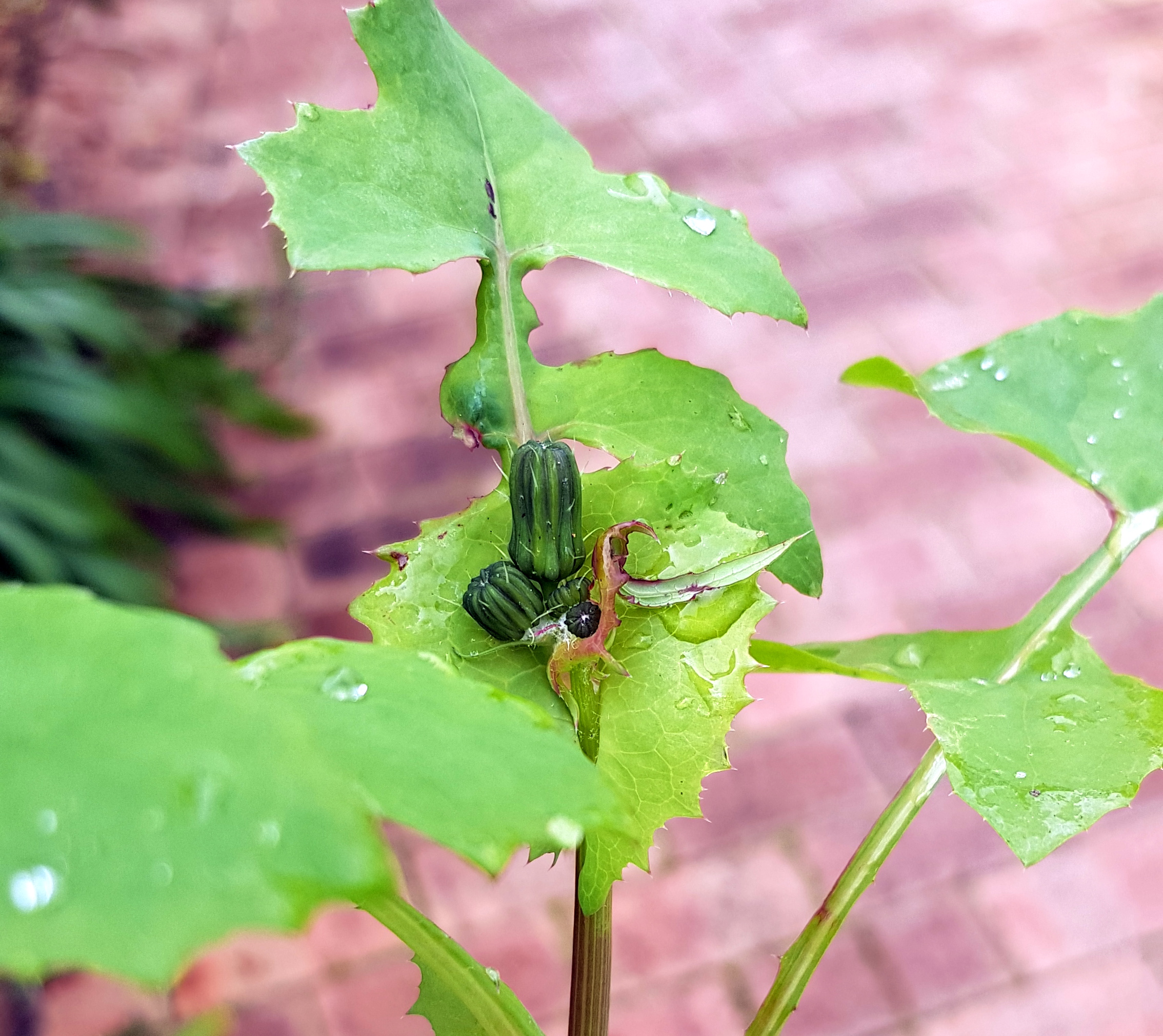
Can I Compost Weeds?
In my quest to keep up with my worm farms and compost bins I am always on the look out for new sources of vegetable matter.
There is lots of conflicting opinion on using weeds in your compost. The fear being that the compost will then spread weeds anywhere you use it.
I firmly believe you can use them in your worm farms and compost bins and here is how.
Choose your weeds carefully
I only use the leafy varieties and not those that spread via runners and create a ground cover. The latter I just pull and leave on top of the soil. They tend to mulch and stop other weeds growing if you do this enough. Really tough to pull weeds can always be killed using this method.
Don’t include any seeds
Pull seed pods off any weeds you are going to use or simply bypass them altogether.
The secret weapon step
If you are still worried you can make soup 🙂 . I have an old pot that I use for this purpose and it doubles as a collection bucket. I pop the weeds into it and then pour boiling water over them. Pop the pot somewhere safe from kids and the rain and allow to sit for a few days.
By then you will have a pile of sludge that can be poured into your compost bins and the like. The boiling water has rendered the weeds, any seeds or BadCritters you missed unlikely to cause you any trouble.


Enjoy,
PK
Written by
·
-
PK’s NoRecipe Insalata Caprese
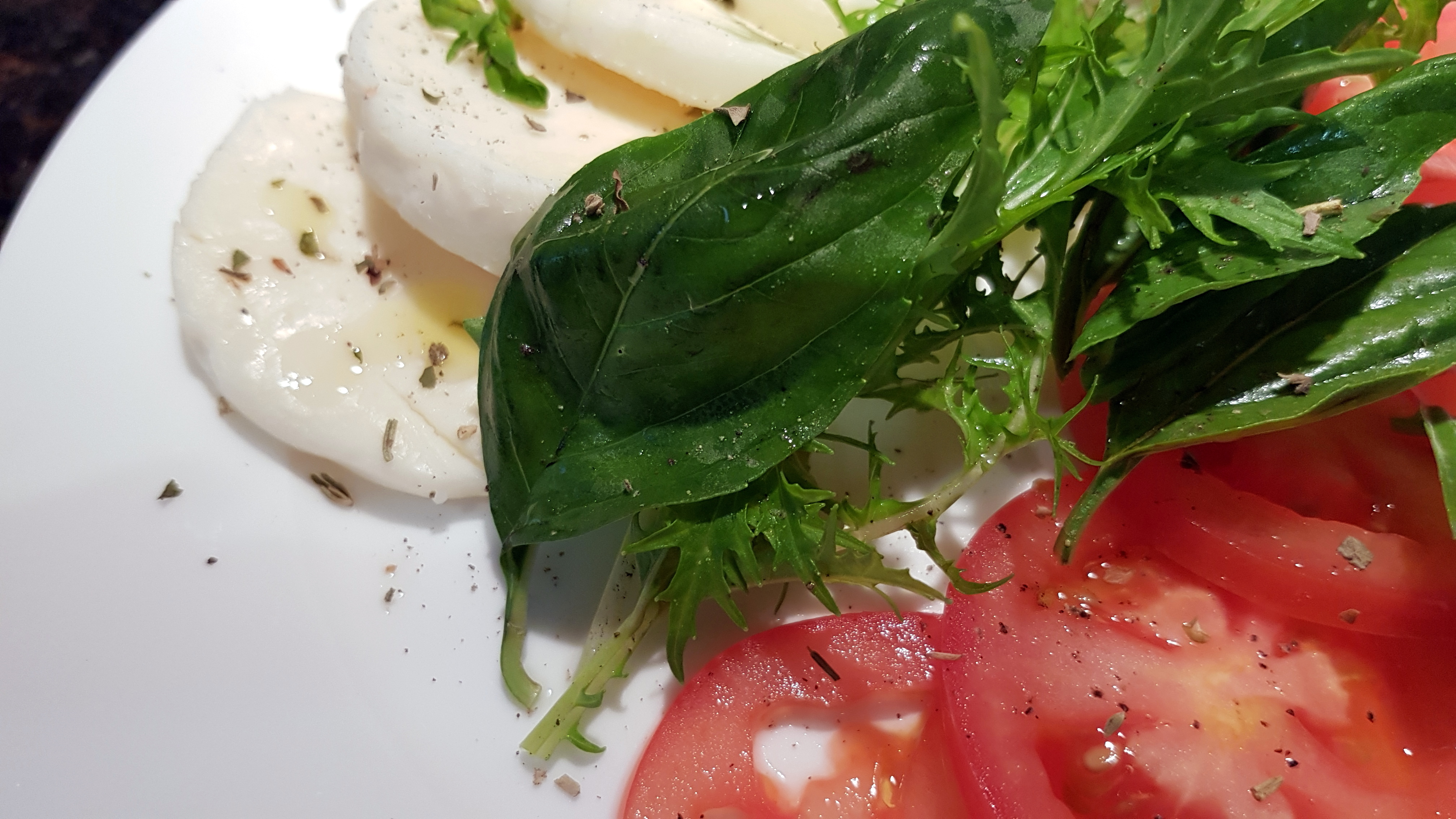
Does it get any easier than this to wow your guests? Try this simple but visually appealing starter salad and you won’t be disappointed 🙂 .
Arrange slices of mozzarella and tomato on a plate. Garnish with some salad greens (I used Mizuna), basil, olive oil and cracked pepper.

Enjoy,
PK
Related Links:
Written by
·
-
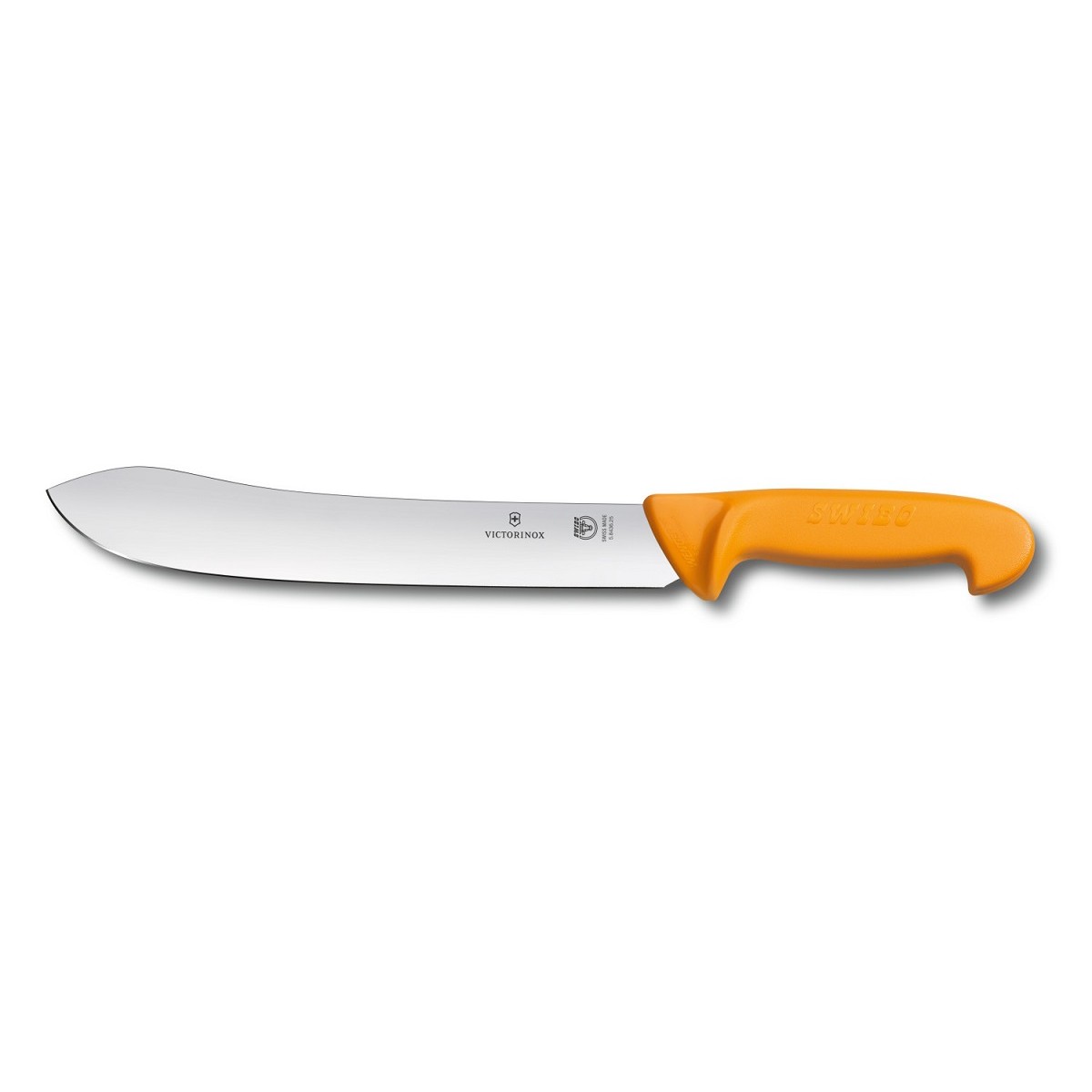
PK Reviews: 25cm Victorinox Swibo Rigid Butchers Knife
I have to say that as a home cook, that buys meat in bulk including whole primals, I love this knife. As soon as you hold the handle you can tell it is not a general purpose kitchen knife. The grip is suited for slicing thick pieces of meat or through joints and not for slicing vegetables. This makes it excellent for the task it was designed for.
Turn the knife to the vertical hold and you have a knife perfect for following the line of bones and meats’ natural seams. It is rigid but I found it just fine for skinning and removing fat and silver.
I am an awful “butcher” but this exceptionally sharp and well designed knife helps me get the job done with minimal wastage.
This is not a paid post. I bought mine online from http://www.kitchenwarehouse.com.au for $59.99 AUD with free delivery to my local store.
Product Reviewed:
-
25cm Victorinox Swibo Rigid Butchers Knife
Pros:
- Tough carbon steel perfect for slicing (Rockwell rating of 56-58).
- Holds an edge for a long time.
- Moulded nylon handle that is easy to clean and doesn’t hold meat particles.
- Curved end design for following seams.
- It comes in a plastic sleeve that I use to store it in.
Cons:
- Being a novice and not having anything to compare it too I can’t find any
The Verdict:
Great product at a reasonable price. Suitable for commercial environments and home butchery.
I hope this review helps you and feel free to send me any comments if you want to add to it.
PK


Related Links:
- go to all reviews
Written by
·
-
-
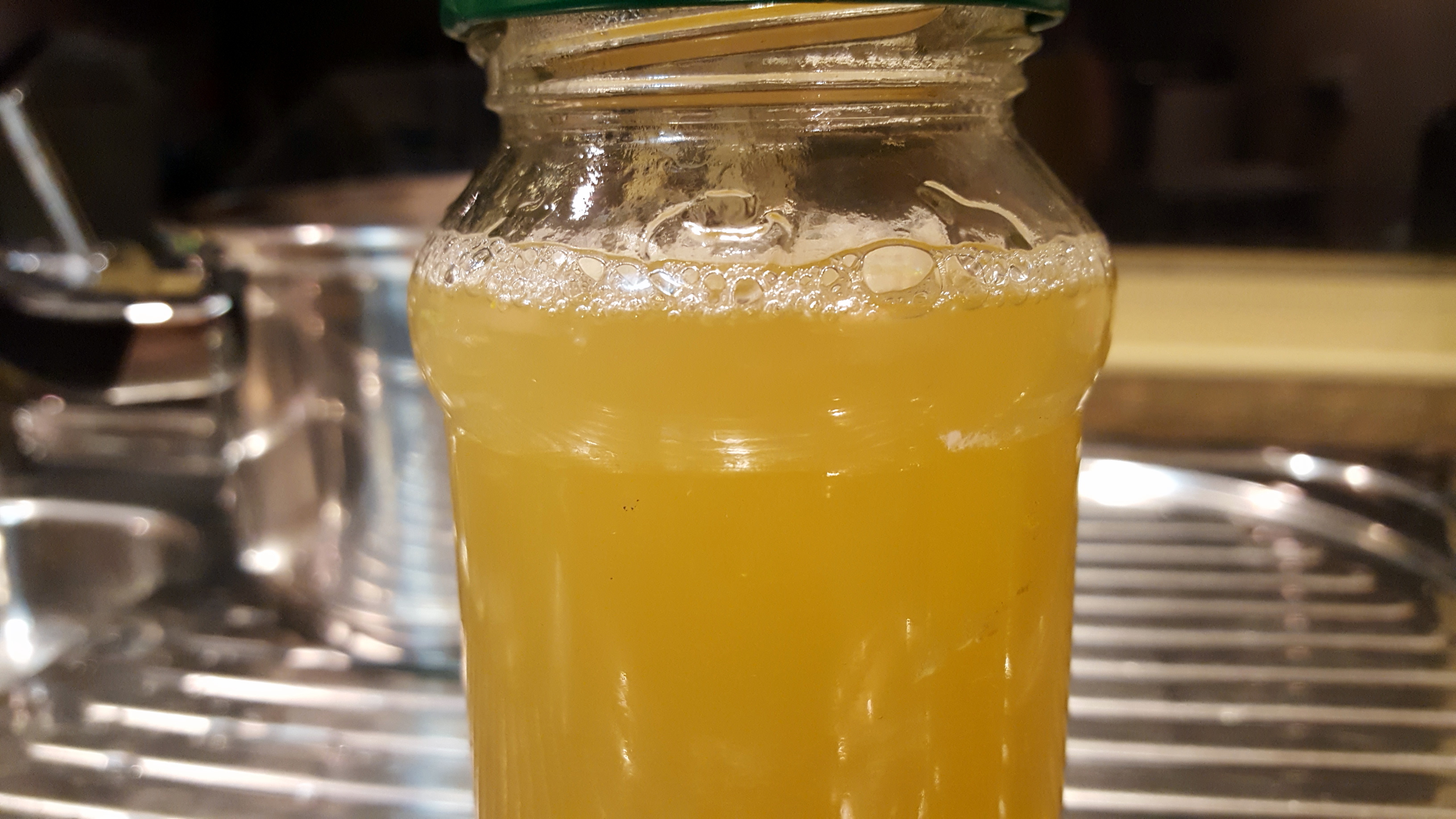
PK’s NoRecipe Lemon Cordial
It is still winter in Perth and our citrus plants are still producing loads of fruit. You know I hate to waste any precious harvest so here is another method of preserving citrus.
This cordial (I used lemons and limes) is super tasty and will last for ages in the fridge 🙂
I simply work on a 2 cups of sugar to 500mls of fresh juice and 500mls of water ratio.
Steps:
- Take a couple of the lemons and or limes and zest them.
- Juice the rest.
- Chuck the zest into a saucepan along with the freshly squeezed juice, water and sugar.
- Bring everything to a gentle boil but do it very slowly and stir often to make sure the sugar is dissolved.
- Take it off the heat as soon as it boils and pour into pre-sterilised jars, straining as you go.
- Let the jars cool before you put the lids on!
Enjoy,
PK
Related Links:
- See more preserving ideas here
Written by
·
-

PK’s Cheaters Pho Ga For One
When someone mentions Vietnamese cuisine I immediately think of the famous Vietnamese noodle dish called Pho.
Pho (pronounced ‘fur’ but without the hard r) is a modern take on more traditional dishes but the Vietnamese people rapidly took to this healthy “fast food” and then spread it around the globe.
I imagine everyone has their own favourite style of Pho. Mine is a sweet and sour broth with some lightly poached chicken, lots of vegetables and tons of rice noodles. Simply multiply the ingredients below for each person you are serving.
I go light on the chili factor (even none at all for my family) and then I use Sriracha hot sauce in my bowl to add some heat.
Tip: Make the fried shallots ahead of time using my method here. They are an optional garnish but I feel they really “upgrade” this dish.
You will be:
- Building the broth
- Poaching the chicken
- Serving.
You will need:
- Ingredients:
- Broth for one:
- 3 cups homemade chicken stock
- a splash of fresh lime juice
- 1.5 Tbsp fish sauce
- a small chunk galangal (galanga)
- a small chunk ginger
- 1/2 cinnamon stick
- 1 star anise
- 1 tsp raw sugar
- black peppercorns to taste, ground
- 1 coriander root
- Bowl for one:
- 250g chicken tenderloins, sliced
- 250g rice noodles, pre-softened in boiling water
- a handful of torn coriander leaves
- a handful of mung bean sprouts
- a few sprigs of vietnamese coriander
- 2 spring onions, white parts, sliced on an angle
- jalepenos , sliced, to taste
- 1/2 a lime (for people to adjust the fish sauce/lime juice balance)
- fried shallots and garlic slices
- Broth for one:
- Equipment:
- a long sharp knife
- a chopping board
- a grater
- a large saucepan
- a serving bowl
Building the broth
I use my home-made chicken stock because it starts you off with a broth that has been built up with chicken bones, vegetables and garlic.
Making a starter broth this way allows you to subsequently build dish specific flavours on top of it and this is what we will do now.
- Add the 3 cups of chicken stock to the saucepan.
- Peel a chunk of galangal and a chunk of ginger and throw them into the pan whole.
- Add the:
- splash of fresh lime juice
- 1.5 Tbsp fish sauce
- 1/2 cinnamon stick
- 1 star anise
- 1 tsp raw sugar
- ground black peppercorns
- 1 coriander root
- Let everything sit for 5 minutes, to infuse, if you have time.
- Put the saucepan on low heat and then gently simmer for about 10 minutes.
Poaching the chicken
- Add the 250g of sliced chicken tenderloins to the gently simmering pan of broth.
- Allow the chicken to cook for 5 minutes and then remove the pan from the heat (by this stage everything is cooked and you don’t want the chicken to overcook as it will go leathery).

Serving
Serve the broth over the rice noodles and vegetables. Garnish with slices of chili, fried shallots and even omelette and peanuts.
Have in easy reach extra fish sauce, lime wedges and of course Sriracha sauce so you and your guests can adjust the taste to suit.


Enjoy,
PK
Written by
·
-

Radishes
Many varieties of this crisp and crunchy edible root can be grown all year round in Perth, Western Australia. They are very easy to grow and my children love watching their rapid growth and asking where Peter Rabbit is :).
You can have fresh radishes all year round by simply planting a new batch every 2 – 3 weeks.
Taste/Aroma:
Most people are familiar with the sharp bite it brings to salads and sandwiches. They even go well in soup. Although some varieties are milder than others it is a love or hate thing I am afraid :).
Did you also know:
- that you can also eat the leaves and sprouts?
- they go great in stirfrys (for example radish carrot and edamame stir fry)?
- you can pickle them (I have some daikon growing and will give this a try soon)?
Cherry Belle


Daikon


French Breakfast

Growing Months:
- All months
Planting/Care:
Simply sow directly where they will be growing (choose a spot in full sun if you can) every 2 – 3 weeks. The soil should be full of composted organic matter and be well draining.
Don’t over do it on the nitrogen front when fertilising or the plants will put too much effort into growing leaves.
Sometimes the seedlings work themselves up and out of the soil, holding on by just a few roots. Gently pull them out and transplant them a bit deeper.
Related Links:
- see more radish posts here
- go to all meal ingredients
- go the Grow It Perth calendar
Written by
·
-

PK Cooks Taste.com.au’s Sticky Poached Asian Chicken Thighs
I saw this recipe online here http://www.taste.com.au/ and just had to try it. I also proved along the way that you don’t have to follow recipes exactly to get a great result. I did some steps out of order accidentally and had to rapidly reduce the sauce before everything went south.
Everything worked out well though and I hardly had enough left over for lunch the next day :).
The chicken was so tender and the sticky sauce had an amazing balance of citrus, salt and sugar. I will definitely be making this again but I intend to follow the instructions to the letter.

You will be:
- Preparing your ingredients.
- Poaching the chicken
- Grilling the chicken and reducing the sauce
- Serving.
You will need:
- Ingredients:
- 1kg boneless chicken thighs
- 1 cup chicken stock (see PK’s Slow Cooker Chicken Stock)
- a few slugs of olive oil
- 1 Tbsp fish sauce
- 1/4 cup raw sugar
- 3 garlic cloves, finely diced
- 2cm fresh ginger root, grated (or 1 tsp store bought minced ginger)
- 1 stalk lemongrass, grated
- the rind from 1 lime, finely grated
- 2 Tbsp (or more) lime juice
- Equipment:
- a long sharp knife
- a chopping board
- a grater
- a citrus juicer
- a mixing jug
- a whisk or fork
- an oven dish
- a large strainer
- a medium saucepan
Prepare your ingredients
- Lay the 1kg boneless chicken thighs out in an oven proof dish.
- Peel and dice the 3 garlic cloves, add to the mixing jug along with the 1 cup chicken stock.
- Finely grate the 2cm of ginger and add to the jug.
- Finely grate the 1 lemongrass stem (use the tender parts only and not the thick outer leaves) and add to the jug.
- Grate the rind from a single lime and squeeze 2 Tbsp of lime juice (I used my frozen lime cubes from last season). Add both to the jug.
- Add the 1 Tbsp fish sauce to the jug.
- Add the 1/4 cup of raw sugar to the mixing jug and give everything a good mix (make sure the sugar has dissolved fully).


Poaching the chicken
- Pour the liquid mixture over the chicken and cook for an hour in a fan-foced oven pre-heated to 180C.
- Turn the chicken half way.


Grilling the chicken and reducing the sauce
- Strain the sauce into a saucepan and start reducing it.
- Return the chicken to the oven tray and turn on the grill to brown the chicken.
- When the sauce is very reduced, pour it back onto the chicken a grill for a little bit longer.


Serving
Serve with your favourite rice, some fresh spinach (the heat of the meal will blanch them) or some asian vegetables and a few sprigs of coriander.
Enjoy,
PK
Written by
·
-
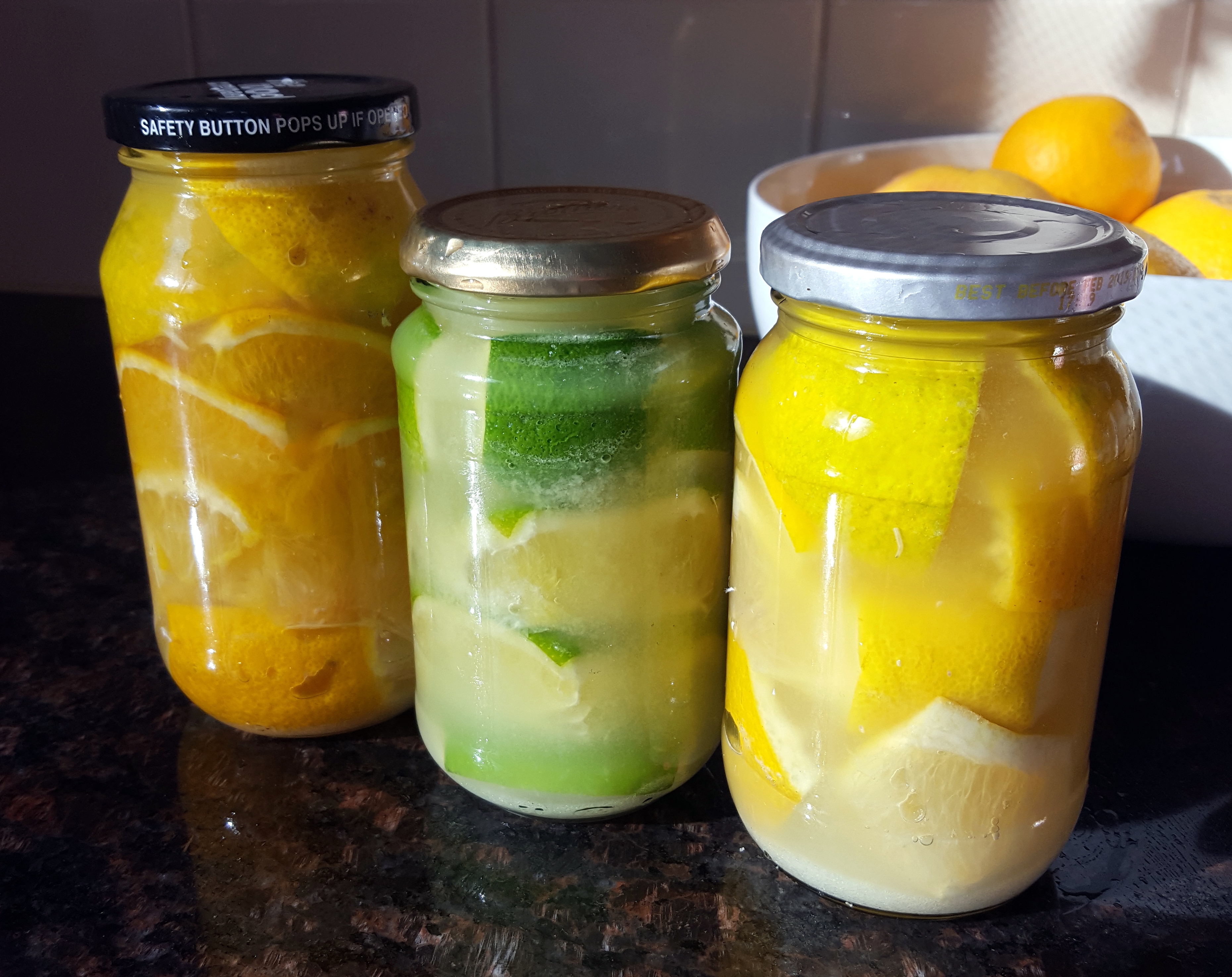
PK’s NoRecipe Preserved Citrus
It’s winter in Perth, Western Australia and this year we are having a really good lemon and orange harvest. I am always on a look for ways to preserve surplus harvest and a good friend of mine suggested I try making preserved lemons. She won me over with ‘they go great in Tagines’ but she didn’t mention how amazing they look in the jars :).
I used lots of salt but I am still going to chuck them in the fridge after a couple of weeks of them sitting sitting in a cool, dry cupboard for a few weeks.

Here are the steps I took:
- I cleaned my chosen citrus with a scourer and rinsed them off (I used the last of the limes, some fresh lemons and a mix of lemons and oranges to make three jars respectively).
- I then took each piece of fruit, cut the ends off and quartered them (large fruit got cut in half again).
- I put 1/2 Tbsp of table salt in the bottom of each of my jars (pre-sterilised with boiling water), put a layer of fruit, pushed that down with a wooden spoon and then added another 1/2 Tbsp salt.
- I repeated the fruit, press and salt cycle until the jar was full to the brim.
- I then added freshly squeezed juice to the jar, added 1 Tbsp salt and popped on a sterilised lid.
- A few taps on the kitchen bench to get all the air bubbles to the top and I moved onto the next type of citrus.
- Then all the jars went into a cupboard for a few weeks.
I will let you know how they go 🙂
(update: they were amazing and I even gave a few jars away)
PK
Related Links:
- See more citrus preserving ideas here
Written by
·
-

PK Reviews: Nylex 5L Shoulder Sprayer
The Nylex 5L and 8L Shoulder Sprayers are perfect for people with kitchen gardens, even large ones. I am reviewing several of the Nylex Sprayer range and I started with their Nylex 1.5L 360° Sprayer. Please see the other Nylex reviews here.
In short I couldn’t be more pleased with my 5L Shoulder Sprayer and I bought it for next to nothing from my local Bunnings. At ~$22 AUD it is very good value for money and one of my units has been in use for 3 years now.
This pressure sprayer is perfect for spraying plants with dense hard to reach foliage (such as chili plants and tomato plants) with both targeted solutions such as pyrethrum or full plant coverage solutions such as bio-oil. You could even use it on trees such as large citrus plants.
My favourite bio-oil by the way is http://ecoorganicgarden.com.au/products/pest-disease/eco-oil/ and no they are not paying me to say that :).
A trigger spray (although Nylex makes good/affordable versions of these) is not going to suffice as they can’t spray upside down and don’t have the holding capacity. Turning the leaves is going to end up getting spray on you and also leaf/foliage damage.
Note: This is not a paid post.
Product Reviewed:
- Nylex 5L Shoulder Sprayer
Pros:
- Very good build quality for a very low price
- 2 year warranty on the UV resistant plastic bottle
- Fibre glass wand with fan and jet nozzles works well with the D shaped handle or supplied shoulder strap to allow you to spray where you want and only where you want
- D shaped handle also makes for easy pumping and even stores the wand when not in use
- Lockable trigger on the wand
- Safety pressure release valve that also makes for easy de-pressuring when you are finished
- Easy to read incremented 1.0L marks so you can accurately mix your concentrate solutions
- Plastic sleeve for holding labels to indicate what type of solution you are keeping the sprayer for e.g.. fungicides vs insecticides (this is one of my favourite features as I don’t like to use the same sprayer for different treatments)
- Filter mechanism avoids blockages
- Spare o-rings etc are available
Cons:
- None that I can tell, sorry 🙂
Availability:
- Available at your local Bunnings https://www.bunnings.com.au/nylex-5l-shoulder-garden-sprayer_p2962002
The Verdict:
Great product at a very reasonable price and easy to store when not in use. Build quality is very high and you should get many years out of it. Once I bought my first one I could not go back. You are going to use a lot less plastic packaging and save money by using such a sprayer.
If you have any questions about the product range I recommend contacting the Nylex team at http://www.nylexwatering.com/contact-us/
Hope this review helps and feel free to send me any comments or corrections.
Enjoy,
PK
Related Links:
Written by
·