Tag: cumin seeds
-
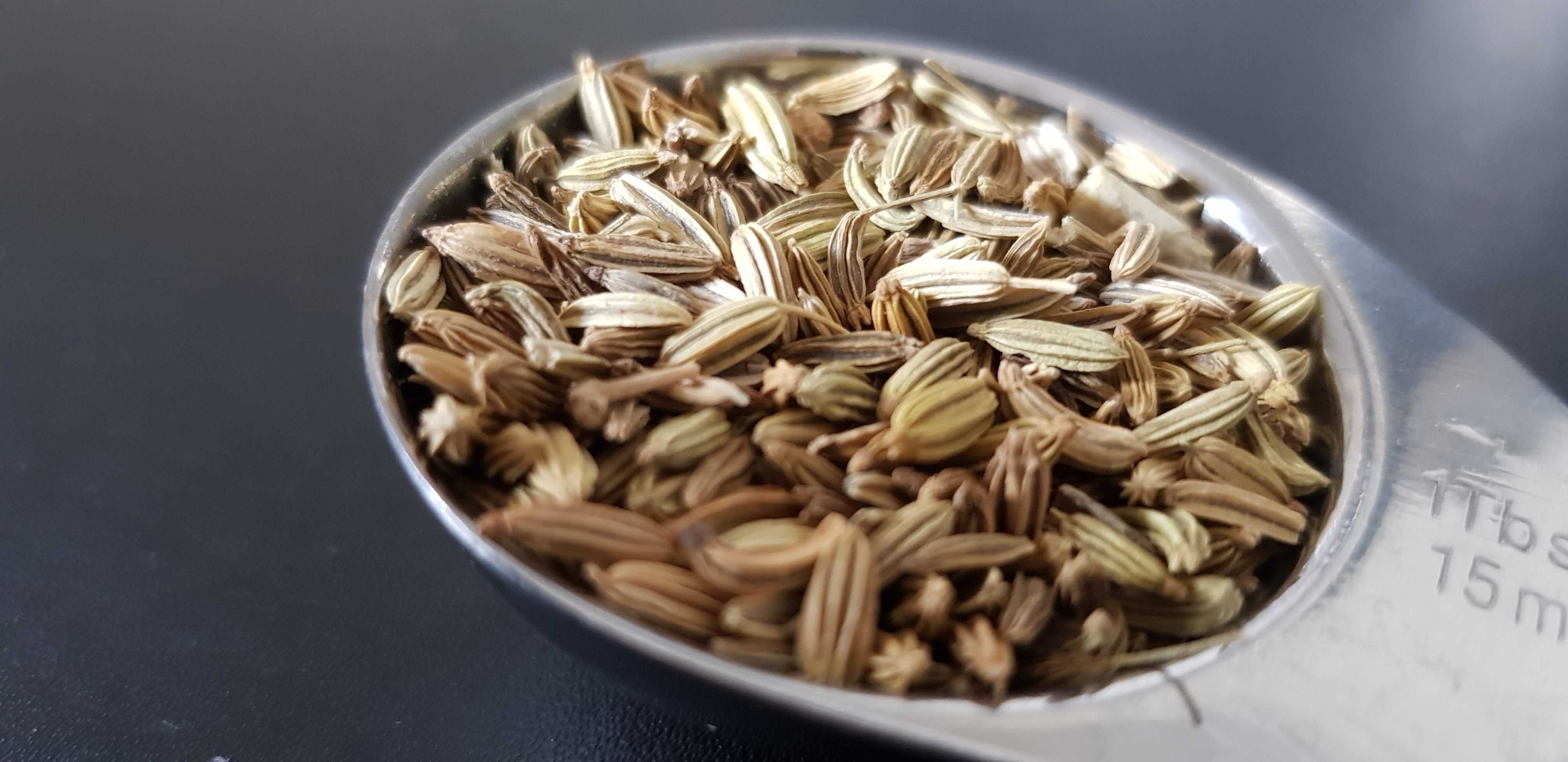
Fennel
Fennel is the seed of a tall perenial plant that was initially native to the Mediterranean coastline. It is in the same family as parsley and coriander.

There is also one cultivar, Florence fennel, that is grown for it’s bulb. It makes for an amazing fennel and lemon salad. It is sometimes sold as an ‘anise bulb’ but anise is a different species that has a similar flavour to fennel.

You can use the seeds whole or ground as a cooking ingredient, garnish and even as a mouth freshener. They are a key ingredient in many masalas and spice pastes. It is a must have spice in many pork dishes and products.
I have some more recipes using fennel for you in the links below. 🙂
Dietary Info: Great for vegetarians, vegans and is gluten free.
This particular cooking ingredient is in PK’s Essential Pantry Cupboard Contents.
Enjoy,
PK
YOU MIGHT ALSO LIKE
MORE ON USING FENNEL
INDIAN CUISINE
THE FULL GICICI INGREDIENTS LIST
Please consider subscribing to a weekly email summary of our posts or check us out on Facebook @growitcatchitcookit.
[mc4wp_form id=”15771″]
Written by
·
-

Cumin
Cumin is the seed of a small annual herbaceous plant that is native to the Middle East and is in the same family as parsley and coriander.
It has a most wonderful warm earthy flavour and smell. You can use them whole, as an ingredient or garnish in their own right or grind them for use in your favourite garam masala or spice pastes.

Cumin pairs well with almost everything and it turns up worldwide in everything from drinks to snacks to main meals and desserts.
I have some recipes using cumin below for you. 🙂
Dietary Info: Great for vegetarians, vegans and is gluten free.
This particular cooking ingredient is in PK’s Essential Pantry Cupboard Contents.
Enjoy,
PK
YOU MIGHT ALSO LIKE
MORE ON USING CUMIN
INDIAN CUISINE
THE FULL GICICI INGREDIENTS LIST
GICICI’S WHAT TO GROW IN PERTH GUIDE
Please consider subscribing to a weekly email summary of our posts or check us out on Facebook @growitcatchitcookit.
[mc4wp_form id=”15771″]
Written by
·
-

PK Makes Nagi’s ‘Chinese Restaurant’ Chicken Satay
I love old school Anglicised ‘chinese restaurant’ chicken satay.
Perth is very lucky now to have cafes and restaurants that serve all manner of global cuisines from the cultural traditional through to really clever fusion. However, growing up in Perth we were not spoilt for choice eating out, there was only Pizza Hut, Red Rooster and the local ‘Chinese Restaurant’.
This dish is far from traditional chinese cuisine but it hits fond childhood food memories. It is quite frankly the best satay chicken I have ever had.
There are 3 main preparation steps that look a little daunting at first but the recipe is actually really easy. With all credit to Nagi of www.recipetineats.com for the way she created and laid the recipe out.
All I am trying to do is spread her amazing work :).
Note:
- I have converted the powdered ingredient quantities in the original recipe to use whole grains using my own crazy rule of thumb.
- I have gone heavy on the onions and garlic as per my childhood memories.
You will be:
- Prepping and tenderising the chicken
- Making the satay seasoning
- Making the satay cooking sauce
- Cooking the chicken
- Serving
You will need:
- Ingredients:
- Chicken:
- 2 chicken breasts (a little over 500g)
- 2 tsp baking soda
- Satay Seasoning:
- 1.5 tsp coriander seeds
- 1.5 tsp cumin seeds
- 3/4 tsp white peppercorns
- 0.5 tsp tumeric powder
- 0.5 tsp chili powder (I used store bought Kashmiri chili powder but you can make your own with this FoodHack.)
- 3 tsp curry powder (any will do and extra points for home-made)
- 1 tsp table salt
- Satay Sauce:
- 3 – 4 Tbsp Peanut Butter (I used http://kraftnuts.com.au/range/2/peanut-butter-smooth just to increase the trip down memory lane)
- 3 tsp raw sugar
- 2 tsp soy sauce (light or normal but not thick like ketjip manis)
- 3 tsp rice vinegar
- 2 tsp hot sauce (I used Eaglobe piment sriracha)
- 1 tsp fresh lemon grass (very finely diced)
- 2/3 cups coconut milk
- 1/2 cup water
- For the wok:
- A good slug of peanut oil
- 1 – 2 large brown onions
- 4 garlic cloves
- Chicken:
- Equipment:
- a chopping board
- a long sharp knife
- a bowl for the chicken to tenderise in
- a mortar and pestle
- a small bowl for the spices
- a small whisk or fork
- a small mixing bowl for the sauce
- a wok or deep fry pan
Steps:
Prepping and tenderising the chicken
- Slice the breasts in a long-wise fashion and then cut the flat slices in half.
- Pop the slices into a bowl and sprinkle them with the 2 tsp baking soda (Nagi says this tenderises them and I can confirm that it really works).
- Pop them back into the fridge while you make the seasoning and sauce.
Making the satay seasoning
- In a mortar and pestle grind the:
- 1.5 tsp coriander seeds
- 1.5 tsp cumin seeds
- 3/4 tsp white peppercorns
- When you have the your desired amount of grind add the ground spices to a bowl with the:
- 0.5 tsp tumeric powder
- 0.5 tsp chili powder
- 3 tsp curry powder
- 1 tsp table salt
- Give everything a quick mix.

Making the satay cooking sauce
- In a different mixing bowl mix until smooth the:
- 3 – 4 Tbsp Peanut Butter
- 3 tsp raw sugar
- 2 tsp soy sauce
- 3 tsp rice vinegar
- 2 tsp hot sauce
- 1 tsp fresh lemon grass (very finely diced)
- 2/3 cups coconut milk
- 1/2 cup water
- Add the satay seasoning and mix again.
- Refrigerate if you are not cooking the chicken until later in the day.
Cooking the chicken
- Bring the chicken and sauce out of the fridge.
- Chop up the 2 brown onions and mince the 4 garlic cloves.
- Add a slug of peanut oil to your pan and bring it to medium heat.
- Prepare any garnish (I went with some fresh sliced jalapenos and spring onions from my PK’s Working Garden).
- Add the onions and garlic to the hot oil and keep everything moving until they soften.
- Add the chicken slices and keep it moving until the chicken is beginning to brown.
- Add the satay sauce and stir fry until the sauce has reduced to your desired thickness (say a few minutes).
Serving
A bit of rice, some chilis, a side of asian greens in oyster sauce (e.g. Choy Sum) and I am in heaven.

Enjoy,
PK
Related Links:
- Recipes using chicken
- More Chinese cuisine
Please consider subscribing to a weekly email summary of our posts or check us out on Facebook @growitcatchitcookit.
[mc4wp_form id=”15771″]
Written by
·
-

PK’s Nyonya Rempah
This Malaysian curry paste looks hard to make on first glance. After a few goes though you will be able to make it blindfolded and I hope like me you find it an enjoyable process :).
I make it well ahead of time for my favourite south-east Asian curry, a sticky Nyonyan Chicken Curry (see the post here). Please give this paste recipe a try, you won’t be disappointed. The only drawback is that you might not look at store bought pastes in the same light ever again.
Note: All my recipes have their chili quota curbed at my family’s request. I am slowly increasing the amount on the sly so don’t tell them :). Add extra chili for that authentic taste if you can get away with it.
You will need:
- Ingredients:
- 1 tsp table salt
- 1 tsp brown sugar
- 3.5 Tbsp whole coriander seeds
- 1.5 tsp whole cumin seeds
- 1.5 tsp whole fennel seeds
- 1 tsp powdered kashmiri chili (at the minimum)
- 1 Tbsp dried belacan (shrimp paste)*
- 1 Tbsb powdered turmeric
- 3 cloves garlic
- 270g red shallots (sliced)
- 1/3 cup olive oil
- Note *: I sometimes use a treacle consistency type of belacan but it is so sticky and harder to blend than the dried version.
- Equipment
- a chopping board
- a long sharp knife
- a small bowl
- a small plate
- a wet blender with a very small bowl
- a dry spice mixer or a mortar and pestle
Make the rempah
Steps:
- Have a quick read of my PK’s Curry Paste Kit post if it has been a while.
- Bring all of the rempah ingredients together. I use a small plate to make it easier to add the ingredients to the frypan or blender.
- Dry fry the whole spices (3.5 Tbsp whole coriander seeds, 1.5 tsp whole cumin seeds and 1.5 tsp whole fennel seeds).
- Let them cool and add to your spice mill. Mill them in bursts to avoid cooking the spices further in the heat caused by the blades. Keep going until you get a fine powder. Add this powder to your wet mixer and enjoy the aroma.
- Roughly chop the 270g red shallots and 3 garlic cloves and add to the wet mixer.
- I use Sim Seng Lee brand dried belacan (1 Tbsp worth) and it stores really well and doesn’t smell out the house! Add it to the wet mixer.
- Add the rest of the ingredients to the wet blender (1/3 cup olive oil, 1 tsp salt, 1 tsp sugar, 1 tsp kashmiri chili and 1 Tbsb powdered turmeric).
- Blend to a smooth paste, add to a bowl and place in the fridge for short-term use or the freezer otherwise.
Better than a store bought paste by a long shot:

Enjoy,
PK
Written by
·
- Ingredients:
-
How To Make A Nyonya Rempah Paste
This Malaysian curry paste looks hard to make on first glance. After a few goes though you will be able to make it blindfolded and I hope like me you find it an enjoyable process :).
I make it well ahead of time for my favourite south-east Asian curry, a sticky Nyonyan Chicken Curry (see the post here). Please give this paste recipe a try, you won’t be disappointed. The only drawback is that you might not look at store bought pastes in the same light ever again.
Look at the colourful ingredients:

Note:
- All my recipes have their chili quota curbed at my family’s request. I am slowly increasing the amount on the sly so don’t tell them :). Add extra chili for that authentic taste if you can get away with it.
- The paste freezes well.
You will need:
- Ingredients:
- 1 tsp table salt
- 1 tsp brown sugar
- 3.5 Tbsp whole coriander seeds
- 1.5 tsp whole cumin seeds
- 1.5 tsp whole fennel seeds
- 1 tsp powdered kashmiri chili (at the minimum)
- 1 Tbsp dried belacan (shrimp paste)*
- 1 Tbsb powdered turmeric
- 3 cloves garlic
- 270g red shallots (sliced)
- 1/3 cup olive oil
- Note *: I sometimes use a treacle consistency type of belacan but it is so sticky and harder to blend than the dried version.
- Equipment
- a chopping board
- a long sharp knife
- a small bowl
- a small plate
- a wet blender with a very small bowl
- a dry spice mixer or a mortar and pestle
Make the rempah
Steps:
- Bring all of the rempah ingredients together (see What Does Mise en Place Mean?.
- Dry fry the whole spices (3.5 Tbsp whole coriander seeds, 1.5 tsp whole cumin seeds and 1.5 tsp whole fennel seeds).
- Let them cool and add to your spice mill. Mill them in bursts to avoid cooking the spices further in the heat caused by the blades. Keep going until you get a fine powder. Add this powder to your wet mixer and enjoy the aroma.
- Roughly chop the 270g red shallots and 3 garlic cloves and add to the wet mixer.
- I use Sim Seng Lee brand dried belacan (1 Tbsp worth), it stores really well and doesn’t smell out the house! Add it to the wet mixer.
- Add the rest of the ingredients to the wet blender (1/3 cup olive oil, 1 tsp salt, 1 tsp sugar, 1 tsp kashmiri chili and 1 Tbsb powdered turmeric).
- Blend to a smooth paste, spoon it into a bowl and place in the fridge.
Better than a store bought paste by a long shot:

Enjoy,
PK
Written by
·
-

Rick Stein’s Garam Masala
I use Rick Stein’s garam masala in so many dishes it isn’t funny. This uniquely south asian spice blend is earthy in taste and aroma. The blend is so verstile though and enhances the dishes of many cuisines.
Sure, you could buy a garam masala from the shops. MasterFoods makes a really good one that I grew up with but making your own means that the spices haven’t lost their aroma and you get to personalise the blend.
Rick Stein says “Even more important than the mix is having them freshly roasted and then ground” and of course, he’s right. It is a bit of extra effort but a pleasurable experience. The resulting spice mix lasts for months in an airtight container.
Steps:
You will need:
Roast the whole spices
Pop all the spices (except the nutmeg) in a hot pan and keep them moving the whole time. Safe to say that if the smoke alarm goes off, you have dry roasted them too long or too high :).
Experiment a bit, with the goal being more the release of the spices’ aromas in my opinion, rather than a change in their appearance.
Mill the spices
Once cooled, transfer everything to your blender or mortar. Grate the nutmeg (or like me use shop bought ground nutmeg, oops) separately and to the mill. Run the mill in quick bursts until you get the consistency you like. Then store in an airtight container.
For more Rick Stein recipes click here.
Enjoy,
PK
Written by
·