Category: growing
-

Reuse, Recover: Egg Shells
As you know or are beginning to suspect, I am nuts about minimising my kitchen waste. I am always looking to reuse or recover anything I can.
Google is a great help in this but once you get in the mindset of doing it and thinking outside the box, you will start coming up with your own ideas.
So with this in mind please don’t throw out those egg shells :).
For starters, egg shells are composed of approximately 95% calcium carbonate. This is great for the soil and lots of shell goes into my composting bins.
I also crush them up somewhat and scatter them around my vegetables to control moths. You might think this an urban myth but it really works. Now I have read that there are two reasons why people think this works. Either the moths think there are too many moth eggs in the vicinity already and move on or they are laying their eggs on the chicken egg shells and the grubs don’t make it to your veggies.

Lastly, I have heard you can use them to raise seedlings in (as little pots) but I have never done so. On a related note, the egg cartons either go back to the farmers market and reused or they go into the worm farm or compost bins.
What do you use egg shells for?
Enjoy,
PK
Related Links:
- see more ReuseRecover posts here
Please consider subscribing to get a weekly email summary of our posts.
[mc4wp_form id=”15771″]
Written by
·
-
Onion Brown
Sorry I haven’t written anything here yet.
Please bear with me or even send me a few words on the subject. I especially would love any tips and tricks you want to share 🙂
Enjoy,
PK
Links:
- see more brown onion posts here
- see more onion posts here
- go to all ingredients
Written by
·
-
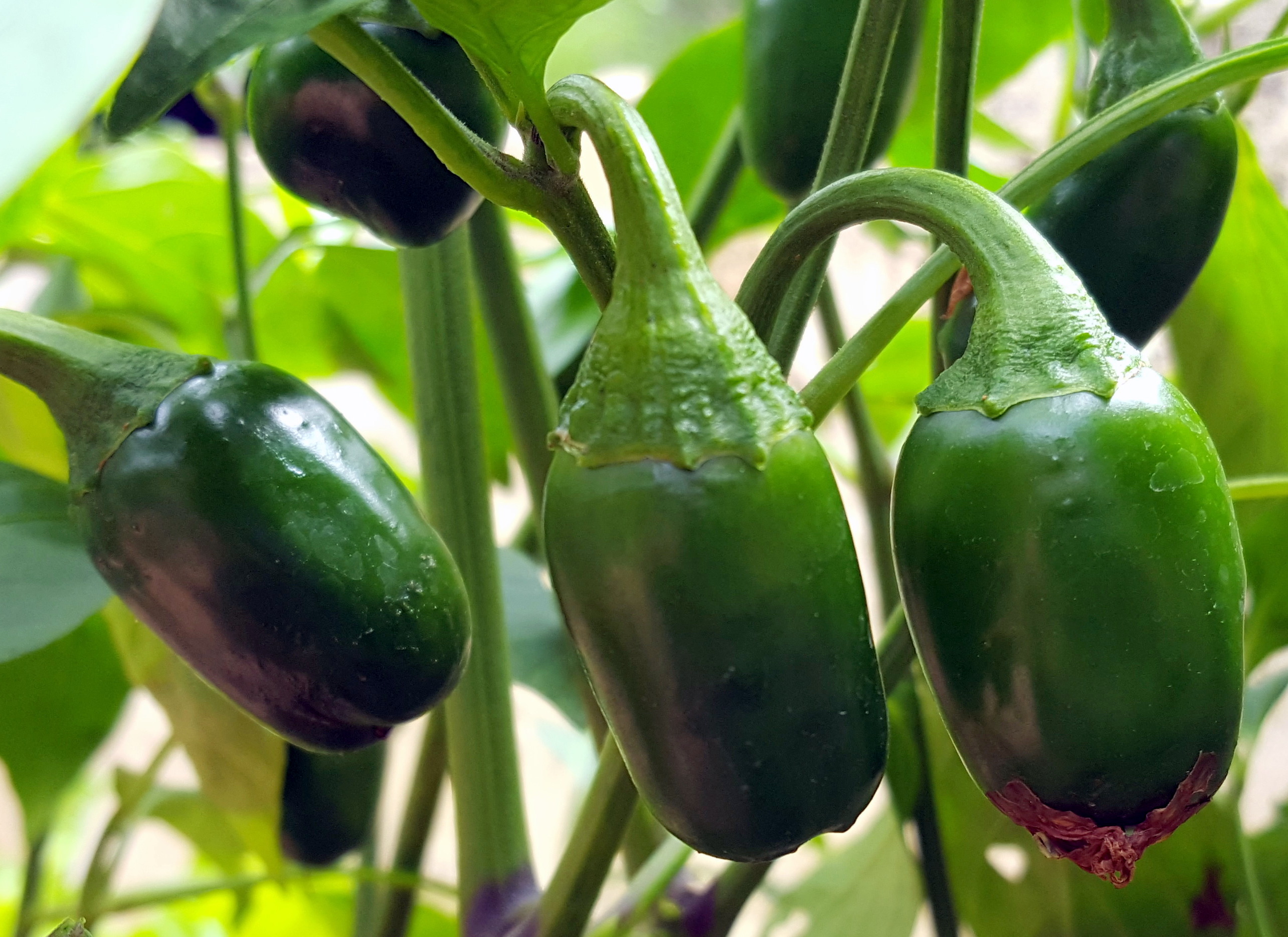
Chili Pepper: Jalapeño
This is the chili I automatically think of whenever some says, well, ‘chili’. It is middle of the road when it comes to heat and is very flavoursome.
You can do so much with it from using it raw, pickled, cooked and dried. If you prefer flavour over the heat factor, take the seeds out prior to using it. If you reserve your seeds you will have lots of luck propagating them.
It is very easy to grow during summer if it gets regular watering but it does not like the cooler months. Irregular or over watering, especially if the fruit gets wet, leads to rust and other diseases.
You can buy seeds in Western Australia from http://wacse.org/product/jalapeno/
Flower:

Fruit:

Plant:

Here you see them sliced and the seeds exposed:

One serving suggestion (sliced with fish sauce):

Fruiting Months:
- November
- December – gangbusters
- January
- February
- March
Position/Care:
Full scorching hot Perth sun but you must keep them well watered and make it regular. Haphazard watering will lead to fruit drop. Very subject to fungal diseases of the leave.
Standard liquid vegetable fertilser often and additional potassium during the summer fruiting months.
Jobs:
Power feed then prune heavily in April to help them survive the cooler months.
Here is the resulting regrowth late July of a good pruning in April:

Scale:

GICICI Grown Plants
[table id=chilis /]
Related Links:
- FoodHacks: Jalapeno Chili Powder
- see more jalapeno posts here
- see more posts about growing chilis here
- see more cooking with chili posts here
- go to all meal ingredients here
- go the Grow It Perth calendar
- see a work in progress map of edible plant species here
Written by
·
-
Strawberry (Fragaria ananassa)
I thought this plant was hard to grow. I could not be more wrong :).
Well sort of…… easy to grow but very tempting to humans, birds and insects alike.Wikipeida writes: ‘The first garden strawberry was grown in Brittany, France during the late 18th century.[3] Prior to this, wild strawberries and cultivated selections from wild strawberry species were the common source of the fruit.’
Common Garden Strawberry flowers:

I will add more soon.
Cheers,
PK
Links:
- see more strawberry posts here.
- go to all ingredients
Written by
·
-

Alfalfa Sprouts
I love growing these little sprouts and use them in salads whenever I can. They are popular everywhere but especially favoured in certain regions of India.
The adult plants have very attractive foliage and the flowers attract those most welcome of visitors, bees. When planted for animal feed it tends to be known as as Lucerne, especially in Australia.
Taste/Aroma:
Very mild taste and with a nice texture. They even smell healthy :).
Sprouts:

Plant:
Left to germinate and grow into a mature plant, Alfalfa looks like this:
(source http://en.wikipedia.org/wiki/Alfalfa#/media/File:Luzerne-600.jpg)
Planting/Care:
Germination time is about a day in a sprouter. You should put a new batch in accordingly if you want to keep them available.
As a plant they are great nitrogen fixers so till the roots back into the soil when rotating your plantings.
Enjoy,
PK
Here are some more posts you will love:
Written by
·
-

Mung Bean Sprouts
Wikipedia writes ‘also known as the moong bean, green gram, or mung, is a plant species in the legume family. The mung bean is mainly cultivated in India, China, and Southeast Asia. It is used as an ingredient in both savoury and sweet dishes’.
Here are the seeds and as you can see I am buying them in larger quantities to save money:


My kids and I love growing them as sprouts:

Yum,
PK
Links:
- see more sprout posts here
- go to all meal ingredients
- go the Grow It Perth calendar
Written by
·
-

Broad Bean (Fava Bean): Grow and Eat
This tall sturdy flowering annual in the bean family produces a multitude of long pods with 8 large beans (the thick walled pods are unpalatable raw) and edible leaves perfect for salads. The plant has sturdy stems and will grow to almost 6 foot but it is not a climber.
Taste/Aroma:
I love the buttery texture of this bean. You can do lots with it but I like to simply sauté them in some butter. I am the only person in the family that likes them though :).
I am yet to make soup with them but this is also a popular use of this bean.
Heike Motzek pointed me at this recipe as a use for the thick walled pods. Now I don’t have to put them all in my worm farms 🙂
Blanching and Storing:
One minute in boiling water and three minutes in freezing water and then into the freezer.

Flower:

Fruit:


Plant:

Leaves:

Grow It Perth:
I start planting in April, stopping in August/September. The plants will keep cropping into October.
Growing Fava beans is relatively easy but you need to give the mature plants some support as they can grow to 6 foot. I use coils of chicken wire but stakes and twine do just as well.
Use a vegetable tailored NPK fertiliser and you should get multiple crops from each plant.
Enjoy,
PK
YOU MIGHT ALSO LIKE
MORE RECIPES USING BEANS
THE FULL GICICI INGREDIENTS LIST
MORE VEGAN , VEGETARIAN , GLUTEN-FREE INGREDIENTS AND MEALS
Written by
·
-
Broad Bean (Fava Bean)
This tall sturdy flowering annual in the bean family produces a multitude of long pods with 8 large beans (the thick walled pods are unpalatable raw) and edible leaves perfect for salads. The plant has sturdy stems and will grow to almost 6 foot but it is not a climber.
Taste/Aroma:
I love the buttery texture of this bean. You can do lots with it but I like to simply sauté them in some butter. I am the only person in the family that likes them though :).
I am yet to make soup with them but this is also a popular use of this bean.
Heike Motzek pointed me at this recipe as a use for the thick walled pods. Now I don’t have to put them all in my worm farms 🙂
Blanching and Storing:
One minute in boiling water and three minutes in freezing water and then into the freezer.

Flower:

Fruit:


Plant:

Leaves:

Grow It Perth:
Green squares = harvest and plant seedlings
Blue squares = plant seedlings, sets or crowns only
Orange squares = harvest only
Black squares = no planting and nothing to harvest
White squares = I don’t know and need your helpM A M J J A S O N D J F bean broad Growing Fava beans is relatively easy but you need to give the mature plants some support as they can grow to 6 foot. I use coils of chicken wire but stakes and twine do just as well.
Use a vegetable tailored NPK fertiliser and you should get multiple crops from each plant.
Related Links:
- see more bean posts here
- see more fava bean posts here
- go to all meal ingredients
- go the Grow It Perth calendar
Written by
·
-

Lemongrass
I first learnt about this flavoursome member of the grass family when I started cooking the Thai classic soup, Tom Yum Goong. I have been growing it ever since for use in sauces, soups, salads and fish cakes.
The plant itself looks and smells amazing and is a natural mosquito repellent to boot :).
Taste/Aroma:
Lemongrass has a mild citrus taste and freshly cut stalks smell (to me anyway) like citrus, roses and herbs.
The stalks are particularly fibrous and are in this respect unpleasant to eat unless you remove the outer few layers and then the top two thirds of the stalk.
You then finely dice, grate or crush the bottom whiter part.

You can of course bend or bruise the whole stalk and use it to flavour soups and sauces, removing the stalk before serving.
Stalks:

Plant:

Harvesting Months:
- All months
Planting/Care:
It is really easy to grow and although you can buy plants from the nursery it is just a easy to get a few stalks with roots attached and plant them. Do this around November if possible. Mine is in the ground but it will do you proud in a pot too.
One way to harvest lemon grass is to pull sharply from the base. You are likely to get some roots and this will help it last longer. I have it on good authority that the Malay way is to cut the base of a stalk with a knife. New stalks will then grow from the cut.
Either way you will get new stalks growing for a continual harvest.
Regrowth if you use a knife instead:

Related Links:
- see more lemongrass posts here
- go to all meal ingredients
- go the Grow It Perth calendar
Written by
·
-
Reuse, Recover: PK’s Bone Meal
I want to reuse and recover as much as I can in my kitchen and gardening activities. So it is only natural that I wondered what I could do with the bones left over after cooking. Some of them go into my worm farms but as my young family is eating more and more meat every day that is only a part solution :).
Some happy Googling later I came across lots of websites showing you how to make home made blood and bone meal. Using blood and bone meal to improve soil is as old as time due to its slow release of nitrogen and phosphorous. For those nutrients to be available to plants though requires slightly acidic soil and I find (even here in Perth) that my “improved” garden beds always meet that requirement.
One of my favourite television shows and websites (Gardening Australia) also informed me that blood and bone meal has a complete lack of potassium. So I added a small amount of potash as they suggested. See http://www.abc.net.au/gardening/stories/s1503292.htm.
Most of the bones I am using have already been cooked once and then recovered to make stock (see my chicken stock post here) and are hence nice and clean. I then bake them on low for a few hours and I do this in my Weber after cooking a roast. I don’t waste any fossil fuels.
This makes them hygienic and brittle enough to break apart in your hands. When I have enough of a collection I feed them through a corn grinder and store the meal until I need it.
This is the clean bones being baked and stored:
The grinding:
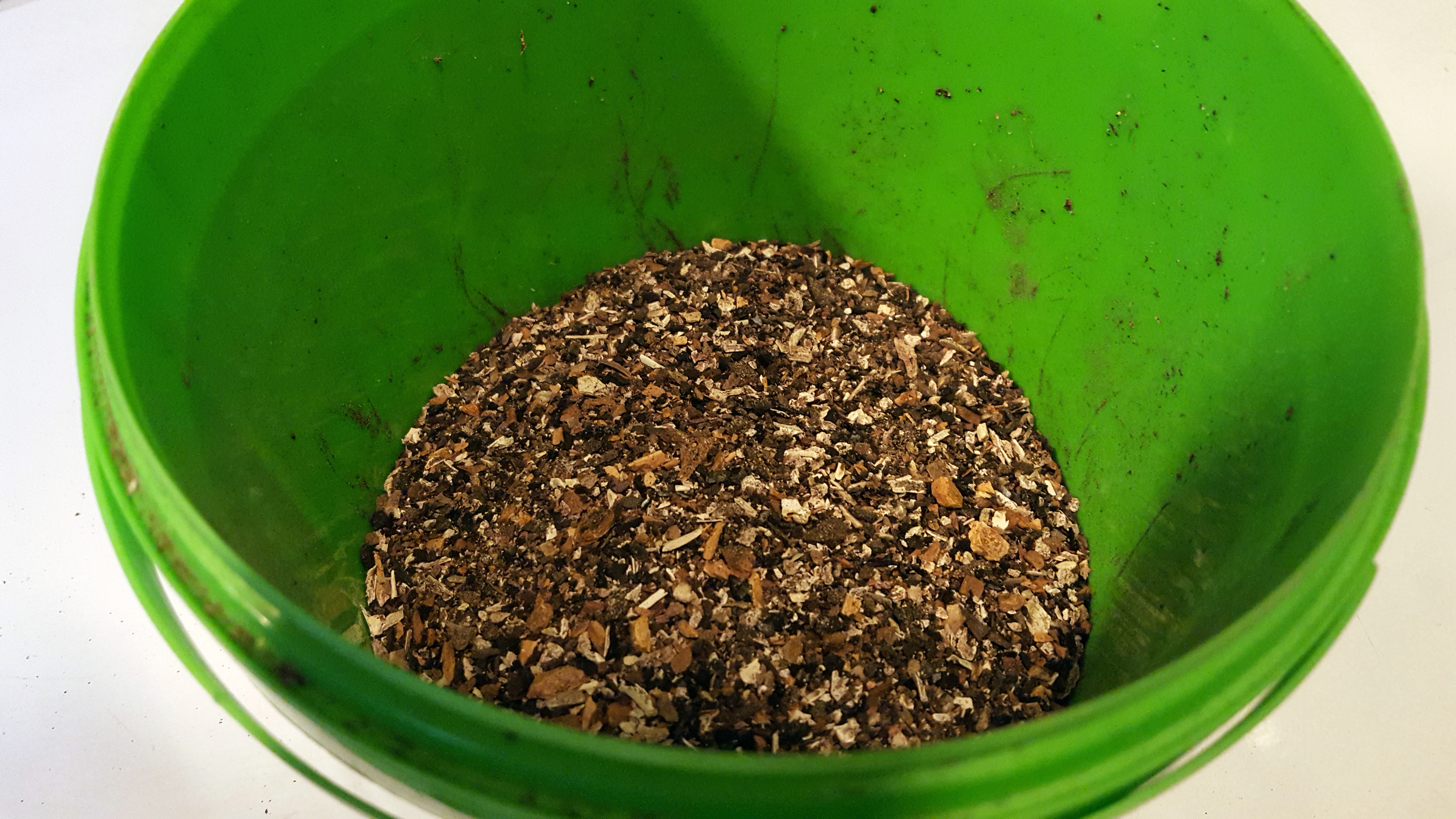
The result:
- has variable sized particles (great for varying the release of the nitrogen, phosphorous and calcium)
- has almost no aroma bar a mild earthy smell
- stores well in a sealed dry container.
As I mentioned above, I also add a small amount of potash granules to the meal to counter the lack of potassium. We now have everything we need for healthy plant roots, bodies, fruits and metabolism.


Of course, be careful when dealing with any soil improvement medium. We have a strict hand washing policy after gardening and also carefully rinse all produce. I wouldn’t put anything in my garden that I was the least bit worried about and neither should you.
Cheers,
PK
See more of the ‘Recover, Reuse’ series here.
Written by
·
