Tag: fruit
-
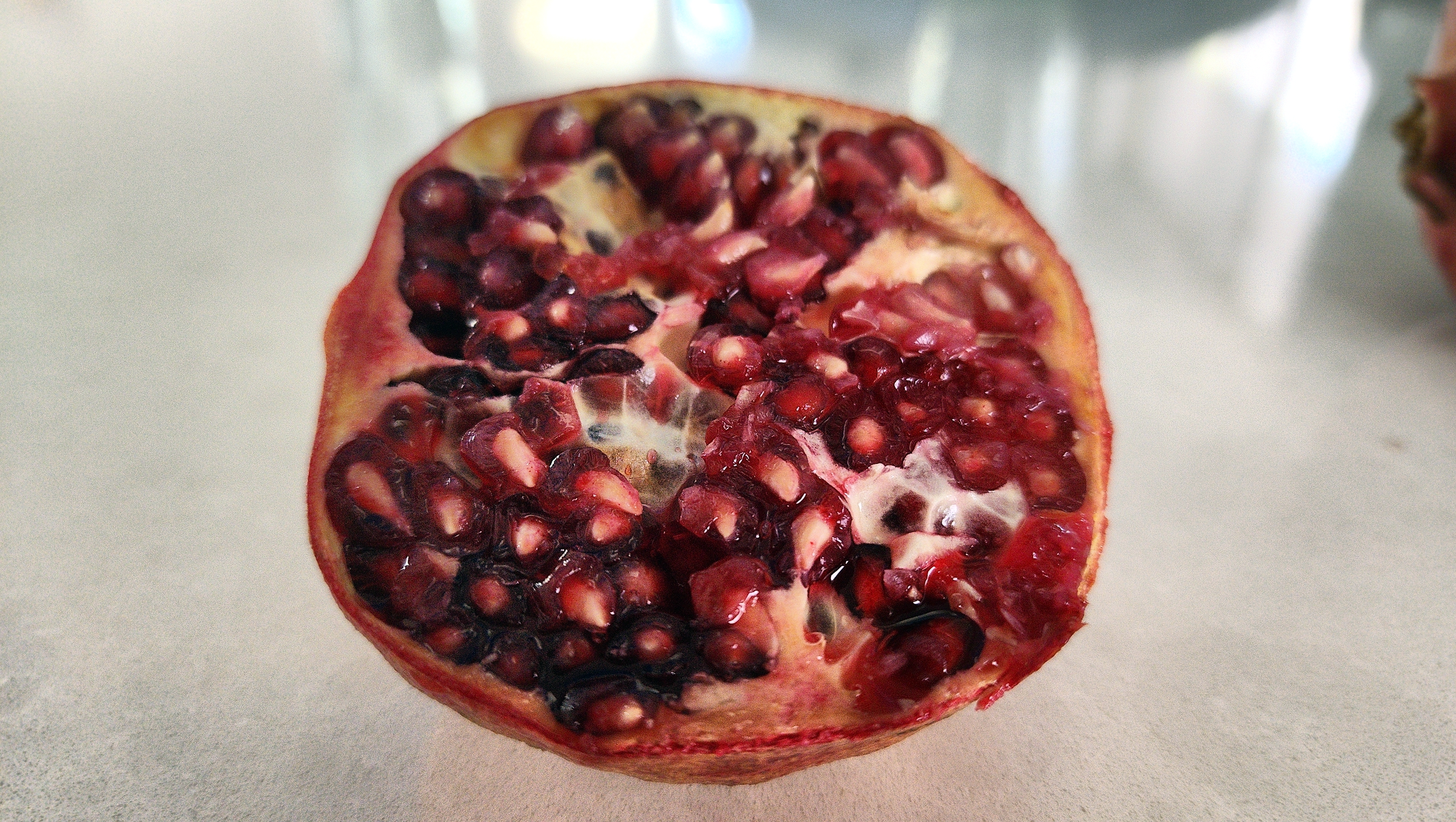
How Do I Use Pomegranate Fruit?
The pomegranate shrub is a hardy plant originally hailing from the Mediterranean.
It’s large round red-purple fruit look and smell amazing. Pomegranates are used in cooking and baking, uses ranging from juices, smoothies, wines, teas, garnishes, jams and fillings.
The outside of the fruit should feel firm and straw like when lightly squeezed.

The fruit is full of tiny little soft berries that contain a small edible seed and lots of juice. Their taste is slightly sour and the texture is akin to passion-fruit seeds.
I like to cut the fruit in half and then bend each half back on itself. The berries should pop out of the white pulp holding them with ease.

I haven’t tried it yet but apparently you can put the seeds in a blender and then strain to get juice that you can put in your smoothies or tea blends.
My favourite use of the berries is as a salad garnish for looks and texture.

Enjoy,
PK
Here are more ingredients and salad posts:
Written by
·
-
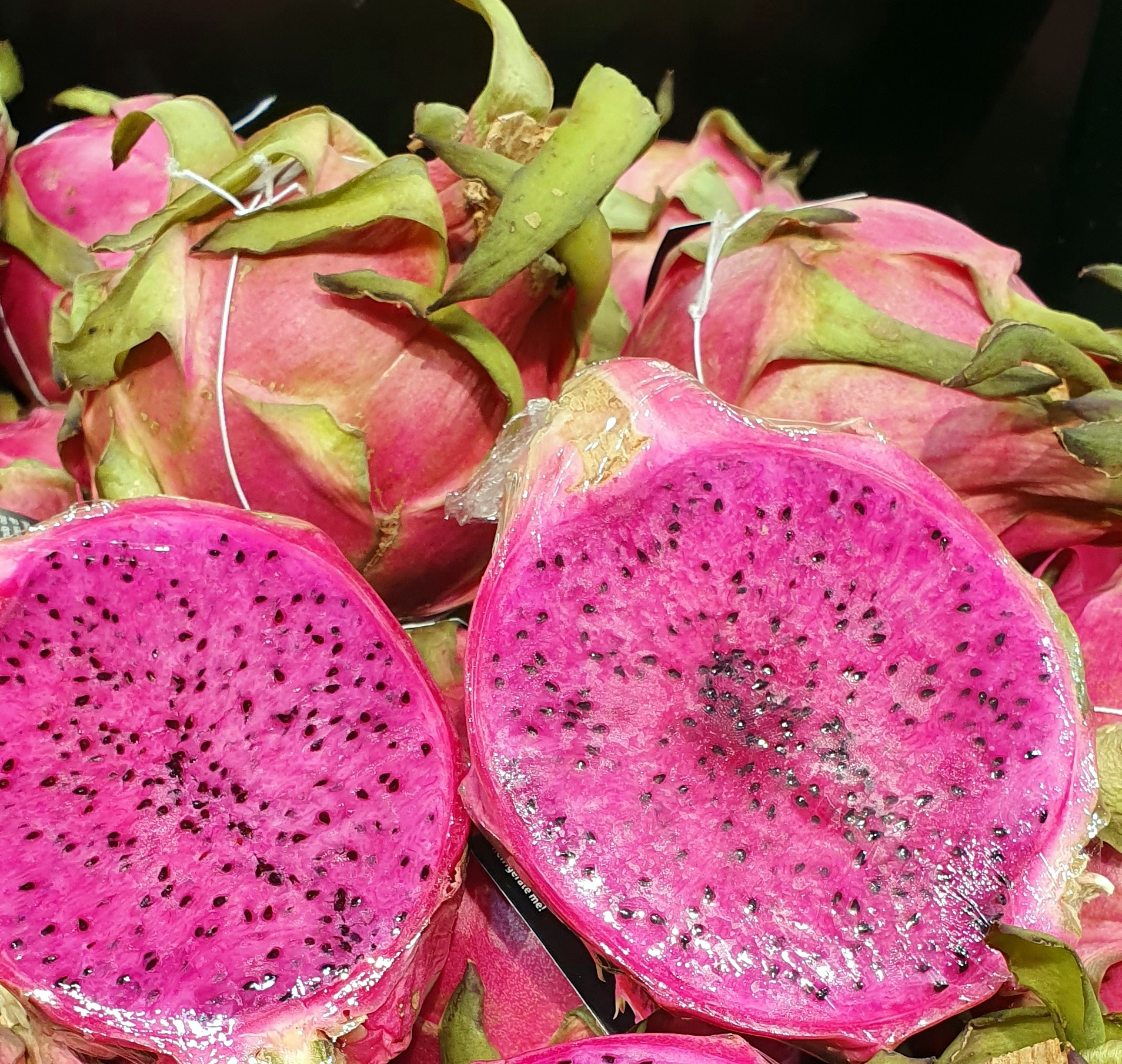
Dragon Fruit
Commonly know as Dragon fruit, the Pitaya is a relative of the cactus and native to the Americas. They are now grown further afield and are relatively expensive.
Their common name comes from the external scaly look of the fruit. Cut open they have a firm, slightly sweet white or pink flesh dotted with tiny crunchy black seeds. Often seen in salads they also pair well with strawberries, pears, citrus and kiwi fruit.

Enjoy,
PK
Here are more ingredients posts:
Written by
·
-
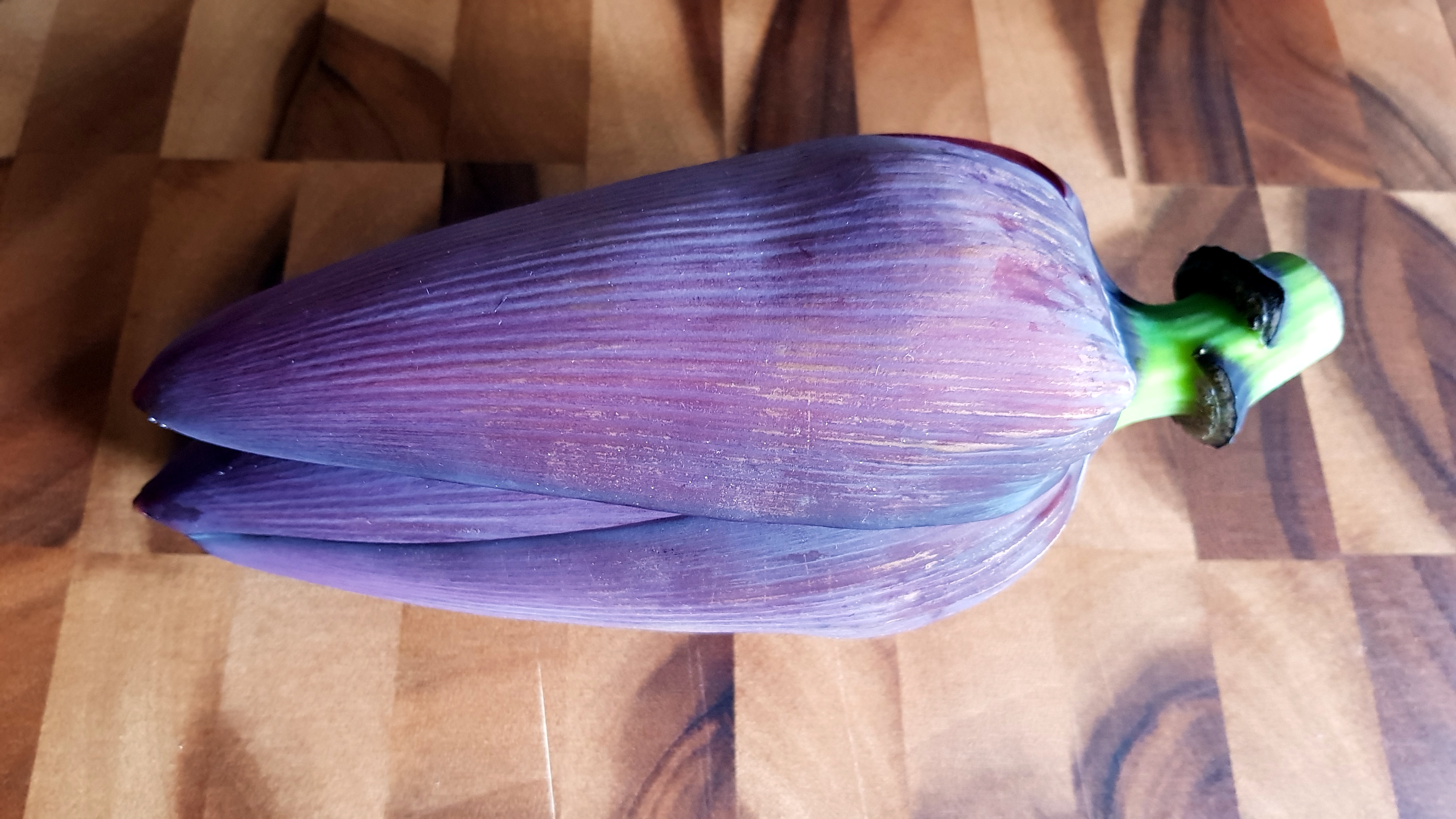
Banana Blossoms
A friend of mine recently gave me a banana blossom.
I had never seen one before so I had to find out how to prepare and eat it. The process is fascinating and isn’t hard. It just takes a bit of time.
The blossom grows at the end of each cluster of bananas.

By Daniela Kloth – Own work, GFDL 1.2, https://commons.wikimedia.org/w/index.php?curid=73500454
They look and smell amazing.

There are two parts of the blossom that can be eaten. Part two is the inner heart which we get to as we peel away the tough purple outer leaves.
Part one though consists of the many long thin florets that would grow to be fruit. You can see them in the next two images. They need to be stripped of their pistil and hard outer layer and immediately put in salty water or a citrus, water and vinegar solution. Otherwise they discolour rapidly.


Once prepared and soaked they loose their initial bitterness and are great in stirfries.
Eventuall you get to the tender leaves and pale heart. They also need soaking for a few hours.


I then sliced the heart and leaves inor rings and used them in a thai fish curry.

Enjoy,
PK
Here are some more Southeast-Asian cuisine and curry posts.
Written by
·
-

PK Makes Apple Cider Vinegar
So I took one of my reader’s suggestions last week when I was making my hard cider that I make some apple cider vinegar at the same time.
Here you go Grant :).
I found this wonderful method on Tales of a Kitchen and gave it a go with the idea of making my own starter ‘mother‘ for next time and also getting some yummy vinegar for cooking.
Don’t forget careful hygiene with this method. I sterilised everything with boiling water before I started and if the mix starts to smell or look funky I will throw it out and start again.
Steps:
I took some of the left over apples from the cider pressing and popped them into a large glass beer stein. You can use any part of the apple, even the cores and seeds!
I added 4 tsp of raw sugar and enough filtered water to cover the apples. I had a problem keeping the apple chunks down and below the water line. I tried an orange in a bag but it got mouldy :(.
Some more Googling and I came across phickle.com. They suggested using a hessian bag and some ceramic pie weights. I can’t spruik this idea enough. The bag pushes the fruit down and stops them going off and mouldy.
I then put a tea towel over the top of the stein and placed it at the back of a cupboard. Bubbles started almost immediately showing that the fermentation had begun. A few days later and I had a nice creamy layer of ‘mother’ and a nice sweet smell.
Update (1 month in):
I checked several times over the last month that the ‘mother’ was still white and there was no mould or nasty smells. Everything looked good so I moved on to the next stage.
I strained the liquid in a metal sieve and discarded the apples. They looked nice though.

Then I added the strained liquid and the dregs from the beer stein to a clean jar. I will leave this mix for another 4 to 6 weeks, stirring it every now and again.

See you in another 6 weeks, I hope :D.
Wishing you fun in the kitchen,
PK
Related Links:
Please consider subscribing to get a weekly email summary of our posts.
[mc4wp_form id=”15771″]
Written by
·
-

PK’s Roasted Apples
Last night I did a roast pork shoulder just to find that I had run out of apple sauce.
I found a recipe where each person gets their very own roasted apple.
I didn’t use their roasting method but I added a couple of small red apples, lightly coated in olive oil and sprinkled with pepper and salt, for the last 30 minutes while I crisped up the roast potatoes.
You know they are done when their skin loses its colour and starts to fall off.
Enjoy,
PK
Written by
·