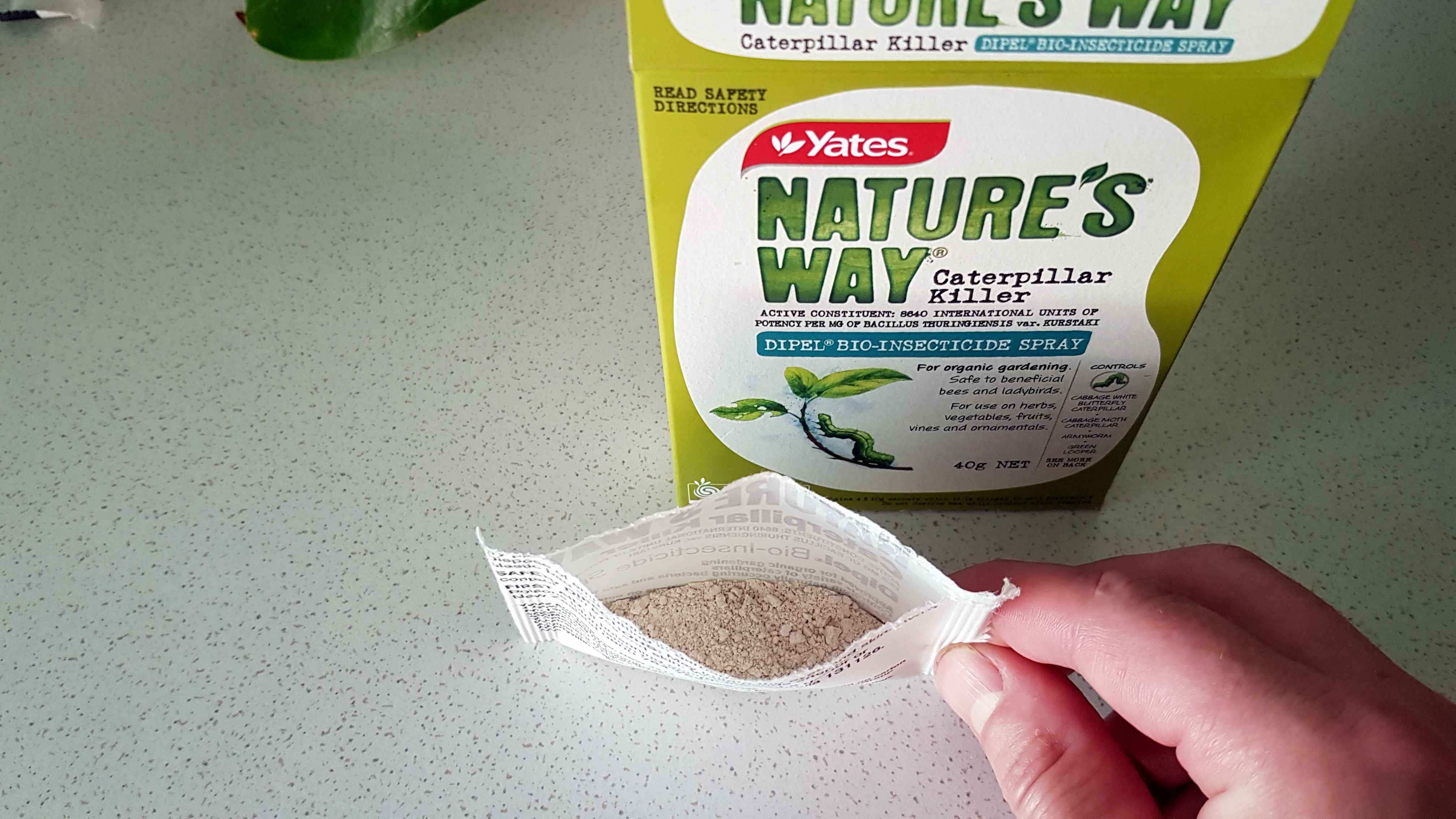
I don’t know why it has taken me so long to use this method of controlling that most common of gardening’s BadCritters, the pesky caterpillar.
Whilst I will still more often than not reach for the pyrethrum spray, Dipel has a place in my garden shed from now on. It comes in a powdered form and is not the bacteria (Bacillus thuringiensis) itself but the crystalised toxins it produces. These toxins disrupt the caterpillars’ digestive tracts as they eat the leaves of your vegetables. They stop eating and starve to death.
You don’t need to worry about hurting bees and other GoodCritters with this spray though. They are in little danger as they don’t ingest enough of the toxins ie they are not munching the leaves.
It might take a few days for you to notice dead caterpillars and see the return of vigour to your leafy greens in particular. I spray every 10 days or so over the summer months.
As always, take care of yourself and others. Wear safety glasses, a mask and gloves when applying any garden spray.
I have you now BadCritter:

Enjoy,
PK
Related Links:
- see more insecticide posts here
Please consider subscribing to get a weekly email summary of our posts.
[mc4wp_form id=”15771″]


Leave a Reply to Chili Pepper: Tepin – Grow It, Catch It, Cook ItCancel reply