Tag: meat
-
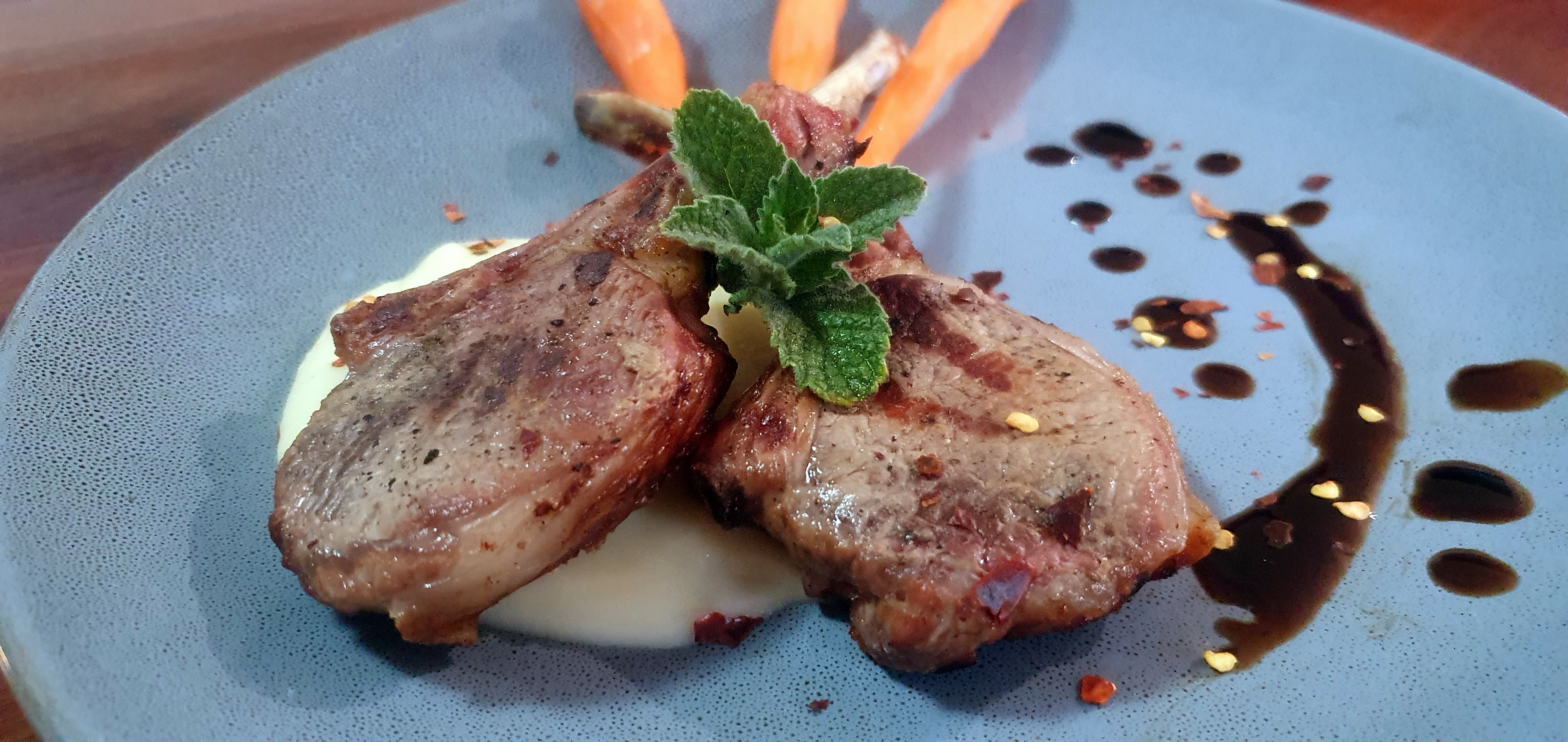
Australian Lamb Cutlets With Potato Puree And Balsamic Mint Sauce
Although they cost a small fortune, I find french cutlets simply irresistibile. Dave’s Mint And Balsamic Dipping Sauce makes this even more so. A match made in heaven!
Normally I make the sauce and give each person a small bowl to dip the lamb in, that is how Dave does it. 🙂
Here though, I served the sauce (reduced to a syrup) with steamed vegetables and a creamy french style potato puree bed for the cutlets.

Ingredients
- Lamb cutlets, frenched (~4 per adult)
- Steamed vegetables
- Potato puree
- 200g mashed potatoes
- 50g or more butter
- milk, to get the right consistency
- salt and pepper to taste
- Dave’s Mint And Balsamic Dipping Sauce, enough for each person
Method
I like to get the lamb out of the fridge in advance so that it is getting to room temperature just as it goes on the pan or barbeque. Use a bit of common sense as to how early you bring it out.
Start by boiling peeled potatoes and mash them as you normally would. When the mash has cooled somewhat add the potatoes, butter and a splash of milk into a blender. Give it a quick blitz and check the consistency, adding small amounts of extra milk as you repeat the process until you are happy. It should stay warm while you steam the vegetables and grill the lamb.
Serving
Go to town. My only advice is to try not eating all the cutlets as you cook them. 🙂

Enjoy,
PK
Here are some more lamb dishes and a selection of sauces and condiments:
Written by
·
-
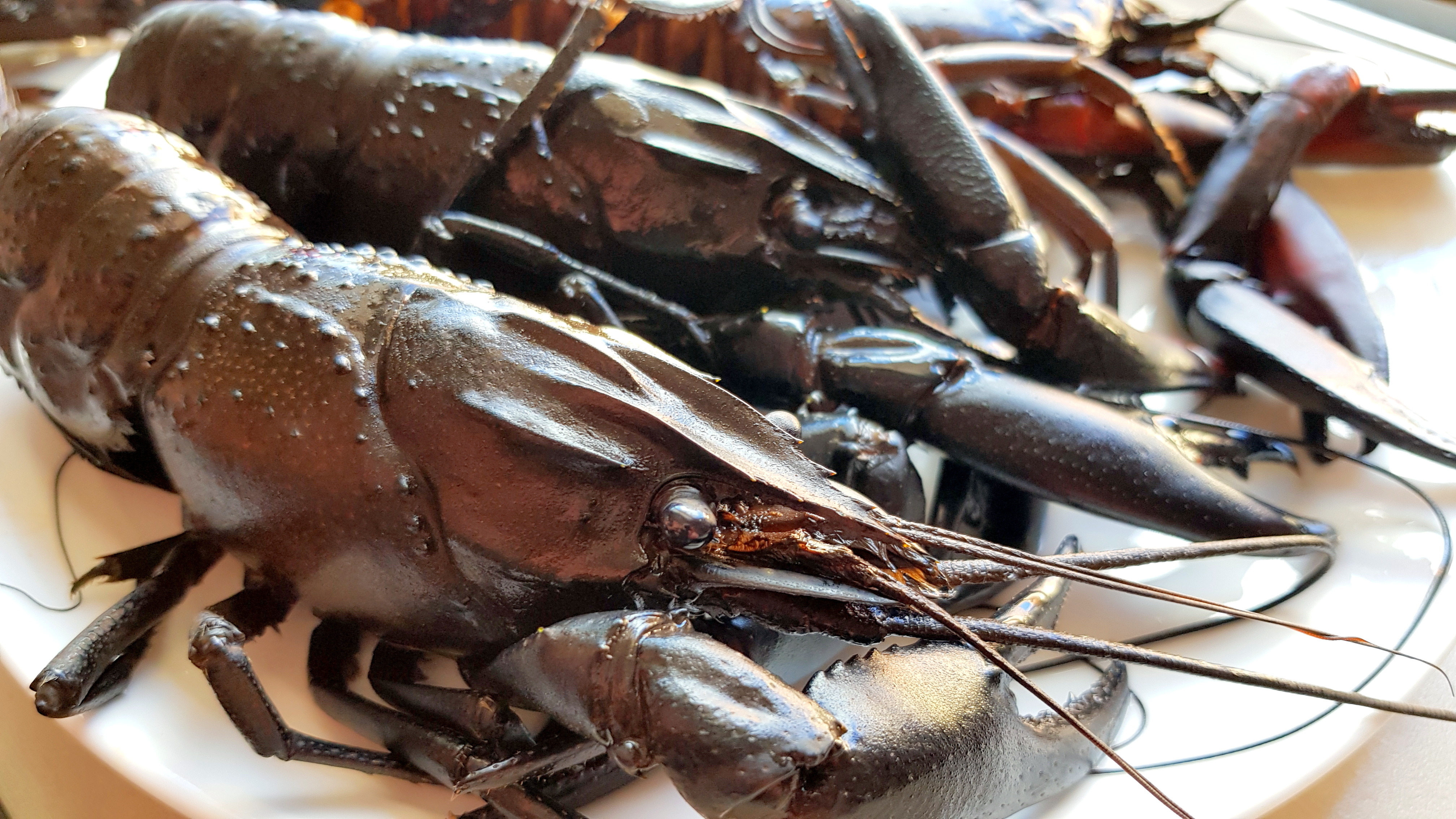
How To Catch Marron: Craigo From GICICI Shows You How
Marroning is a lot of fun and if you pick the right spot you should come home with a good feed. I want to share some tips with you.
Remember to:
- use legal pots.
- not take undersized marron.
- stick to your possession limit.
- buy a licence for the season and have it on you.
- visit the Department of Fisheries website for the latest rules http://www.fish.wa.gov.au
Marron Hunting Tips
Use the right bait. I use cheap dog food wrapped in old stockings. These I tie to the base of the pots.

Pick a spot that exhibits marron holes in the bank and if hunting during the day look for deep drop-offs that provide darker water.


Check your pots every 45 minutes or so. If you catch any make sure to measure the carapace and only keep those bigger than the minimum size.
Put your live catch on ice kill them humanely.
This guy was just short so he went back in.

That is better 🙂

Leave your spot as clean if not cleaner than when you arrived.

Fish on,
Craigo
Related Links:
- see all recipes using marron here
- see more seafood posts here
- see more meat posts here
- See more from Craigo here
Please consider subscribing to get a weekly email summary of our posts.
[mc4wp_form id=”15771″]
Written by
·
-
Chicken Crown
Breaking down a whole chicken is the best way to save money and also know that you are making the best use of a precious resource.
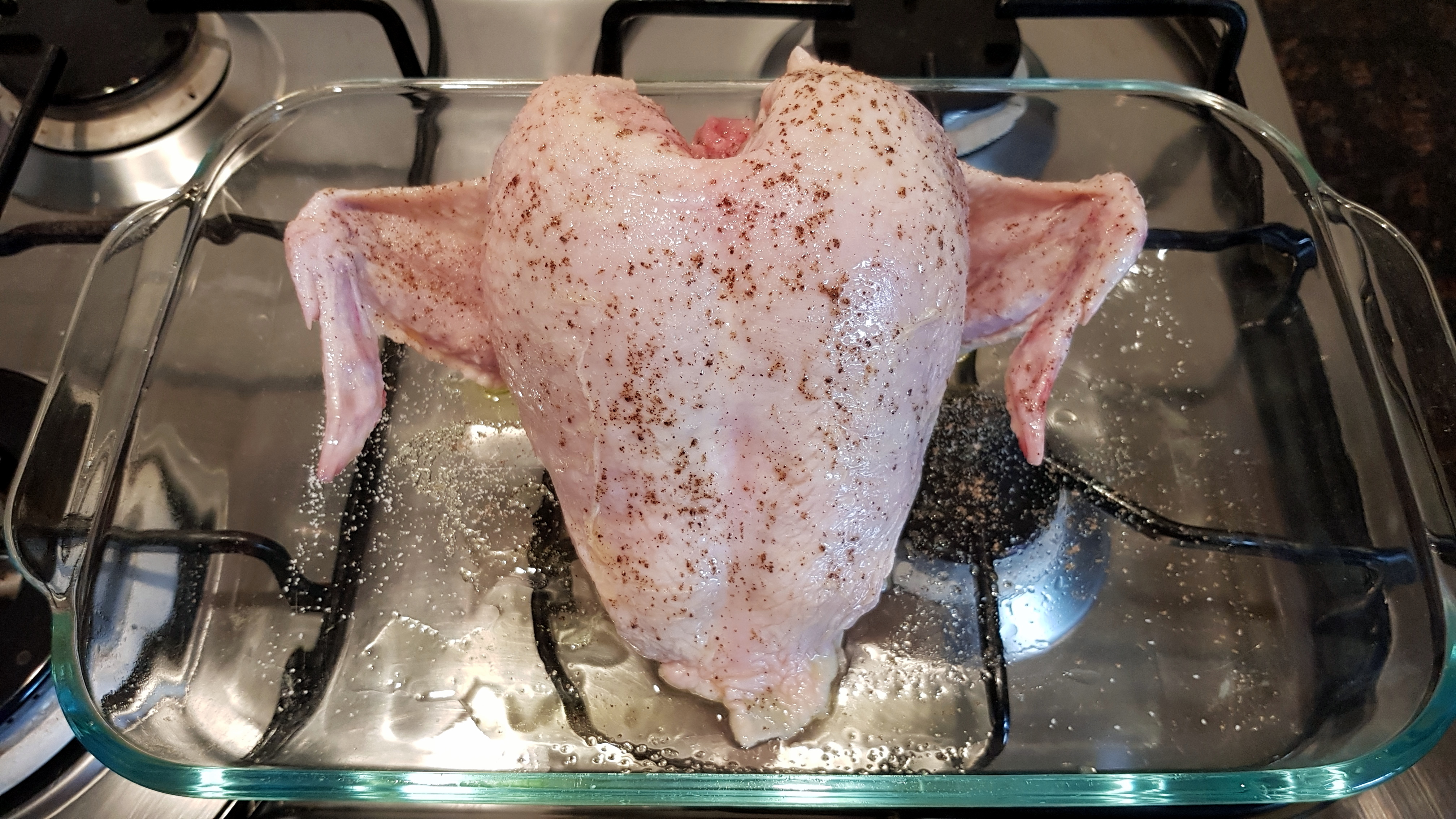
After removing the wings and legs from a whole chicken we can make what is called a ‘crown of chicken’. It makes for a perfect roast and you can even leave the wings attached. I am
going to try(I did, see it here) stuffing the cavity with bacon next time I cook one :).If you need any help I recommend watching Scott Rea’s video which I have included at the end of this post.
Crown of chicken
There is a line that runs along the underside of the breast. Use your knife or shears to cut down and along that line, severing the backbone. Trim up the neck skin and there you have it.


You can go further and either a) cut the crown in half, see last picture below, and or b) cut the lower rib cage away and then halve the crown to get two breasts on the bone.

Cooking suggestion – PK’s Chicken Crown Roast With Bacon

Enjoy,
PK
More Chicken Cuts:
[table id=chicken /]
Related Links:
- see all recipes using chicken here
- go to the main page about chickens here
- go to the main ingredients page here
Scott Rea video:
Please consider subscribing to get a weekly email summary of our posts.
[mc4wp_form id=”15771″]
Written by
·
-
Chicken Whole
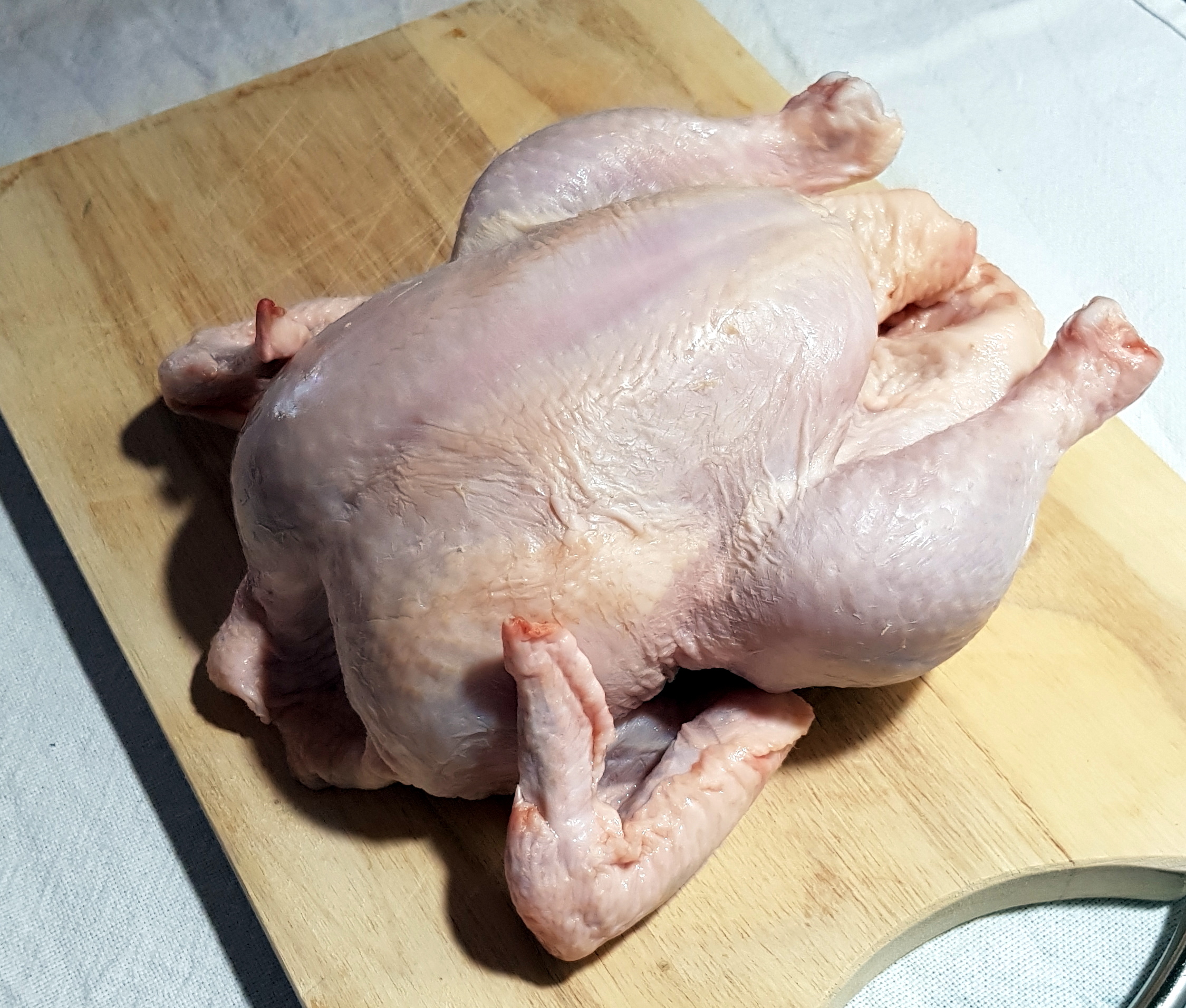
A whole roast or braised chicken is the most amazing of meals to share with friends and family. With its mix of light and dark meat everyone is a winner. Personally I like every single bit of meat but I have not had much experience with their offal and off cuts.
In Australia we don’t really categorise whole birds between fryer, boilers and roasters (as in America and Europe) in our supermarkets. We really go in there looking for a certain sized bird depending how many people we want to feed and the labels all say ‘whole chicken’.
Much of the bird’s size comes down to what they were fed and how long they were raised for. Chicken is always sold at a low price point and its lean meat makes for a really thrifty meal.
At the bottom of the post are links to some yummy recipes and you can use this table to find out about the different cuts you can get from a whole chicken.
This is what you get from one chicken:

Enjoy,
PK
More Chicken Cuts:
[table id=chicken /]
Related Links:
- see dishes using whole chickens here
- see all recipes using chicken here
- go to the main ingredients page here
Please consider subscribing to get a weekly email summary of our posts.
[mc4wp_form id=”15771″]
Written by
·
-

How Do I Butterfly Or Spatchcock A Chicken
A whole chicken, especially the larger birds, can take longer to get all of the meat to a safe temperature.
So, a great way to have a roast chicken on the bone, in less time, is to butterfly or split the whole bird. This is also called spatchcocking. It is almost as simple as cutting the chicken in half but the result is a flat profile that cooks evenly.
Chicken Halves
Halving a chicken is still a good skill to learn. Simply place the whole bird length ways in front of you, breast side up. Using a long sharp knife or cleaver simply cut straight down through the middle. The breast bone will guide you.
You could even flatten each half out a bit with the heel of your hand.

Butterflyed\Spatchcocked Chicken
Place the whole bird length ways, breast down. Using kitchen shears, cut along each side of the backbone, removing it entirely.

Then slice in into the cartilage at the top of the breastbone (see the next photo) and pop the breastbone out. Run your finger along the soft part of the breastbone and it should come out in one piece. I have embedded the excellent YouTube video that taught me how to do this at the bottom of the post.


Tidy the fat and skin up. Flip the chicken over and flatten it slightly with your hands.

Enjoy,
PK
How to remove the breastbone easily:
Here are more chicken primal cuts and uses of butterflied chicken:
Written by
·
-
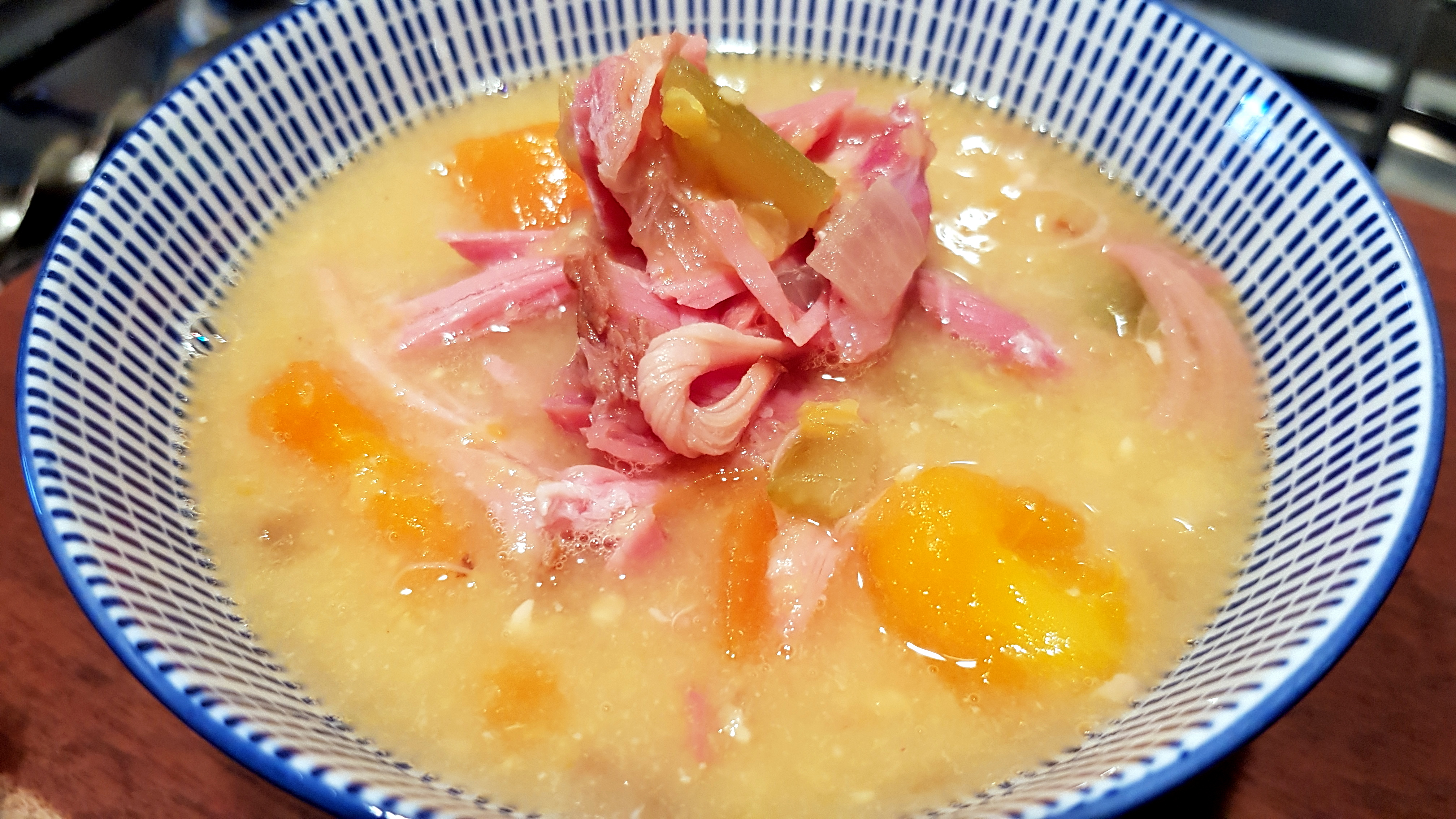
PK’s Pea And Ham Hock Soup
Talk about nostalgia. My mum used to make this for me as a kid and it brings back happy memories every time. I think I might have done my mum proud with my recipe and stayed true to the dish’s thriftiness to boot :). It also freezes well so I got a whole week’s worth of lunches.
You don’t have to cook pea and ham soup in a slow cooker but it is worth the low and slow cook for the extra depth of taste you will get. I will also leave the decision to blend or leave the soup chunky up to you. I did a halfway option, blended soup with some of the ham left chunky.
You will be:
- Preparing your ingredients
- Cooking low and slow
- Removing the bones
- Blending or not
- Serving.
You will need:
- Ingredients:
- 1.5 cups dried yellow split peas
- 2 celery sticks, rough chopped
- 2 carrots, rough chopped
- 1 brown onion, rough chopped
- 1 bay leaf
- 1 ham hock (mine was ~850g)
- 10 cups water
- Equipment:
- a long sharp knife
- a chopping board
- a slow cooker
- a pair of kitchen tongs
- a wooden spoon
- a stick mixer
Preparing your ingredients
- Thoroughly rinse the split peas under cold water until it runs clear.
- Place them at the bottom of your slow cooker, turn this on to low.
- Chop the:
- 2 celery sticks
- 2 carrots
- 1 brown onion
- Add them on top of the layer of split peas.
- Add the bay leaf.
- Add the ham hock after giving it a quick rinse.
- Add 10 cups of water and cover.


Cooking low and slow
Cook for about 6 to 8 hours (more if the meat is not falling off the bone) turning the hock over every now and again.

Removing the bones
Remove the main bones and then look carefully for any other little bones. This is important if you are going to blend the soup. You can use the bones to make Bone Meal for your garden.

Blending or not
Blend the soup now if you want to. I did but I kept some of the ham hock whole for serving purposes.
Serving
Some crusty bread and cracked black pepper would go a treat :).

Enjoy,
PK
Related Links:
Written by
·
-

Australian Beef
I find all the different cuts of beef a bit bewildering. To make matters worse they are called different name in different countries and then there are so many ways to cook with them.

I am going to try and learn and share as much information as I can about this great animal because considering the resources that go into raising cattle we don’t want to waste one bit of the meat.
That said, I still want to get the best value for money so I need to learn how to spot the best examples of each cut. I expect there are going to be a lot of insider tips and tricks to master and by now you know that makes me tick :).
Lastly how the animals are raised, what they eat and what that means for the environment is very important to me. I respect peoples’ right not to eat meat however I want to keep doing so but as sustainably as I can.
Although this image it shows the American names for primal (basic) beef cuts I think it is a good starting point.

The above primal cut graphic (and similar ones on the posts below) are credited to Wikipedia user JoeSmack.
Please click on the links below for more information and cooking tips:
- bottom sirloin section
- brisket section
- flank section
- chuck section
- plate section
- rib section
- round section
- shank section
- short loin section
- sirloin section
- tenderloin section
- top sirloin section
Written by
·