Tag: sustainability.
-
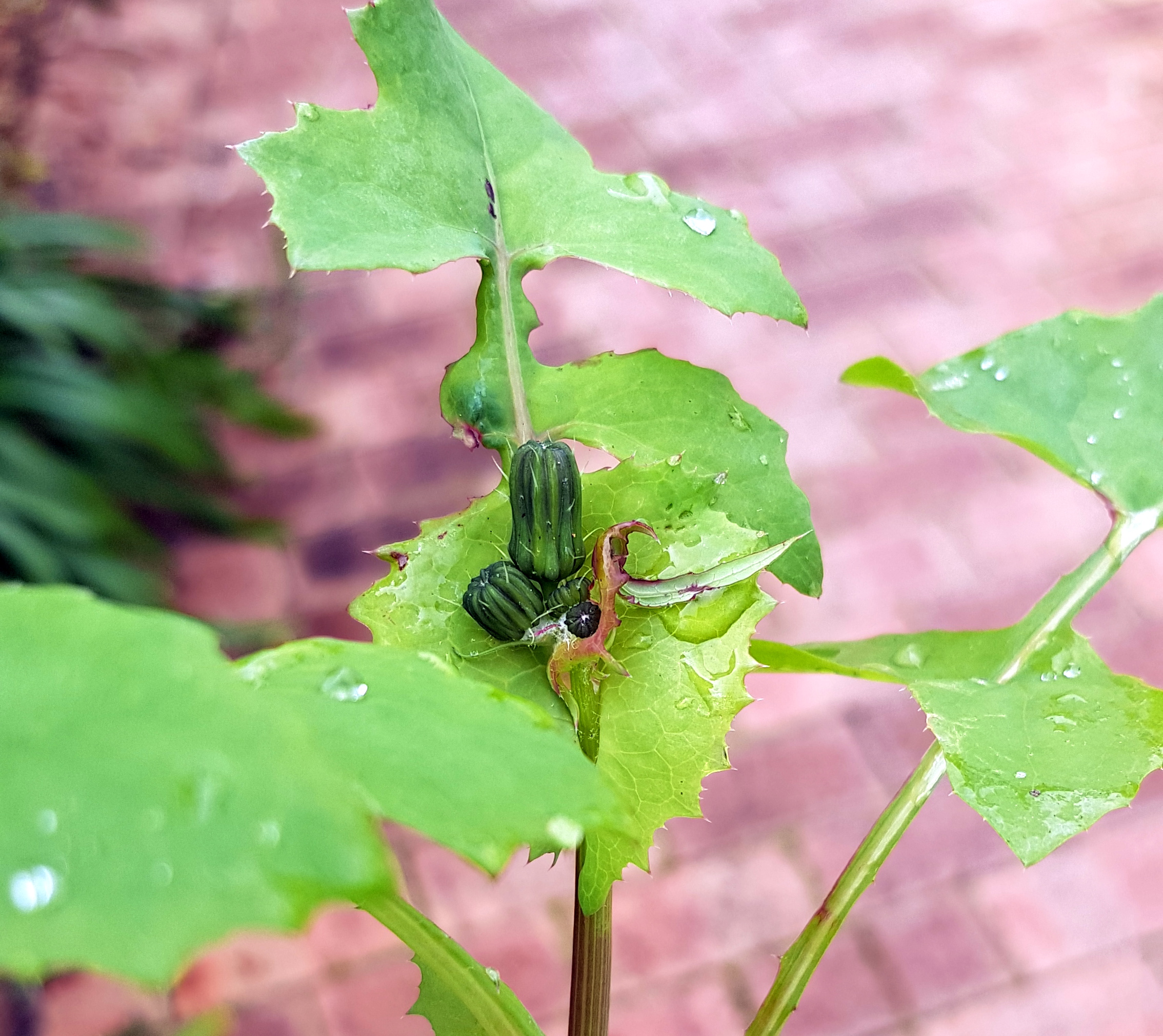
Environmentally Friendly Weed Control
I actually enjoy pulling weeds. I find it very relaxing and distracts me from the day’s little stresses.
Most people don’t and even for me when I am pushed for time the weed situation can get out of control. So I wanted to share a number of chemical free weed control methods I employ.
Till them into the soil
If I have a large area of weeds (of the type that don’t aggressively spread) I will turn them back into the soil with a hoe, or a rake or even a spade. Break the roots up enough and the weeds will break down and enrich the soil. At the very least you have thinned their numbers allowing for easier control of the rest.
Pull them and use in compost and worm farms
In my quest to keep up with my worm farms and compost bins I am always on the look out for new sources of vegetable matter. There is lots of conflicting opinion on using weeds in your compost. The fear being that the compost will then spread weeds anywhere you use it.
I only use the leafy varieties and not those that spread via runners and create a ground cover.
Pull seed pods off any weeds you are going to use or simply bypass them altogether.
If you are still worried you can make soup 🙂 . I have an old pot that I use for this purpose and it doubles as a collection bucket. I pop the weeds into it and then pour boiling water over them. I then put the pot somewhere safe from kids and the rain and allow to sit for a few days.
By then you will have a pile of sludge that can be poured into your compost bins and the like. The boiling water has rendered the weeds, any seeds or BadCritters you missed unlikely to cause you any trouble.


Boil them where you find them
This tip is great for those tenacious weeds growing in brick paving or growing right next to another plant. I guess you just have to weigh up for yourself the cost to the planet to use and boil the water vs the chemicals, water, power and plastic in a bottle of weed spray. For some that might not be worth the cost and I get that.
If you have any boiled water leftover in the kettle, simply pour it on the weeds where you find them until you see them blanch and wilt. This kills the weed and its roots outright and seems to inhibit the seeds too.

The effects are immediate.
Before:

After:

Hit them with white vinegar where you find them
White vinegar (not to be confused with white wine vinegar) can be used for so many purposes outside of cooking.
Try spraying weeds where you find them with straight vinegar or a vinegar and detergent mix. It knocks them around a bit.
Hope these tips help and please let me know your secret weed killing techniques 🙂
PK
Please consider subscribing to a weekly email summary of our posts or check us out on Facebook @growitcatchitcookit.
[mc4wp_form id=”15771″]
Written by
·
-
Can I Compost Weeds?
In my quest to keep up with my worm farms and compost bins I am always on the look out for new sources of vegetable matter.
There is lots of conflicting opinion on using weeds in your compost. The fear being that the compost will then spread weeds anywhere you use it.
I firmly believe you can use them in your worm farms and compost bins and here is how.
Choose your weeds carefully
I only use the leafy varieties and not those that spread via runners and create a ground cover. The latter I just pull and leave on top of the soil. They tend to mulch and stop other weeds growing if you do this enough. Really tough to pull weeds can always be killed using this method.
Don’t include any seeds
Pull seed pods off any weeds you are going to use or simply bypass them altogether.
The secret weapon step
If you are still worried you can make soup 🙂 . I have an old pot that I use for this purpose and it doubles as a collection bucket. I pop the weeds into it and then pour boiling water over them. Pop the pot somewhere safe from kids and the rain and allow to sit for a few days.
By then you will have a pile of sludge that can be poured into your compost bins and the like. The boiling water has rendered the weeds, any seeds or BadCritters you missed unlikely to cause you any trouble.


Enjoy,
PK
Written by
·
-

Business: Gale Force Farm Organic Free Range Eggs
I am definitely going to be adding to this post with more details soon about the amazing people at https://www.facebook.com/galeforcefarm/ but I wanted to share with you some photos I just took of their organic free range eggs.
They taste as good as they look by the way :).
Please note this is not a paid post and I am doing it to spread the word about a great south-west Australian farm (Margaret River) doing right by their livestock :).
If you live in the Perth metro region, please ask your local shop to stock them.
About:
Gale Force Farm is a family run farm located in Metricup- part of the Margaret River Region. We are producing Certified Organic Free Range Eggs. We will look to expand to include Organic Lambs and Fruit and Vegetables.
We aim to be self-sustainable, and our property is off the grid- with power generated by our solar power system.Contact Details:
Address: Gale Road, Metricup, Western Australia, AustraliaEmail: galeforcefarm@gmail.comPhone: 0488 203 466Related Links:
Written by
·
-

I Caught A Squid, Now What?
My ideal fishing trip sees me catching a few squid for dinner. Shame that I am terrible at catching squid. I mostly resort to bartering a few table fish for them with my mates. That said, even a blind pig finds a truffle now and then :).
Written by
·
-
How To Prepare Freshly Caught Squid
My ideal fishing trip sees me catching a few squid for dinner. Unfortunately I am terrible at catching squid 🙂 . Occasionally I get lucky but mostly resort to bartering a few table fish for them with my mates.
These lovely looking squid rings came out of Owen Anchorage (just south of the port of Fremantle, Western Australia) on a recent fishing trip.
I want to share some of the tips I have picked up thanks to my mates and also a bit of experimenting in the kitchen.

On the boat
We all want to avoid being covered in black goupy squid ink when retrieving squid into the boat. Let the squid have a few squirts in the water whilst still on the jig. If you have a net, scoop it under the squid and let the net contain the ink squirts. Once they have calmed down a bit bring them on board.
I was recently given two tips that not only stop the squid from inking the inside of your eski (and the rest of your catch) but also treat the squid humanely.
Tip 1 – Take a knife and spear the squid behind each eye. This will instantly kill them and you know you have done it right when the squid completely turns white. Here is some more information on the technique https://en.wikipedia.org/wiki/Ikejime.
Tip 2 – Pop any squid you have caught in a plastic bag before adding them to the eski. I reuse the plastic bag on several fishing trips, cleaning them after each use.
Cleaning
My friends have been testing the use of scaling bags, towed behind the boat at slow speeds, to clean their squid catch. These pictures were taken after only a few minutes using the bag and the results are even better if you leave it out longer. You can see the hoods are nice and clean and the skin and wings have been removed.
My brother in law has also given me a few tips for cleaning squid the old fashion way.
Tip 1 – Work your thumb into the hood and work the cuttlebone (it runs the length of the hood) loose with your thumb until the whole lot comes out in one piece. This way you won’t (hopefully) break the ink sac when you pull the head and tentacles out of the hood.
Tip 2 – If there are some ink stains and like me you want nice clean squid rings, don’t bother trying to fight the whole hood. Nor do you have to attempt the near impossible task of turning it inside out to clean it. Simply cut the hood into several pieces, each as long as your thumb. This makes them easier to clean under the tap but still allows you to make nice thin rings later.

I pop the head, tentacles and wings into a snap-lock bag. Now frozen, they are ready for the next fishing trip as bait or berley/chum.
Tip 3 – I also freeze the rings before I cook with them as I have it on good authority that this will help make them tender due to the freezing process breaking down the fibers.
Once coated in an egg batter and Panko breadcrumbs (or a salt, pepper and flour dry coating) they will shallow fry quickly for that melt in your mouth texture.
Enjoy,
PK
Here are some squid and seafood posts:
Written by
·
-

PK’s Working Garden
A working home garden (or kitchen garden) is one where the emphasis is on the growing of herbs, vegetables and fruit. There may also be areas for composting and hopefully a system of natural pest management aka insecticide free bug control.
They can be just as visually appealing as any other type of garden. However, their beauty may be more in the eye of the beholder and the smile on your kid’s face as you hunt for caterpillars together. If it was up to me I would have one giant vegetable garden, a few benches and a hammock :).
Indeed, it is becoming increasingly difficult, much to my wife’s dismay, to see where my kitchen garden stops and the “other” garden starts. For now I am getting away with it :).
There is something uplifting in getting an ingredient straight out of the garden as you cook. It is a great way to briefly slow down the pace set by modern life.
Enjoy,
PK
Here are a few photos:

Please consider subscribing to a weekly email summary of our posts or check us out on Facebook @growitcatchitcookit.
Written by
·
-

PK’s Worm Farms
Although this is my first ever worm farm, I am already hooked and singing their virtues.
Written by
·