Tag: reuse recover
-
Hard Plastic Recycling: Reuse Recover Rethink
Plastic is an amazingly versatile material and it is no wonder it is used to make items and as a packaging material for our food, beverages, cleaning products, equipment etc etc.
However, consumers and manufacturers alike think of it as disposable and that is where the problem lies. Not to mention that in many cases it is overused or unnecessarily used because it is cheap and convenient.
Until this mindset changes and cost comparative, environmentally friendly alternatives become widespread, the ‘plastic problem’ will be with us.
Recycling plastic gets us of the hook right?
No but it is a great start considering what I wrote above.
However, I hear a lot of negativity from people about plastic recycling. Most of it revolves around the idea that recycling schemes are all a charade and the plastic still ends up in landfill.
Firstly, I bet some of it does as no system is perfect and recycled plastic is a commodity subject to supply and demand like any product. There has to be manufactures willing to buy enough recycled plastic to keep up with the recycling schemes.
Secondly, I believe that shouldn’t stop me trying to recycle where I can and lobbying/voting with my wallet when required for improvement in recycling schemes and food transportation etc.
Thirdly, I believe that combining recycling with reducing the plastic you bring into being and resusing everything possible as often as possible is a wining strategy. Some examples are buying in bulk, refusing plastic shopping bags when offered and going to stores that let you bring your own containers. One of my friend’s mum even made a peg basket out of a milk bottle for the best recover example I have heard in ages!
Want to know more?
As always I want to know more about what I am using. So I look for the little symbol on each product to inform me.
There are 7 types of hard plastics in common use in Western Australia that can be recycled or reused to varying degrees. Many hard plastics are collected by our local councils and some are also taking soft plastics now. I am going to try and get you examples of each.
1 Polyethylene Terephthalate (PET)
Tough as nails and very common. Think soft drink/spring water bottles and tomato punnets

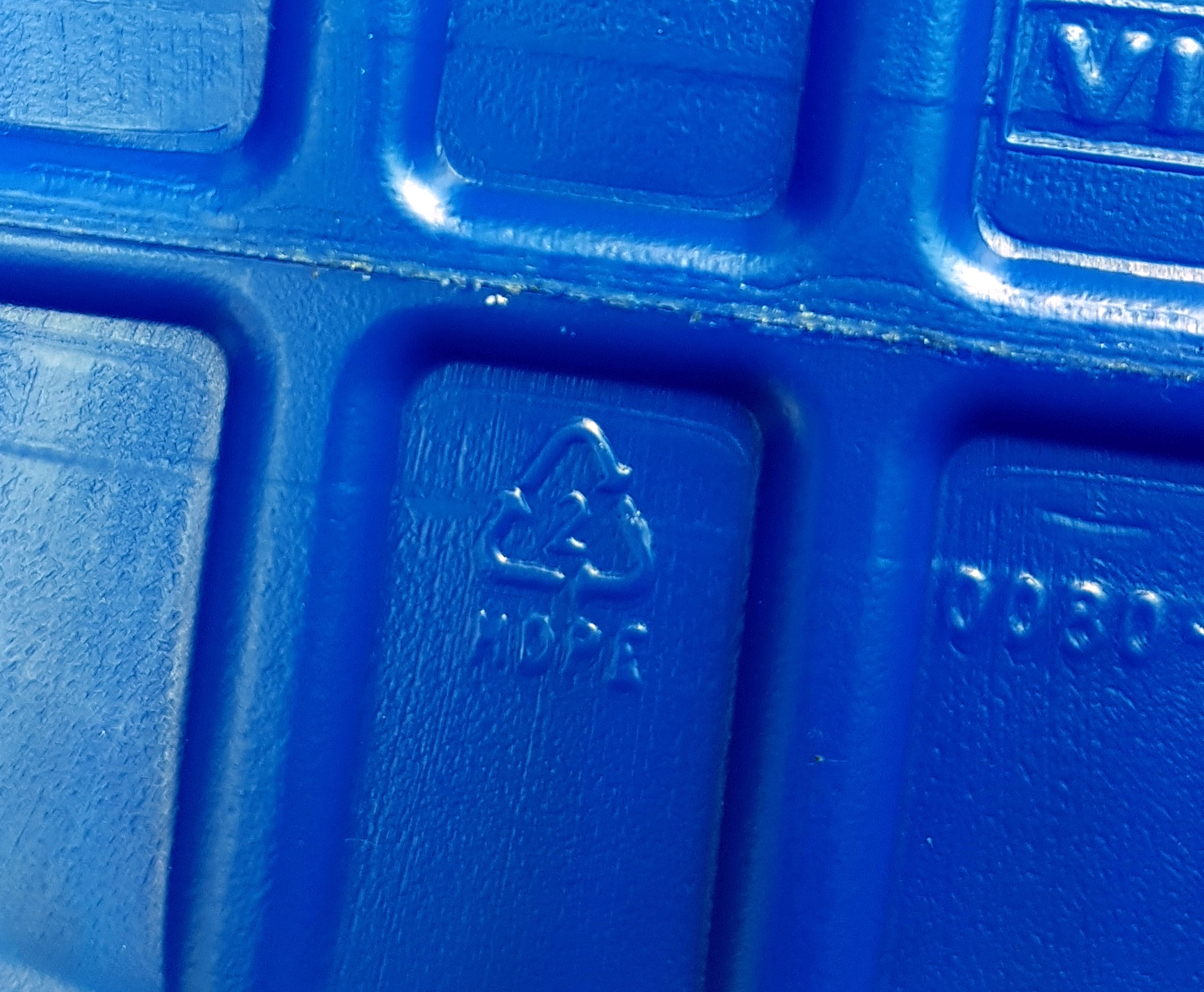
2 High Density Polyethylene (HDPE)
One of the most common plastics and is usually fully or semi opaque and dyed.
Examples include bottles (milk, detergent, shampoo etc) and plastic bags.


3 Polyvinyl Chloride (PVC)
Examples familiar to us gardeners are reticulation pipes. Flooring even which shouldn’t have surprised me but did.

4 Low Density Polyethylene (LDPE)
The dreaded packing foam is a common example.
5 Polypropylene (PP)
A hard yet flexible plastic.
A few common examples are:
- microwaveable food containers and their lids.
- the 5 gallon buckets some of us use use in the garden or take fishing.
- seedling pots and tubs of feriliser.


6 Polystyrene (PS)
Strong but brittle. A common example is take away cup lids.

7 Expanded Polystyrene (EPS) or Other
The opaque meat trays you get in a supermarket are a common example. Buying meat in bulk is a great way to reduce this plastic. Heavy duty reusable bottle lids are another example. Sometimes you might see a number 7 and the word ‘Other’.
You may even see a note saying a particular item of packaging is not recyclable in Australia but that is not across the board.


I hope these examples help inform your choices. I am passionate about reducing my plastic consumption and this post has been a real eye-opener for me.
Happy reusing, recovering and rethinking,
PK
Related Links:
- see more Reuse Recover Rethink posts here
Please consider subscribing to get a weekly email summary of our posts.
[mc4wp_form id=”15771″]
Written by
·
-
Soft Plastic Recycling Australia: Reuse Recover Rethink
The best way of recycling plastic is to have not used it in the first place. 🙂
However while it remains part of everyday life we should try to recycle as much of it as we can.
In Australia we can’t put soft plastic bags, wraps, packaging etc in our council waste bins. I thought they couldn’t be recycled at all.
Turns out they tend to jam the machinery we use here and they get removed from the line during the sorting step. Destination? Landfill.
So what can we do?
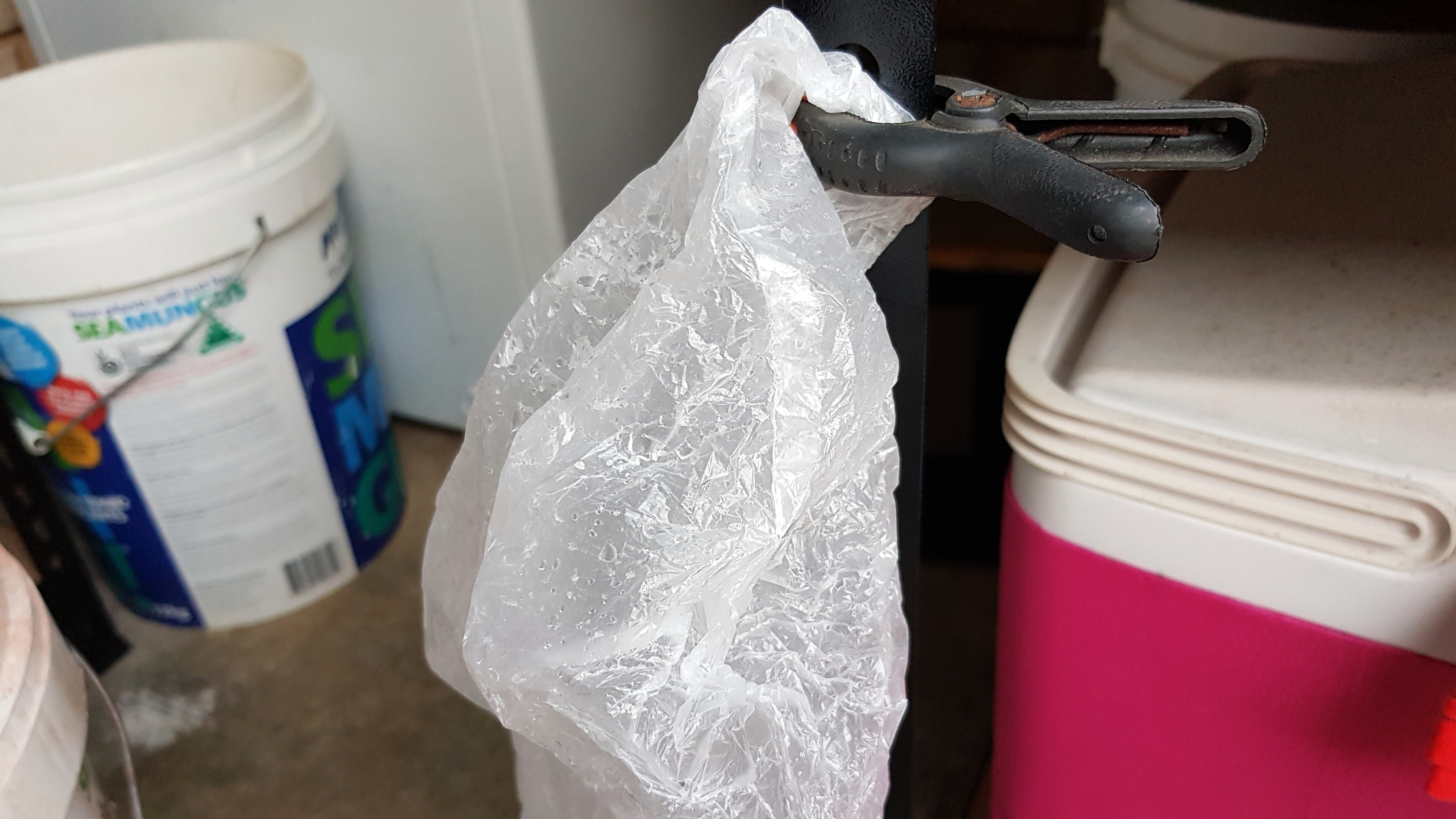
I try to reuse my plastic bags at least once. I wash and dry them if required.

I collect soft packaging in box that I keep in my shed and then I visit my local Coles Supermarket.

Many Coles Supermarkets are collection points for the REDcycle program. They recycle soft plastic and make it available for the manufacturing of park benches, decking, bollards, signs, exercise equipment and the like.

They take:

I think it is a great start,
PK
Related Links:
- see more Reuse Recover Rethink posts here
Please consider subscribing to get a weekly email summary of our posts.
[mc4wp_form id=”15771″]
Written by
·
-
ReuseRecover: Jam Jar Screw Containers
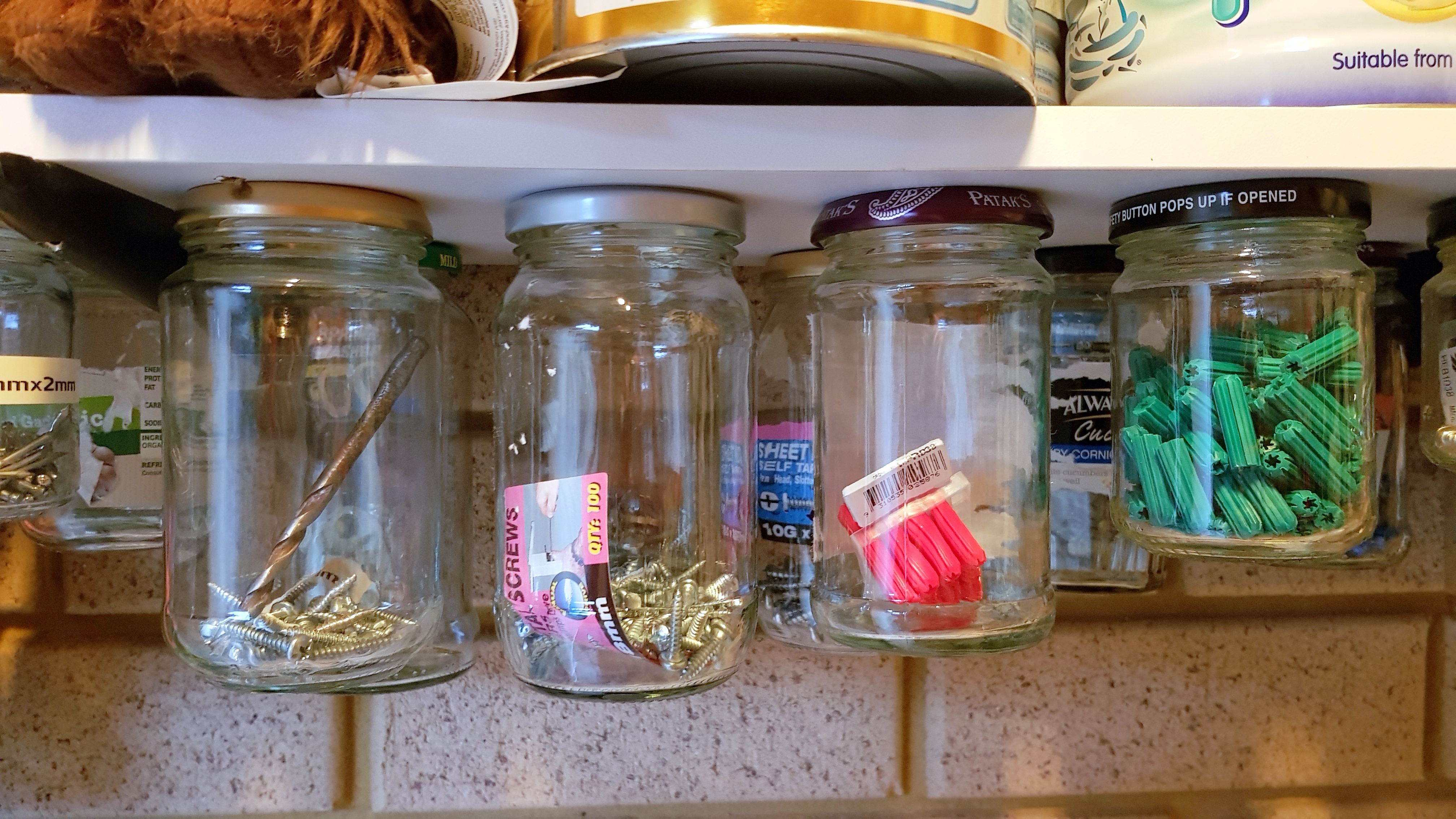
My father in law put me onto this great tip. Using jam jars and the like to store nuts, bolts etc etc in your shed this way has so many benefits.
Not only do you get to give a second life to a single life container (albeit a recyclable one) but you also make use of the underside of your shed shelves. Every shed owner wants more storage :).
Simply wash your jar, drill two holes through the lid and into the bottom of the shelf. Use short screws to attach the lid and hey presto you have a new storage container.
Tips:
- The holes in the lid should be spaced apart and not in the center so that the lid doesn’t spin when you try and twist the jar off to get to the contents.
- Leave enough room between jars to allow you to see the jars several rows behind. I even alternated the alignment of my rows to improve visibility.
- Put often used items in the first row and less used in the rear rows.
Enjoy,
PK
Written by
·
-

Reuse, Recover: Egg Shells
As you know or are beginning to suspect, I am nuts about minimising my kitchen waste. I am always looking to reuse or recover anything I can.
Google is a great help in this but once you get in the mindset of doing it and thinking outside the box, you will start coming up with your own ideas.
So with this in mind please don’t throw out those egg shells :).
For starters, egg shells are composed of approximately 95% calcium carbonate. This is great for the soil and lots of shell goes into my composting bins.
I also crush them up somewhat and scatter them around my vegetables to control moths. You might think this an urban myth but it really works. Now I have read that there are two reasons why people think this works. Either the moths think there are too many moth eggs in the vicinity already and move on or they are laying their eggs on the chicken egg shells and the grubs don’t make it to your veggies.

Lastly, I have heard you can use them to raise seedlings in (as little pots) but I have never done so. On a related note, the egg cartons either go back to the farmers market and reused or they go into the worm farm or compost bins.
What do you use egg shells for?
Enjoy,
PK
Related Links:
- see more ReuseRecover posts here
Please consider subscribing to get a weekly email summary of our posts.
[mc4wp_form id=”15771″]
Written by
·
-
Reuse, Recover: PK’s Bone Meal
I want to reuse and recover as much as I can in my kitchen and gardening activities. So it is only natural that I wondered what I could do with the bones left over after cooking. Some of them go into my worm farms but as my young family is eating more and more meat every day that is only a part solution :).
Some happy Googling later I came across lots of websites showing you how to make home made blood and bone meal. Using blood and bone meal to improve soil is as old as time due to its slow release of nitrogen and phosphorous. For those nutrients to be available to plants though requires slightly acidic soil and I find (even here in Perth) that my “improved” garden beds always meet that requirement.
One of my favourite television shows and websites (Gardening Australia) also informed me that blood and bone meal has a complete lack of potassium. So I added a small amount of potash as they suggested. See http://www.abc.net.au/gardening/stories/s1503292.htm.
Most of the bones I am using have already been cooked once and then recovered to make stock (see my chicken stock post here) and are hence nice and clean. I then bake them on low for a few hours and I do this in my Weber after cooking a roast. I don’t waste any fossil fuels.
This makes them hygienic and brittle enough to break apart in your hands. When I have enough of a collection I feed them through a corn grinder and store the meal until I need it.
This is the clean bones being baked and stored:
The grinding:
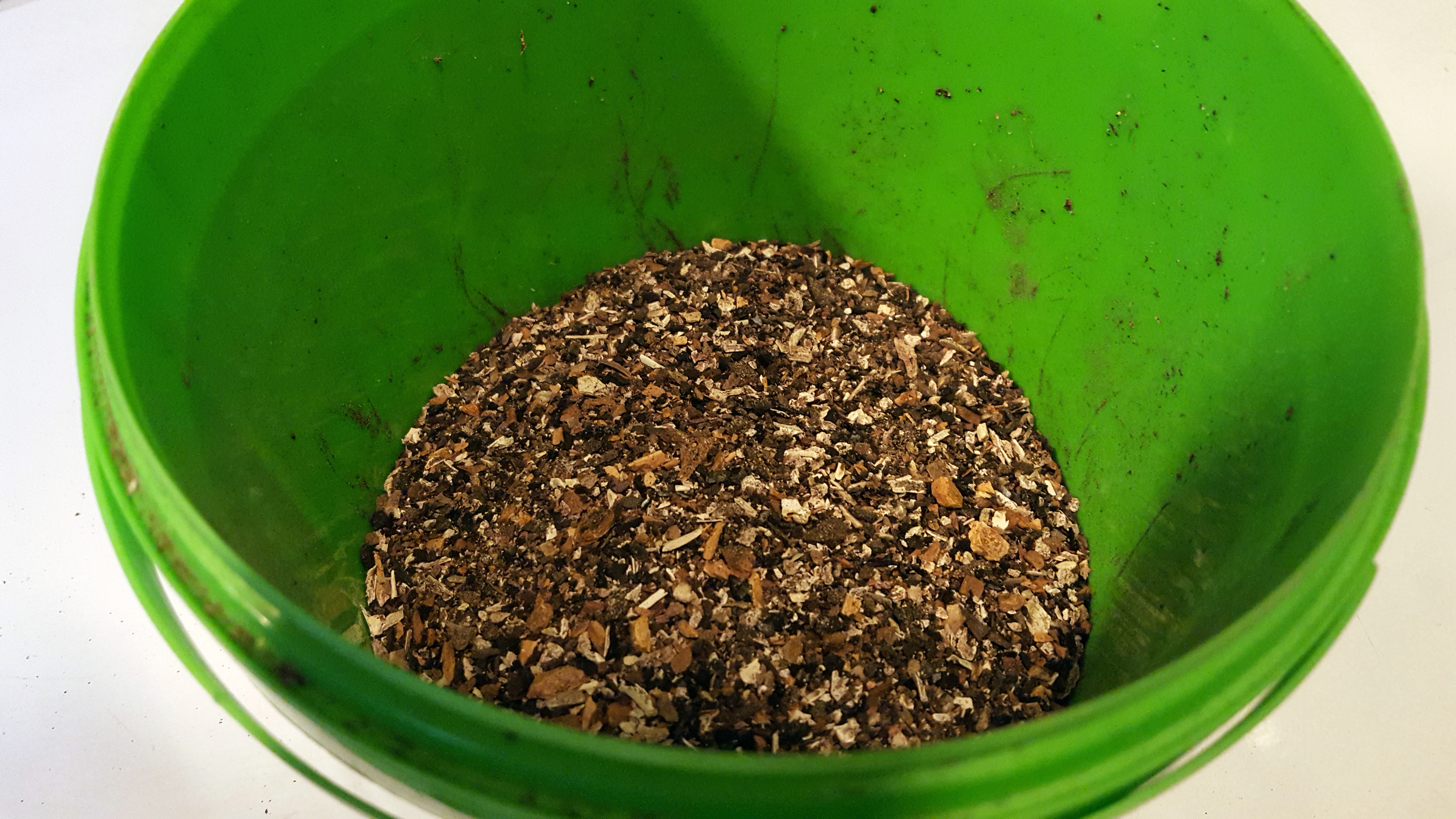
The result:
- has variable sized particles (great for varying the release of the nitrogen, phosphorous and calcium)
- has almost no aroma bar a mild earthy smell
- stores well in a sealed dry container.
As I mentioned above, I also add a small amount of potash granules to the meal to counter the lack of potassium. We now have everything we need for healthy plant roots, bodies, fruits and metabolism.


Of course, be careful when dealing with any soil improvement medium. We have a strict hand washing policy after gardening and also carefully rinse all produce. I wouldn’t put anything in my garden that I was the least bit worried about and neither should you.
Cheers,
PK
See more of the ‘Recover, Reuse’ series here.
Written by
·