Tag: plant
-

Edible Plant Lifecycles
Planting out a kitchen garden takes planning and a knowledge of each edible plant’s lifecycle in the region you are in.
It might seem obvious that some plants just won’t grow where you live. Less obvious is that plants may behave differently if your climate is not their native one.
There are three main classes of edible plants that we need to know about.
Perennials
Edible plants that live for more than two years and are therefore not annuals or biennials (that die after one or two years respectively) are called perennials. The class is further broken down into herbaceous or evergreen with the former appearing to “die off” in the cold months, regrowing in spring from rootstock.
Evergreens by contrast do not “die off” but may loose their leaves and or stop producing fruit/edible leaves and flowers.
Perth climate edible perennials include lemongrass, rosemary, jalapeno chili, curry leaf tree and citrus trees. Perth is in a temperate region and can have cold winters. Therefore some perennials such as tomatoes have to be planted as if they are annuals.
We discuss this and true annuals in the next section.
Annuals
A true edible annual is one where the plant completes the germination from seed to growing, fruiting and production of seed within one year. The plant then dies. As mentioned in the previous section, some perennials are planted out as annuals depending on their tolerance to the extremes of climate in areas that they are not native to.
Perth climate edible annuals include basil and coriander.
Biennials
Edible biennials are often planted out as annuals too. This class of edible takes up to two years to complete the germination to seed production cycle.
Perth climate edible biennials include fennel and parsley.
Written by
·
-
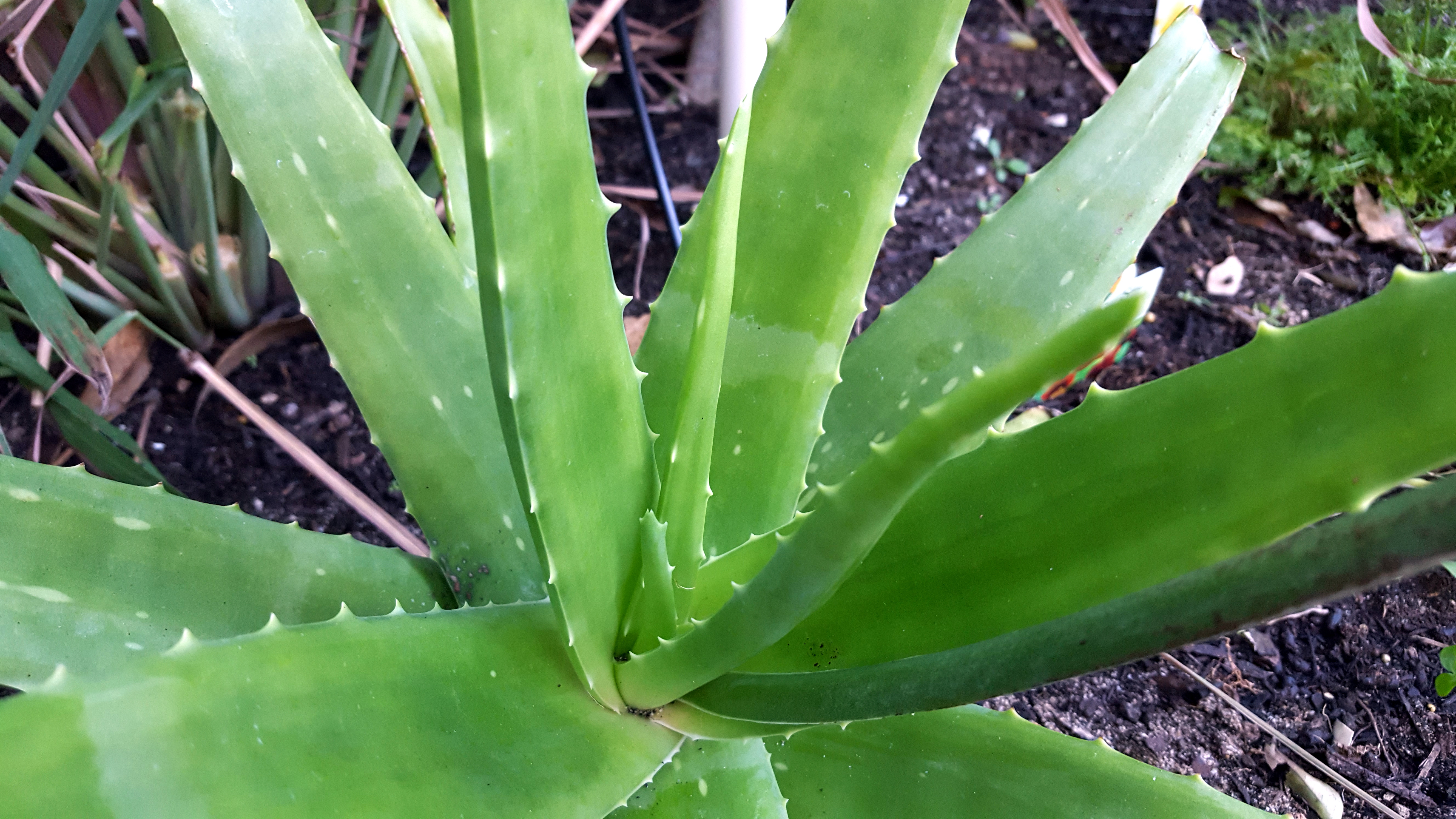
Aloe Vera
Aloe vera is one of those plants that everyone recognises on sight. I grow it because I love the look of it.
The thick fleshy leaves have little white barbs that look like teeth but this has to be one of the friendliest and useful plants.
Aloe extract pops up in all sorts of beverages, moisturising products and sunburn remedies. Here is an example of how you can make your own gel http://www.wikihow.com/Make-Aloe-Vera-Gel.
Here is a cut leaf showing the gel:

Taste/Aroma:
Apparently the gel and juice taste awful. I am not game to try 🙂
Freshly cut leaves and the gel have an unpleasant acrid smell but you have to get pretty close to smell it.
Flower:
The flower is very attractive, lasts a long time and is perched a top a metre tall stem.

Plant:

Planting/Care:
I have it planted in rich well-draining soil that gets a little sun during winter and afternoon sun during summer. I generally keep clear of it when using fertilisers and I find it low maintenance. If potted, it is also very happy to be inside for long periods.
Aloe spreads via ‘pups’ that bud off the edges as a ready-made plant. These are easily transplanted and potted aloe vera plants make a great gift.
Enjoy,
PK
Here are some more grow your own food posts and some of my favourite ingredients:
Written by
·